Suzuki Yuta, Miyazaki Takayuki, Muto Hiroki, Kubara Kenji, Mukai Yohei, Watari Ryuji, Sato Shinya, Kondo Keita, Tsukumo Shin-Ichi, Yasutomo Koji, Ito Masashi, Tsukahara Kappei
hhc Data Creation Center, Tsukuba Research Laboratories, Eisai Co., Ltd., 5-1-3 Tokodai, Tsukuba, Ibaraki 300-2635, Japan.
Drug Discovery Platform, KAN Research Institute, Inc., 6-8-2 Minatojima-minamimachi, Chuo-ku, Kobe, Hyogo 650-0047, Japan.
Mol Ther Nucleic Acids. 2022 Dec 13;30:226-240. doi: 10.1016/j.omtn.2022.09.017. Epub 2022 Sep 24.
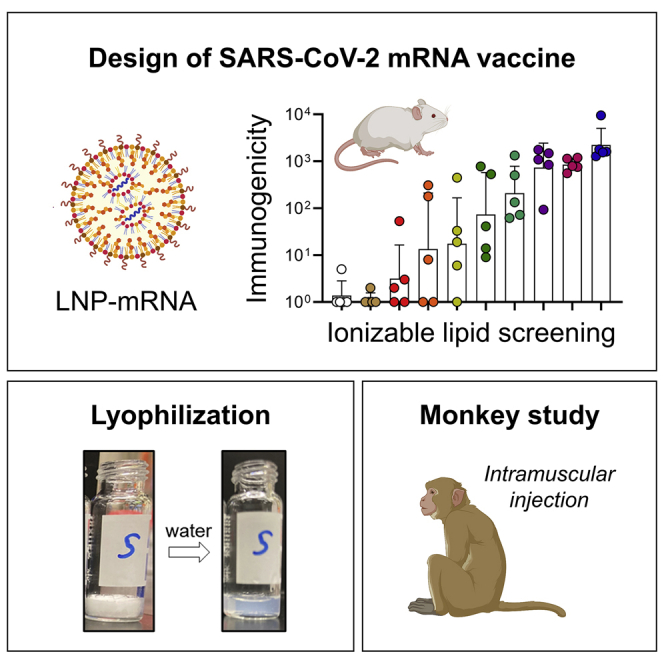
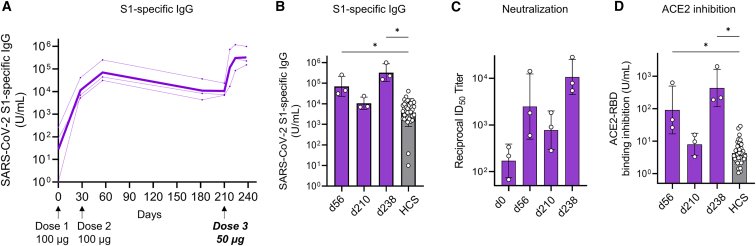
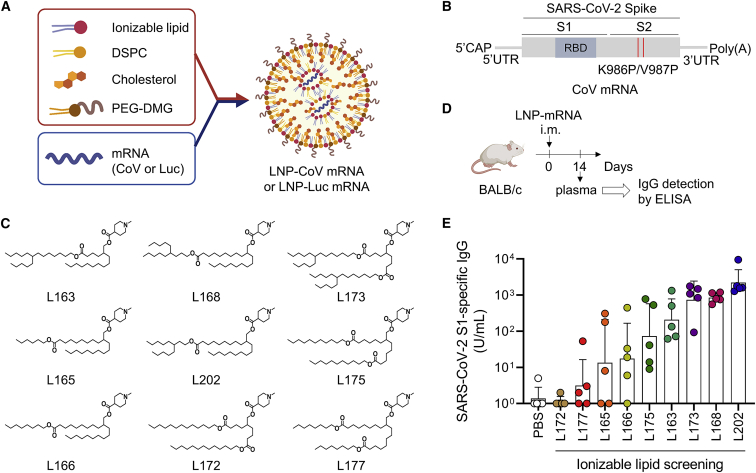
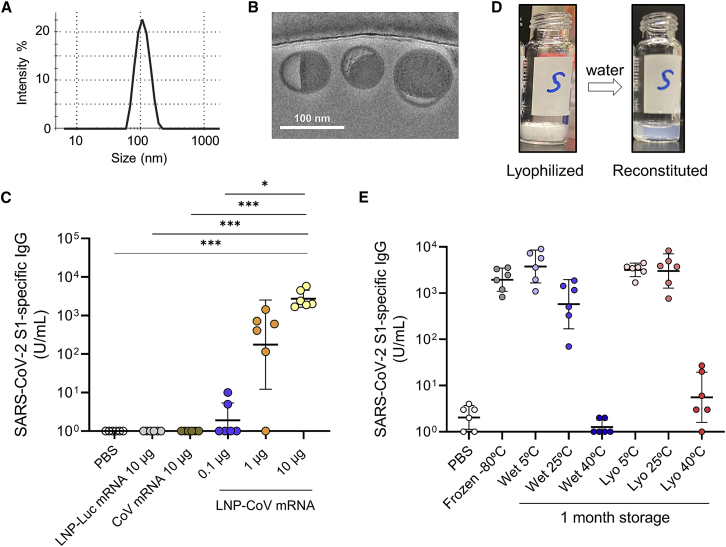
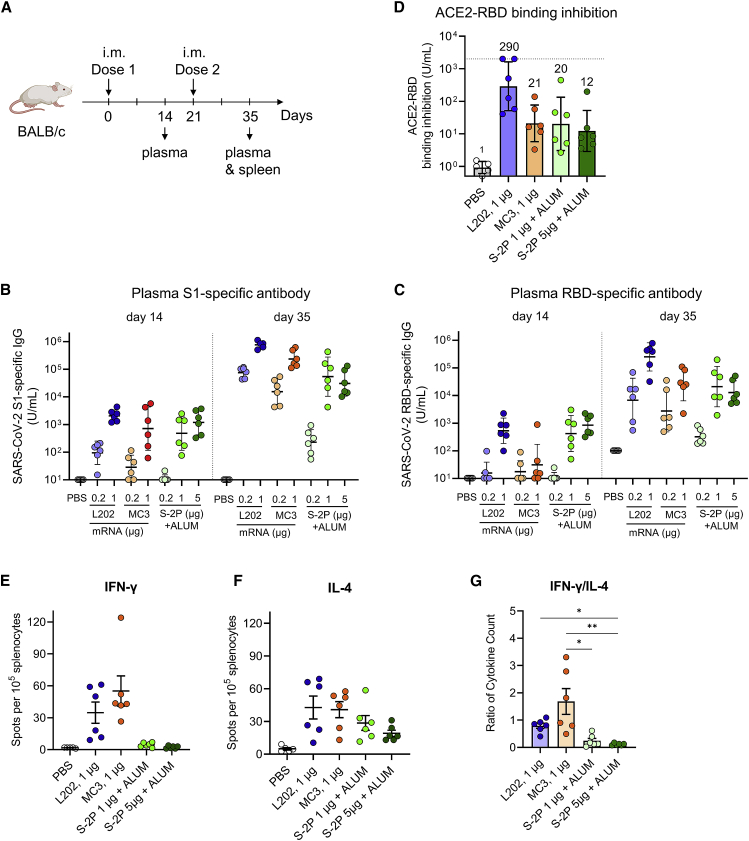
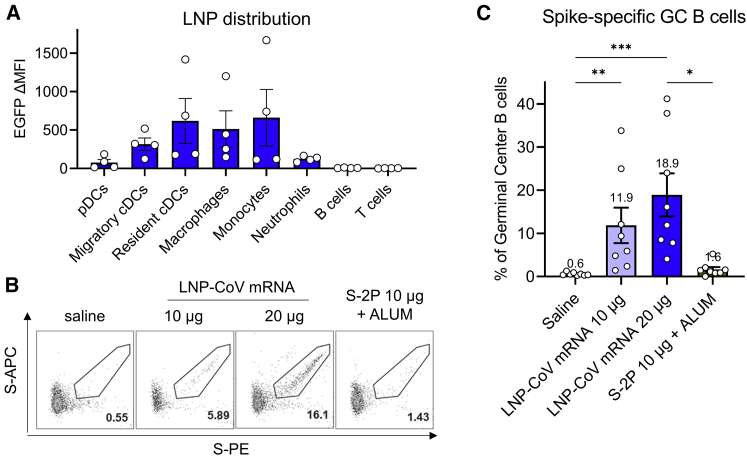
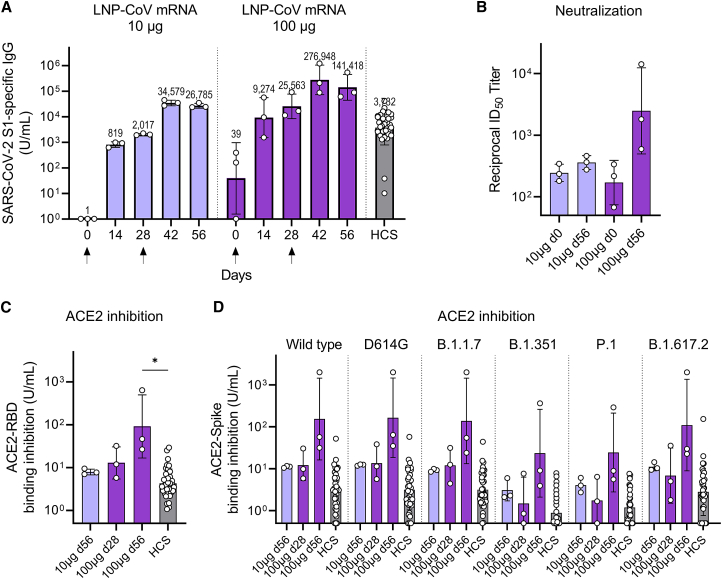
mRNA and lipid nanoparticles have emerged as powerful systems for the preparation of vaccines against severe acute respiratory syndrome coronavirus-2 (SARS-CoV-2) infection. The emergence of novel variants or the necessity of cold chain logistics for approved mRNA vaccines undermines the investigation of next-generation systems that could preserve both potency and stability. However, the correlation between lipid nanoparticle composition and activity is not fully explored. Here, we screened a panel of ionizable lipids and identified lead lipid nanoparticles with a branched-tail lipid structure. Buffer optimization allowed the determination of lyophilization conditions, where lipid nanoparticle-encapsulated mRNA encoding SARS-CoV-2 spike protein could induce robust immunogenicity in mice after 1 month of storage at 5°C and 25°C. Intramuscularly injected lipid nanoparticles distributed in conventional dendritic cells in mouse lymph nodes induced balanced T helper (Th) 1/Th2 responses against SARS-CoV-2 spike protein. In nonhuman primates, two doses of 10 or 100 μg of mRNA induced higher spike-specific binding geometric mean titers than those from a panel of SARS-CoV-2-convalescent human sera. Immunized sera broadly inhibited the viral entry receptor angiotensin-converting enzyme 2 (ACE2) from binding to the spike protein in all six strains tested, including variants of concern. These results could provide useful information for designing next-generation mRNA vaccines.
信使核糖核酸(mRNA)和脂质纳米颗粒已成为制备针对严重急性呼吸综合征冠状病毒2(SARS-CoV-2)感染疫苗的强大系统。新型变体的出现或已获批mRNA疫苗对冷链物流的需求,削弱了对既能保持效力又能保持稳定性的下一代系统的研究。然而,脂质纳米颗粒组成与活性之间的相关性尚未得到充分探索。在此,我们筛选了一组可电离脂质,并鉴定出具有支链尾部脂质结构的先导脂质纳米颗粒。缓冲液优化使得冻干条件得以确定,在此条件下,包裹编码SARS-CoV-2刺突蛋白mRNA的脂质纳米颗粒在5°C和25°C储存1个月后,能在小鼠体内诱导强大的免疫原性。肌肉注射的脂质纳米颗粒分布于小鼠淋巴结中的传统树突状细胞,可诱导针对SARS-CoV-2刺突蛋白的平衡辅助性T细胞(Th)1/Th2反应。在非人灵长类动物中,两剂10或100μg的mRNA诱导的刺突特异性结合几何平均滴度高于一组SARS-CoV-2康复者血清。免疫血清在所有测试的六种毒株(包括关注变体)中均广泛抑制病毒进入受体血管紧张素转换酶2(ACE2)与刺突蛋白的结合。这些结果可为设计下一代mRNA疫苗提供有用信息。