
过渡空间的视觉特征对虚拟现实环境中人类压力恢复的影响。
Effects of the Visual Character of Transitional Spaces on Human Stress Recovery in a Virtual Reality Environment.
机构信息
College of Environmental Design, University of California, Berkeley, CA 94720, USA.
School of Architecture and Art, North China University of Technology, Beijing 100144, China.
出版信息
Int J Environ Res Public Health. 2022 Oct 12;19(20):13143. doi: 10.3390/ijerph192013143.
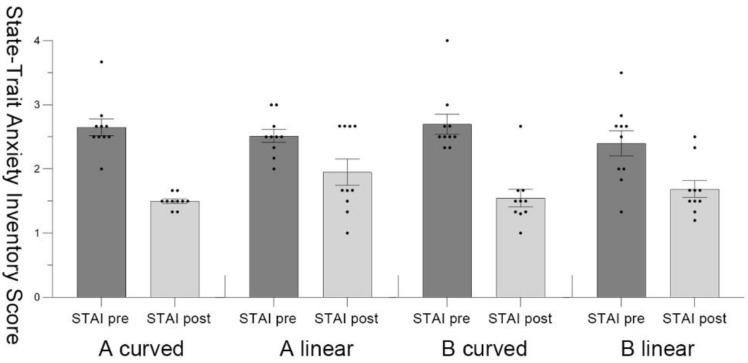
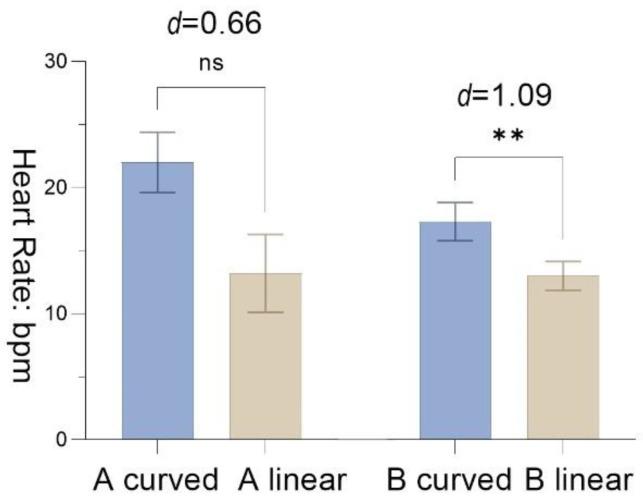
As people's levels of stress increase with the complexity of contemporary urban life, the stress healing agenda in built environments has become more critical than ever. Previous research has demonstrated that linear and nonlinear shapes in the environment have an impact on human stress recovery. However, to date, most studies have focused on indoor and outdoor spaces, while research on transitional spaces is still limited. Transitional spaces connect the interior with the exterior and are ubiquitous in the city, such as plazas, open cafes, and urban corridors. We hypothesize that curved and linear environments affect human stress recovery differently in transitional spaces. To test this hypothesis, virtual reality (VR) technology and experiments were conducted with 40 participants. At the end of the Trier Social Stress Test (TSST), participants were randomly assigned to four VR environments to test which environment is more effective in stress recovery for humans. Participants' physiological data, including heart rate and blood pressure, were measured by bio-monitoring sensors. The psychological data were tested by the State-Trait Anxiety Inventory (STAI). In general, the resulting data indicate that the curved environment is more effective than the linear environment for the recovery of human stress in transitional spaces.
随着当代城市生活复杂性的增加,人们的压力水平不断上升,因此,建筑环境中的压力缓解议程比以往任何时候都更加重要。先前的研究表明,环境中的线性和非线性形状会对人类的压力恢复产生影响。然而,迄今为止,大多数研究都集中在室内和室外空间,而对过渡空间的研究仍然有限。过渡空间将内部与外部连接起来,在城市中无处不在,例如广场、露天咖啡馆和城市走廊。我们假设,在过渡空间中,曲线和线性环境对人类压力恢复的影响不同。为了验证这一假设,我们使用虚拟现实 (VR) 技术和 40 名参与者进行了实验。在特里尔社会压力测试 (TSST) 结束后,参与者被随机分配到四个 VR 环境中,以测试哪种环境对人类的压力恢复更有效。参与者的生理数据,包括心率和血压,通过生物监测传感器进行测量。心理数据通过状态-特质焦虑量表 (STAI) 进行测试。总的来说,结果数据表明,在过渡空间中,曲线环境比线性环境更能有效地缓解人类压力。




 Zotero 插件