Shi Xiaofei, Liu Dong, He Xinhua, Liu Wei, Yu Fuqiang
The Germplasm Bank of Wild Species, Yunnan Key Laboratory for Fungal Diversity and Green Development, Kunming Institute of Botany, Chinese Academy of Sciences, Kunming 650201, China.
Guizhou Kangqunyuan Biotechnology Co., Ltd., Liupanshui 553600, China.
J Fungi (Basel). 2022 Oct 20;8(10):1107. doi: 10.3390/jof8101107.
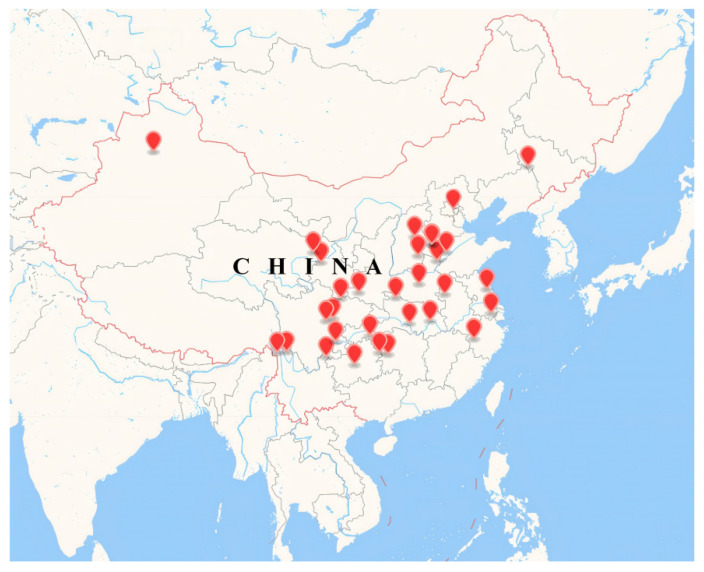
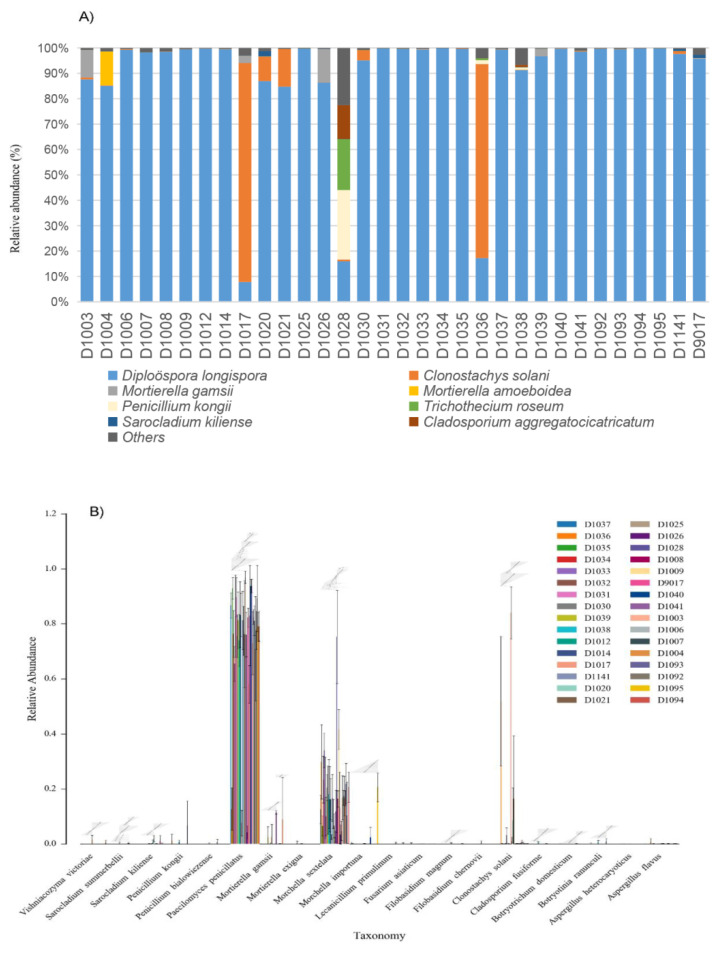
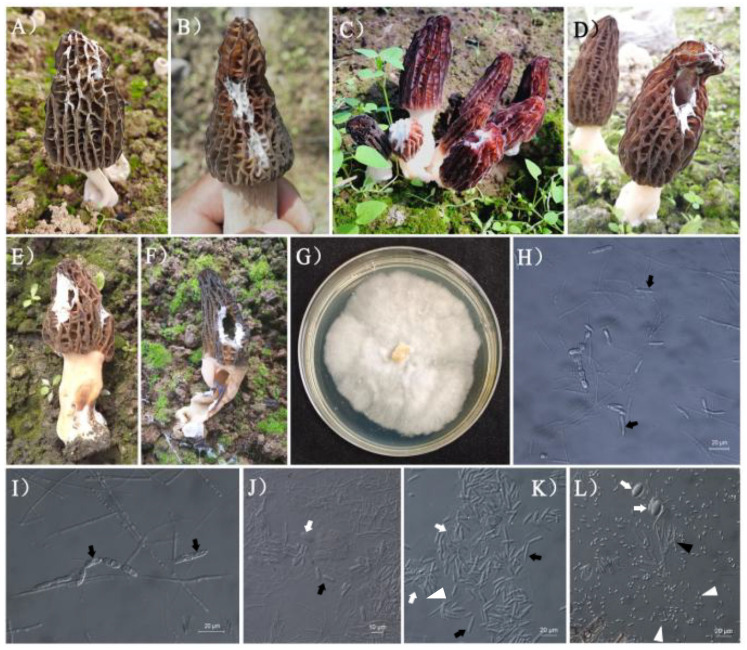
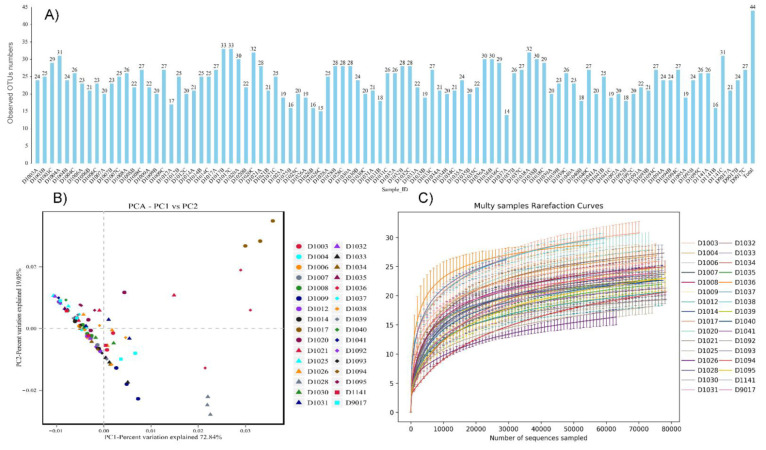
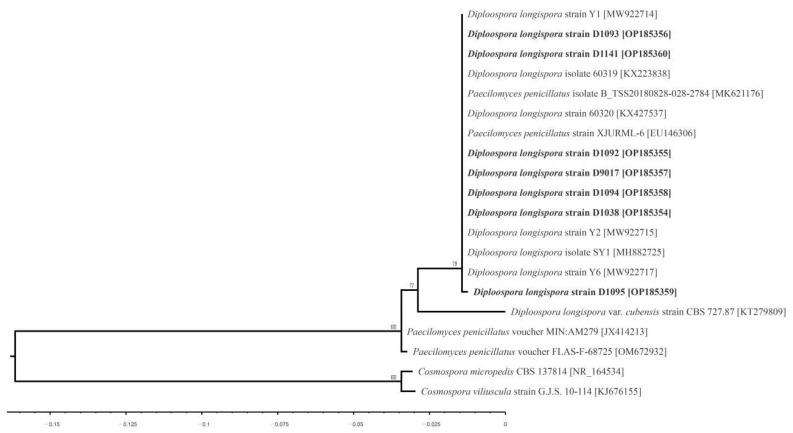
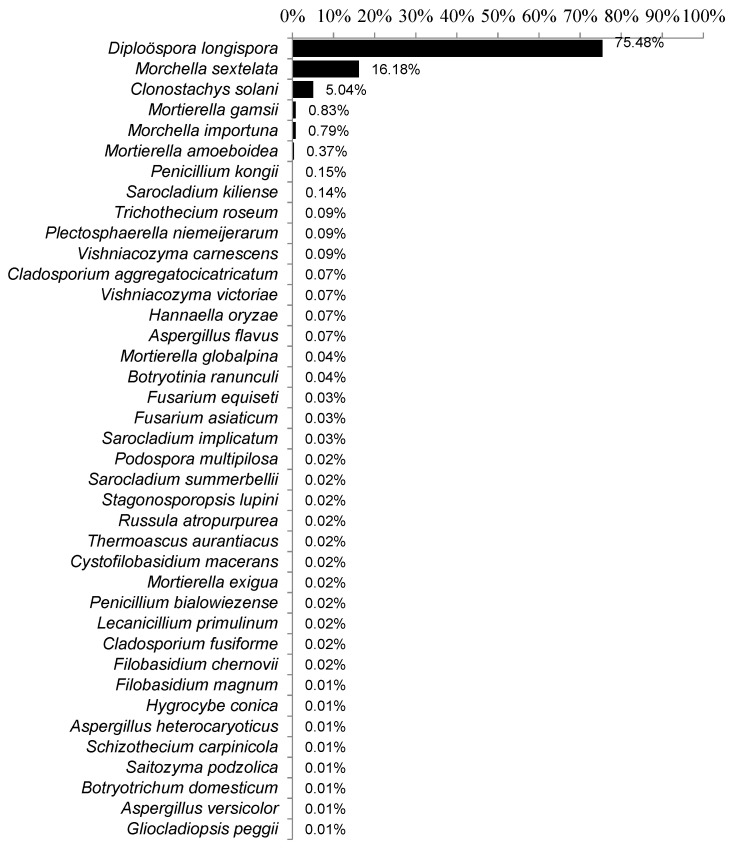
True morels (, Pezizales) are world-renowned edible mushrooms (ascocarps) that are widely demanded in international markets. has been successfully artificially cultivated since 2012 in China and is rapidly becoming a new edible mushroom industry occupying up to 16,466 hectares in the 2021-2022 season. However, nearly 25% of the total cultivation area has annually suffered from fungal diseases. While a variety of morel pathogenic fungi have been reported their epidemic characteristics are unknown, particularly in regional or national scales. In this paper, ITS amplicon sequencing and microscopic examination were concurrently performed on the morel ascocarp lesions from 32 sites in 18 provinces across China. Results showed that (75.48%), (5.04%), (0.83%), (0.37%) and (0.15%) were the putative pathogenic fungi. The long, oval, septate conidia of was observed on all ascocarps. Oval asexual spores and sporogenic structures, such as those of , were also detected in infected samples with high ITS read abundance. Seven isolates of were isolated from seven selected ascocarps lesions. The microscopic characteristics of pure cultures of these isolates were consistent with the morphological characteristics of ascocarps lesions. had the highest amplification abundance in 93.75% of the samples, while had the highest amplification abundance in six biological samples (6.25%) of the remaining two sampling sites. The results demonstrate that is a major culprit of morel fungal diseases. Other low-abundance non-host fungi appear to be saprophytic fungi infecting after . This study provides data supporting the morphological and molecular identification and prevention of fungal diseases of morel ascocarps.
羊肚菌(盘菌目)是世界著名的可食用蘑菇(子囊果),在国际市场上需求广泛。自2012年以来,羊肚菌在中国已成功实现人工栽培,并在2021 - 2022季迅速成为一个新的食用菌产业,种植面积达16466公顷。然而,每年近25%的总种植面积遭受真菌病害。虽然已报道了多种羊肚菌致病真菌,但其流行特征尚不清楚,尤其是在区域或国家尺度上。本文对中国18个省份32个地点的羊肚菌子囊果病变同时进行了ITS扩增子测序和显微镜检查。结果表明,尖顶羊肚菌(75.48%)、粗柄羊肚菌(5.04%)、皱柄羊肚菌(0.83%)、小羊肚菌(0.37%)和黑脉羊肚菌(0.15%)是推定的致病真菌。在所有子囊果上均观察到尖顶羊肚菌的长椭圆形、有隔膜的分生孢子。在ITS读数丰度高的感染样本中还检测到卵形无性孢子和产孢结构,如粗柄羊肚菌的。从7个选定的子囊果病变中分离出7株尖顶羊肚菌菌株。这些分离株的纯培养物的微观特征与子囊果病变的形态特征一致。尖顶羊肚菌在93.75%的样本中扩增丰度最高,而粗柄羊肚菌在其余两个采样点的6个生物样本(6.25%)中扩增丰度最高。结果表明,尖顶羊肚菌是羊肚菌真菌病害的主要元凶。其他低丰度非寄主真菌似乎是在尖顶羊肚菌之后感染的腐生真菌。本研究为羊肚菌子囊果真菌病害的形态学和分子鉴定及防治提供了数据支持。