Kumar Alok, Solanki Vikas, Katiyar Akshay, Mandal Bikash
Advanced Centre for Plant Virology, Division of Plant Pathology, Indian Agricultural Research Institute, New Delhi, India.
School of Plant Sciences, College of Agriculture and Environmental Sciences, Haramaya University, Dire Dawa, Ethiopia.
Front Microbiol. 2022 Nov 2;13:1030042. doi: 10.3389/fmicb.2022.1030042. eCollection 2022.
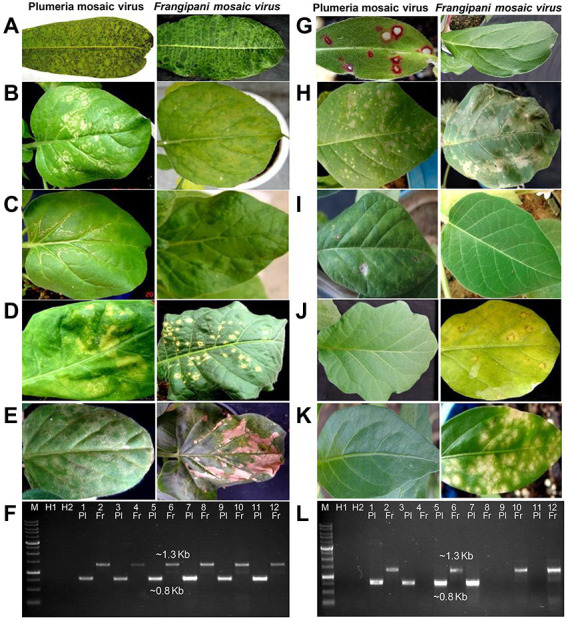
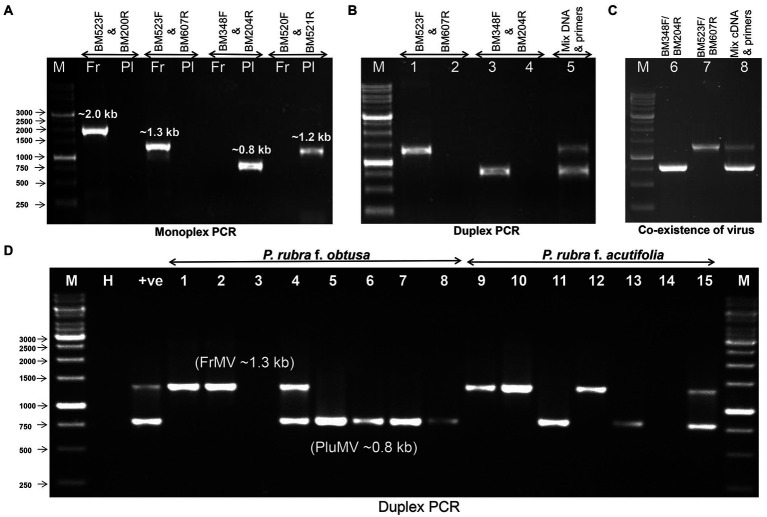
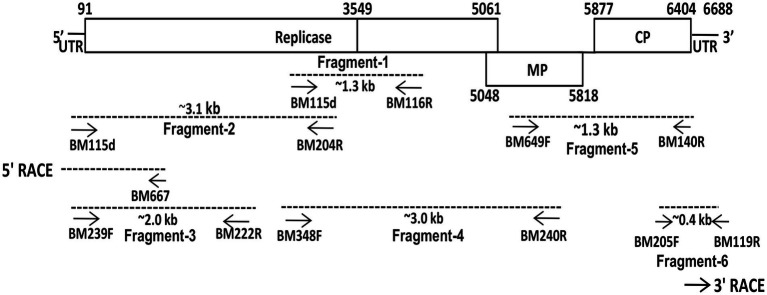
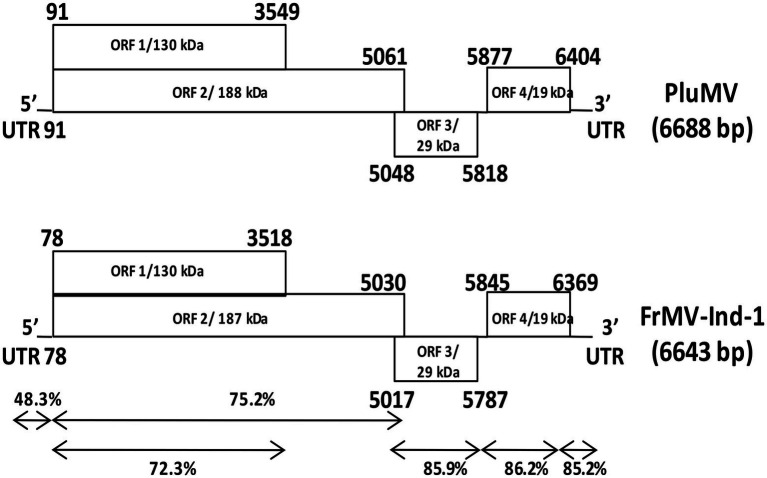
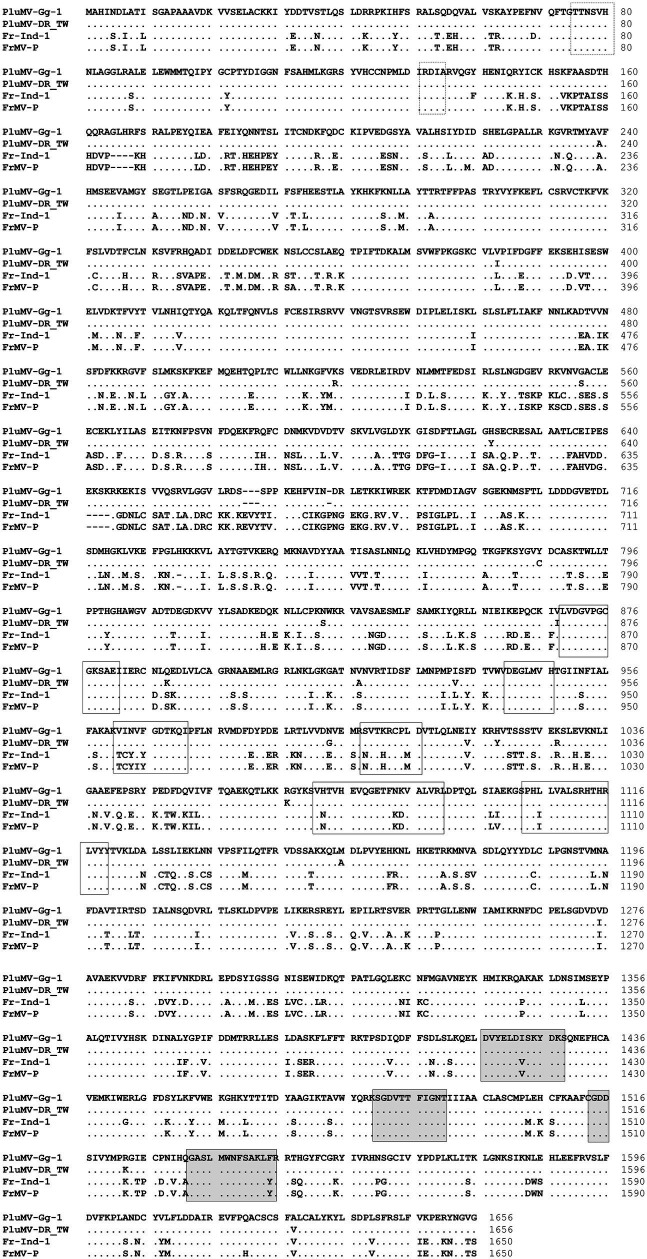
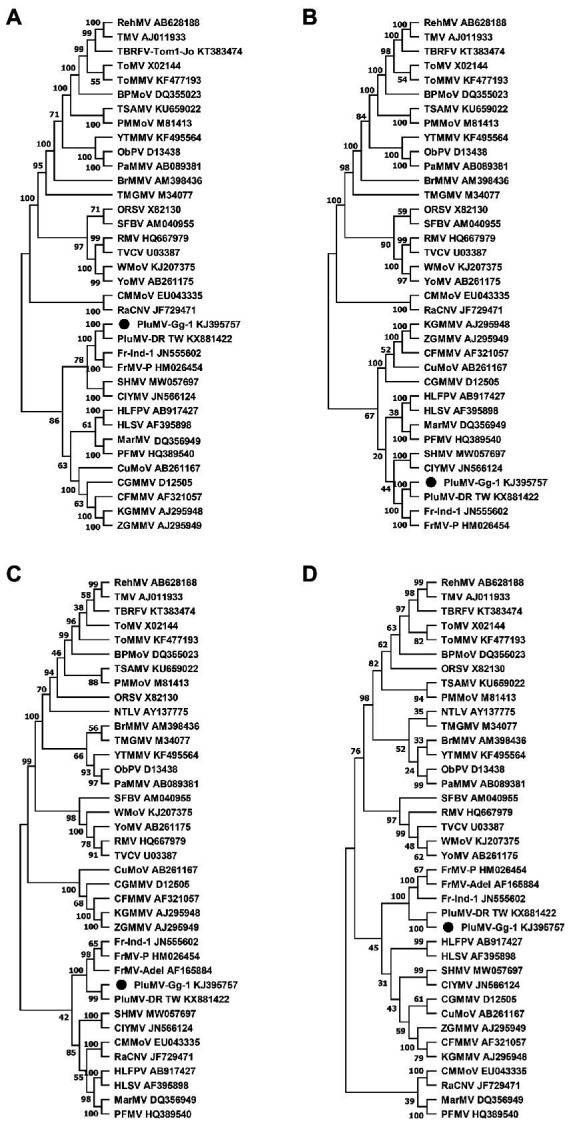
Temple tree ( f. ), an important fragrant-flower tree extensively used in the urban landscaping is known to be infected with a tobamovirus, frangipani mosaic virus (FrMV). In this study, we describe another tobamovirus, Plumeria mosaic virus (PluMV) infecting temple tree in India. PluMV was isolated from an old temple tree co-infected with FrMV. The presence of another tobamovirus was initially realized based on the distinct symptoms on (globe amaranth), a non-host of FrMV. PluMV was highly transmissible through simple rub-inoculation. In host-range study, brinjal (), chilli () datura () globe amaranth and tobacco ( cv. Xanthi) could differentiate PluMV from FrMV. The complete genome sequence of PluMV was determined (6,688 nucleotides [nt], GenBank KJ395757), which showed the genome structure typical of tobamovirus encoding four proteins: small replicase (3,549 nt/130 kDa), large replicase (5,061 nt/188 kDa), movement protein (770 nt/29 kDa) and coat protein (527 nt/19 kDa). The 5' and 3' UTR of PluMV contained 91 and 284 nt, respectively. The PluMV genome was 45 nts longer than that of FrMV and shared only 71.4-71.6% sequence identity with FrMV and < 50% sequence identity with the rest of the other members of the genus . PluMV shared a close but a divergent evolutionary relationship with FrMV. Based on the species demarcation guidelines of ICTV (<90% genome sequence identity), PluMV was considered as a new tobamovirus species. As PluMV was serologically related with FrMV, differential diagnostic assays such as simplex and duplex RT-PCR were developed, which revealed that PluMV naturally existed in both the species of temple tree, f. and f. in India either alone or in mixed infection with FrMV.
鸡蛋花(鸡蛋花属)是一种重要的香花树,广泛用于城市绿化,已知感染了一种烟草花叶病毒属病毒,即鸡蛋花花叶病毒(FrMV)。在本研究中,我们描述了另一种感染印度鸡蛋花的烟草花叶病毒属病毒,即鸡蛋花花叶病毒(PluMV)。PluMV是从一棵同时感染FrMV的老鸡蛋花树上分离得到的。另一种烟草花叶病毒属病毒的存在最初是基于鸡冠花(FrMV的非寄主)上出现的明显症状而发现的。PluMV通过简单摩擦接种具有高度传染性。在寄主范围研究中,茄子(茄属)、辣椒(辣椒属)、曼陀罗(曼陀罗属)、鸡冠花和烟草(品种Xanthi)可以区分PluMV和FrMV。测定了PluMV的完整基因组序列(6688个核苷酸[nt],GenBank登录号KJ395757),其显示出烟草花叶病毒属典型的基因组结构,编码四种蛋白质:小复制酶(3549 nt/130 kDa)、大复制酶(5061 nt/188 kDa)、运动蛋白(770 nt/29 kDa)和外壳蛋白(527 nt/19 kDa)。PluMV的5'和3'非翻译区分别包含91和284 nt。PluMV基因组比FrMV长45 nt,与FrMV的序列同一性仅为71.4 - 71.6%,与该属其他成员的序列同一性小于50%。PluMV与FrMV具有密切但有差异的进化关系。根据国际病毒分类委员会的物种划分标准(基因组序列同一性<90%),PluMV被认为是一种新的烟草花叶病毒属病毒物种。由于PluMV与FrMV存在血清学关系,因此开发了单重和双重RT-PCR等鉴别诊断方法,这些方法表明PluMV在印度的两种鸡蛋花属植物,即鸡蛋花和红鸡蛋花中自然存在,要么单独存在,要么与FrMV混合感染。