Li Zhe, Khan Suliman, Liu Yang, Wei Ruixue, Yong V Wee, Xue Mengzhou
Department of Cerebrovascular Diseases, The Second Affiliated Hospital of Zhengzhou University, Zhengzhou, China.
Academy of Medical Science, Zhengzhou University, Zhengzhou, China.
Front Neurol. 2022 Nov 4;13:1032343. doi: 10.3389/fneur.2022.1032343. eCollection 2022.
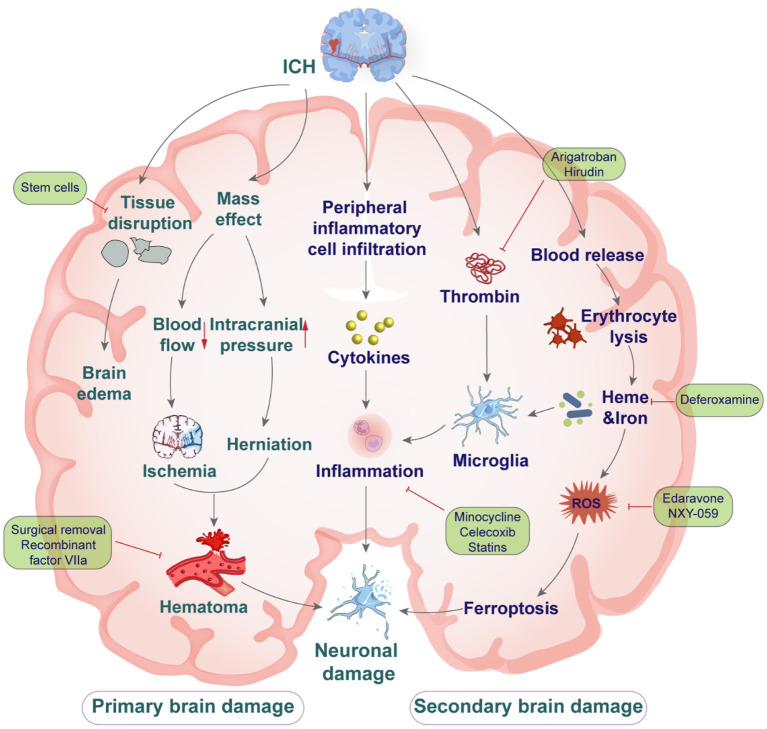
Stroke is the second highest cause of death globally, with an increasing incidence in developing countries. Intracerebral hemorrhage (ICH) accounts for 10-15% of all strokes. ICH is associated with poor neurological outcomes and high mortality due to the combination of primary and secondary injury. Fortunately, experimental therapies are available that may improve functional outcomes in patients with ICH. These therapies targeting secondary brain injury have attracted substantial attention in their translational potential. Here, we summarize recent advances in therapeutic strategies and directions for ICH and discuss the barriers and issues that need to be overcome to improve ICH prognosis.
中风是全球第二大致死原因,在发展中国家发病率呈上升趋势。脑出血(ICH)占所有中风的10%-15%。由于原发性和继发性损伤的共同作用,脑出血与较差的神经功能预后和高死亡率相关。幸运的是,现有一些实验性疗法可能改善脑出血患者的功能预后。这些针对继发性脑损伤的疗法在其转化潜力方面已引起了广泛关注。在此,我们总结了脑出血治疗策略和方向的最新进展,并讨论了改善脑出血预后需要克服的障碍和问题。