
迈向多发性硬化症分子特征生物标志物联合检测的研究。
Toward a Combination of Biomarkers for Molecular Characterization of Multiple Sclerosis.
机构信息
CNRS UMRS7242, Biotechnology and Cell Signaling, Therapeutic Peptides Team, Institut du Médicament de Strasbourg (IMS), ESBS, 300 Boulevard S. Brant, 67400 Illkirch-Graffenstaden, France.
出版信息
Int J Mol Sci. 2022 Nov 13;23(22):14000. doi: 10.3390/ijms232214000.
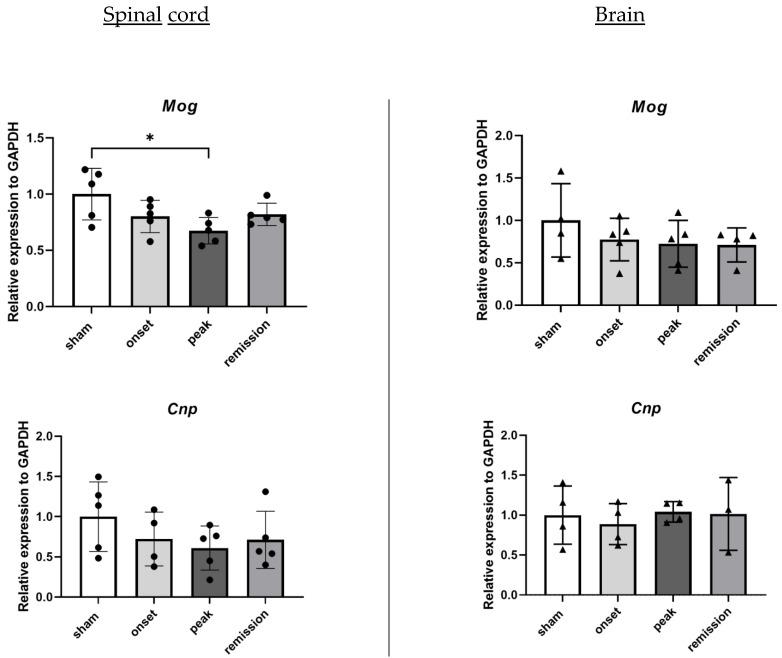
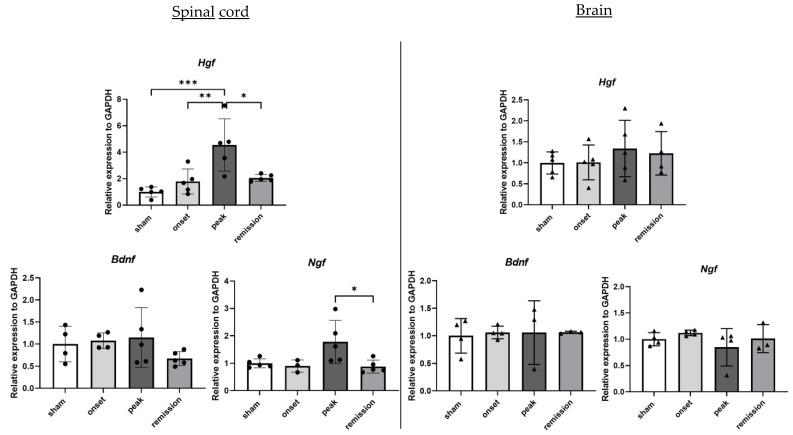
Multiple sclerosis (MS) is an autoimmune disease affecting the central nervous system associated with chronic inflammation, demyelination, and axonal damage. MS is a highly heterogeneous disease that leads to discrepancies regarding the clinical appearance, progression, and therapy response of patients. Therefore, there is a strong unmet need for clinically relevant biomarkers capable of recapitulating the features of the disease. Experimental autoimmune encephalomyelitis (EAE) is a valuable model for studying the pathophysiology of MS as it recapitulates the main hallmarks of the disease: inflammation, blood-brain barrier (BBB) disruption, gliosis, myelin damage, and repair mechanisms. In this study, we used the EAE-PLP animal model and established a molecular RNA signature for each phase of the disease (onset, peak, remission). We compared variances of expression of known biomarkers by RT-qPCR in the brain and spinal cord of sham and EAE animals monitoring each of the five hallmarks of the disease. Using magnetic cell isolation technology, we isolated microglia and oligodendrocytes of mice of each category, and we compared the RNA expression variations. We identify genes deregulated during a restricted time frame, and we provide insight into the timing and interrelationships of pathological disease processes at the organ and cell levels.
多发性硬化症 (MS) 是一种影响中枢神经系统的自身免疫性疾病,与慢性炎症、脱髓鞘和轴突损伤有关。MS 是一种高度异质性疾病,导致患者的临床表现、进展和治疗反应存在差异。因此,强烈需要能够重现疾病特征的临床相关生物标志物。实验性自身免疫性脑脊髓炎 (EAE) 是研究 MS 病理生理学的有价值模型,因为它再现了疾病的主要特征:炎症、血脑屏障 (BBB) 破坏、神经胶质增生、髓鞘损伤和修复机制。在这项研究中,我们使用 EAE-PLP 动物模型,为疾病的每个阶段(发作、高峰、缓解)建立了分子 RNA 特征。我们通过 RT-qPCR 比较了假手术和 EAE 动物大脑和脊髓中已知生物标志物的表达差异,监测了疾病的五个特征中的每一个。使用磁性细胞分离技术,我们分离了每个类别的小鼠的小胶质细胞和少突胶质细胞,并比较了 RNA 表达的变化。我们确定了在受限时间范围内失调的基因,并深入了解了器官和细胞水平上病理疾病过程的时间和相互关系。






 Zotero 插件