Division of Pharmacodynamics, Keio University Faculty of Pharmacy, 1-5-30, Shibakoen, Minato-ku, Tokyo, 105-8512, Japan.
BMC Pharmacol Toxicol. 2022 Nov 30;23(1):89. doi: 10.1186/s40360-022-00628-9.
Linezolid causes hematological toxicity, mostly thrombocytopenia, which leads to treatment discontinuation and failure. Recent studies revealed that during linezolid therapy, the incidence of treatment-related hematological toxicity is significantly higher in patients with decreased renal function (DRF) than in those with normal renal function. Linezolid monitoring is necessary due to the high frequency of hematological toxicity in patients with DRF and the relationship between blood concentration and safety. We performed a systematic review and meta-analysis to evaluate the safety correlation between DRF and trough monitoring.
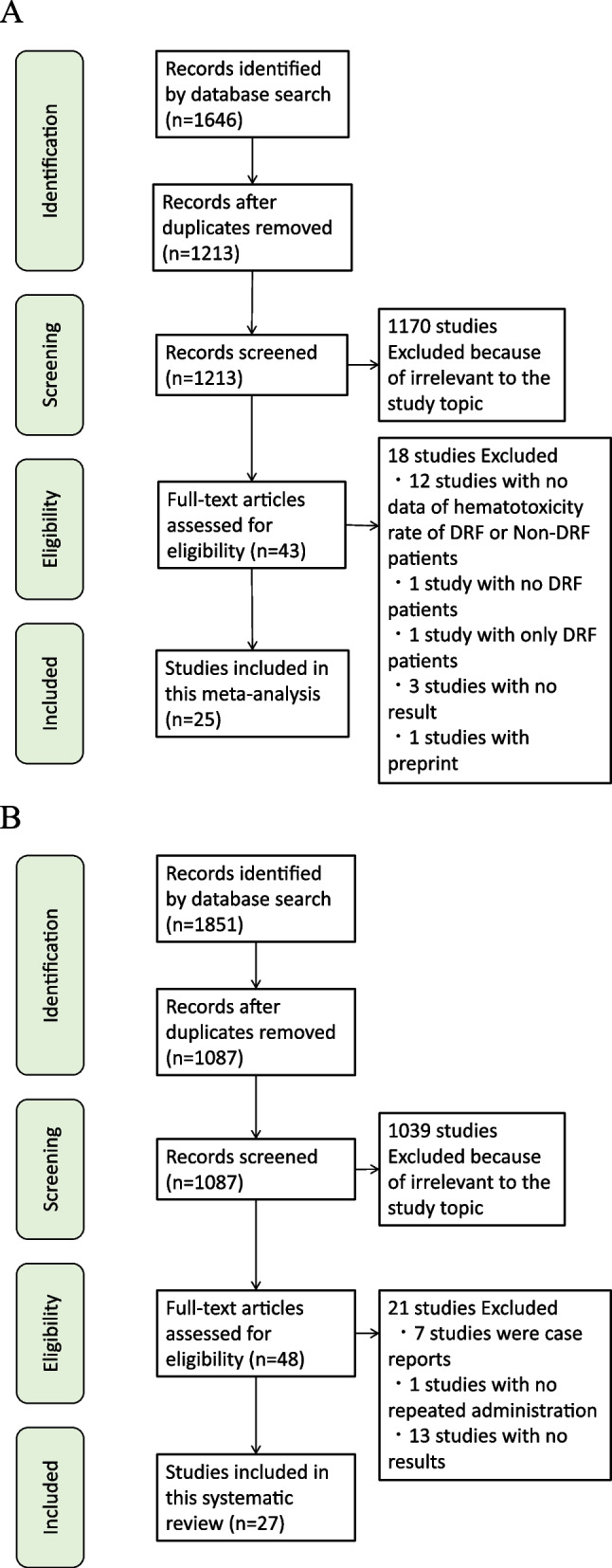
Articles published before June 24, 2022, on MEDLINE, Web of Sciences, Cochrane Register of Controlled Trials, and ClinicalTrials.gov were systematically analyzed. Odds ratios (ORs) and 95% confidence intervals (CIs) were calculated using the Mantel-Haenszel method and the variable effects model.
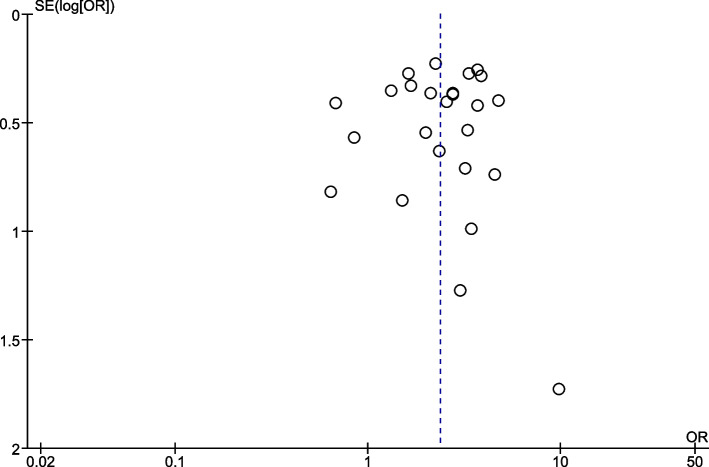
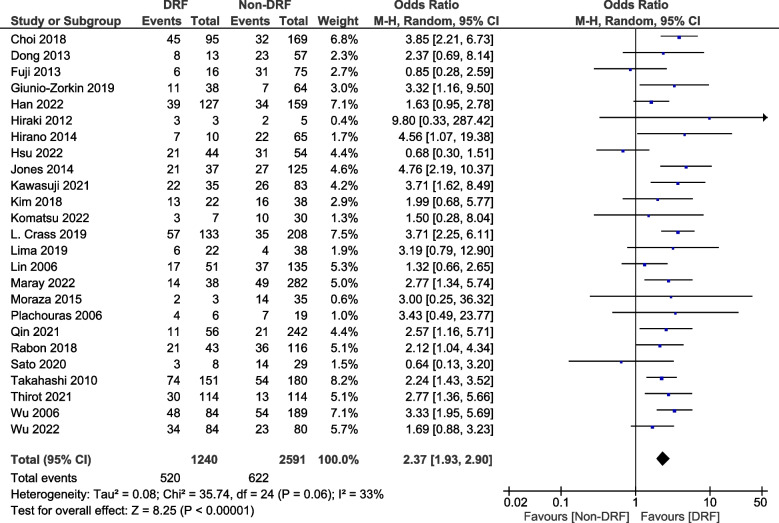
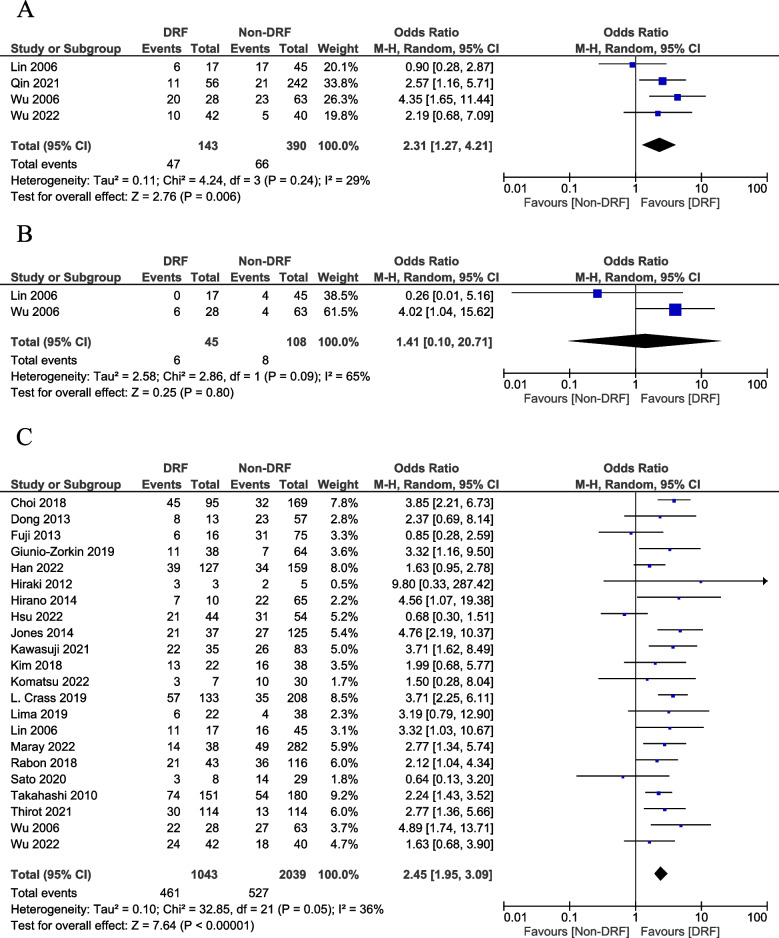
The incidence of hematological toxicity was significantly higher in patients with DRF than in those without DRF (OR = 2.37; p < 0.001). Subgroup analysis, performed according to hematotoxicity classification, including thrombocytopenia, anemia, and pancytopenia, revealed a significantly higher incidence of thrombocytopenia (OR = 2.45; p < 0.001) and anemia (OR = 2.31; p = 0.006) in patients with DRF than in those without; pancytopenia (OR = 1.41; p = 0.80) incidences were not significantly higher. Based on a systematic review, linezolid trough concentrations > 6-7 μg/mL may be associated with an increased incidence of thrombocytopenia. However, no confidential threshold values for the development of thrombocytopenia were found in the area under the concentration curve values for children or adults.
We observed a high frequency of hematological toxicity during linezolid therapy in patients with DRF. To ensure safety, linezolid trough concentrations should be ≤6-7 μg/mL.
利奈唑胺可引起血液学毒性,主要是血小板减少症,导致治疗中断和失败。最近的研究表明,在利奈唑胺治疗期间,肾功能下降(DRF)患者的治疗相关血液学毒性发生率明显高于肾功能正常的患者。由于 DRF 患者血液学毒性发生率高,且与血药浓度和安全性有关,因此需要进行利奈唑胺监测。我们进行了系统评价和荟萃分析,以评估 DRF 与谷浓度监测之间的安全性相关性。
系统分析了 2022 年 6 月 24 日前在 MEDLINE、Web of Sciences、Cochrane 对照试验登记处和 ClinicalTrials.gov 上发表的文章。使用 Mantel-Haenszel 方法和变量效应模型计算比值比(OR)和 95%置信区间(CI)。
与无 DRF 患者相比,DRF 患者血液学毒性发生率显著更高(OR=2.37;p<0.001)。根据血液毒性分类进行的亚组分析显示,DRF 患者血小板减少症(OR=2.45;p<0.001)和贫血(OR=2.31;p=0.006)的发生率显著更高,而全血细胞减少症(OR=1.41;p=0.80)的发生率无显著差异。基于系统评价,利奈唑胺谷浓度>6-7μg/mL 可能与血小板减少症发生率增加相关。然而,在儿童或成人的浓度曲线下面积值中,并未发现血小板减少症发展的明确阈值。
我们观察到 DRF 患者在利奈唑胺治疗期间血液学毒性发生率较高。为确保安全性,利奈唑胺谷浓度应≤6-7μg/mL。