Nie Xiaoli, Chen Haiyang, Xiong Ying, Chen Juan, Liu Te
Shanghai Geriatric Institute of Chinese Medicine, Shanghai University of Traditional Chinese Medicine, Shanghai 200031, China.
Department of Obstetrics and Gynecology, Xinhua Hospital Affiliated to Shanghai Jiao Tong University School of Medicine, Shanghai 200092, China.
J Cancer. 2022 Oct 24;13(14):3503-3514. doi: 10.7150/jca.77445. eCollection 2022.
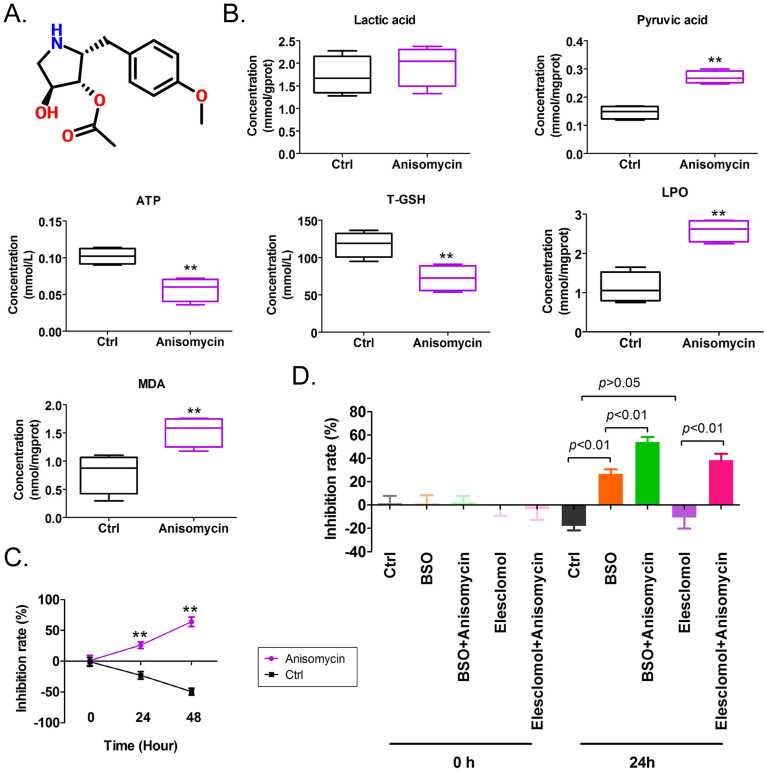
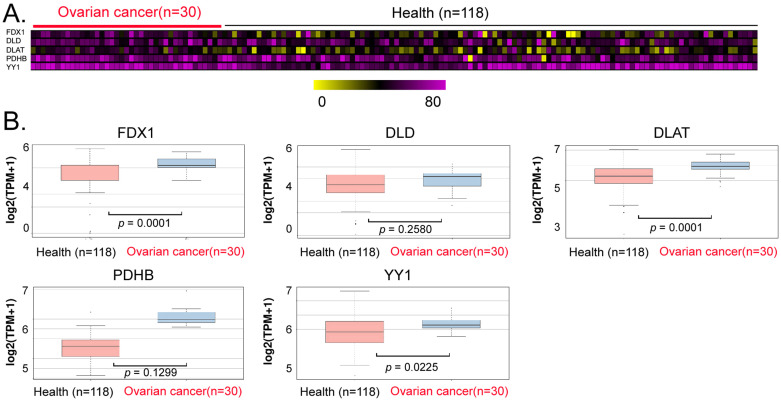
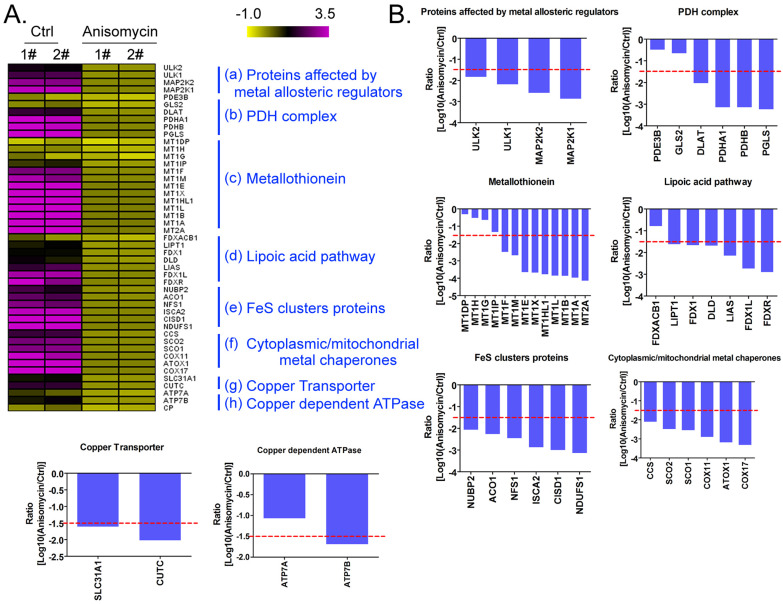
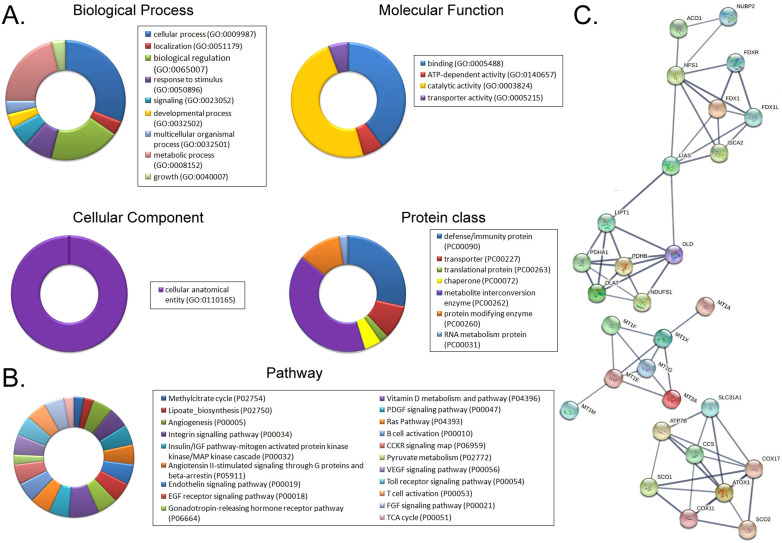
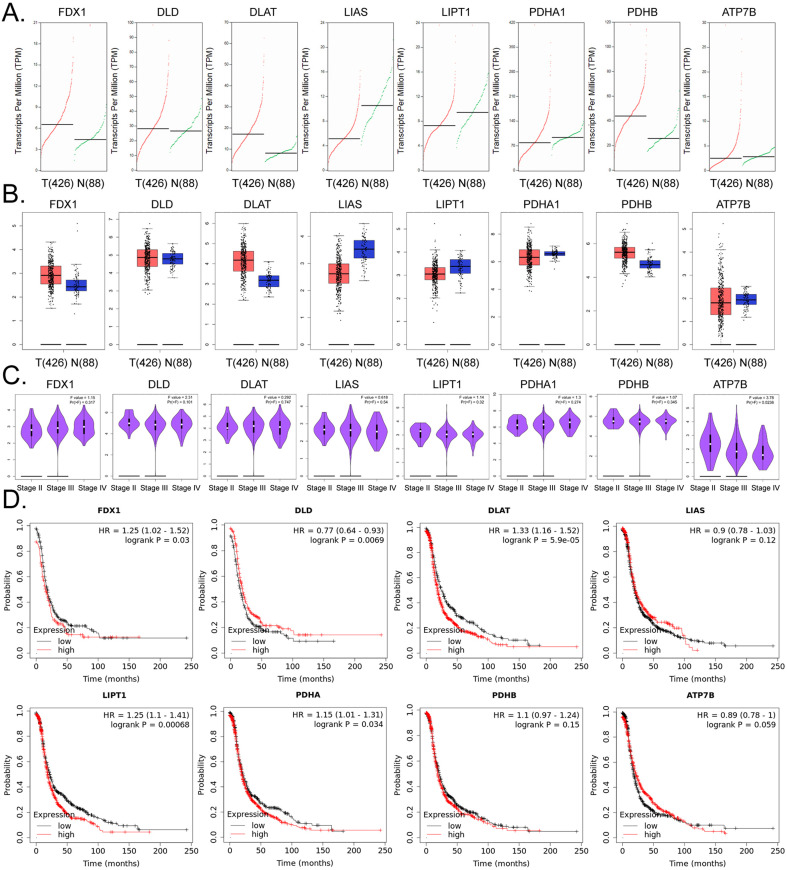
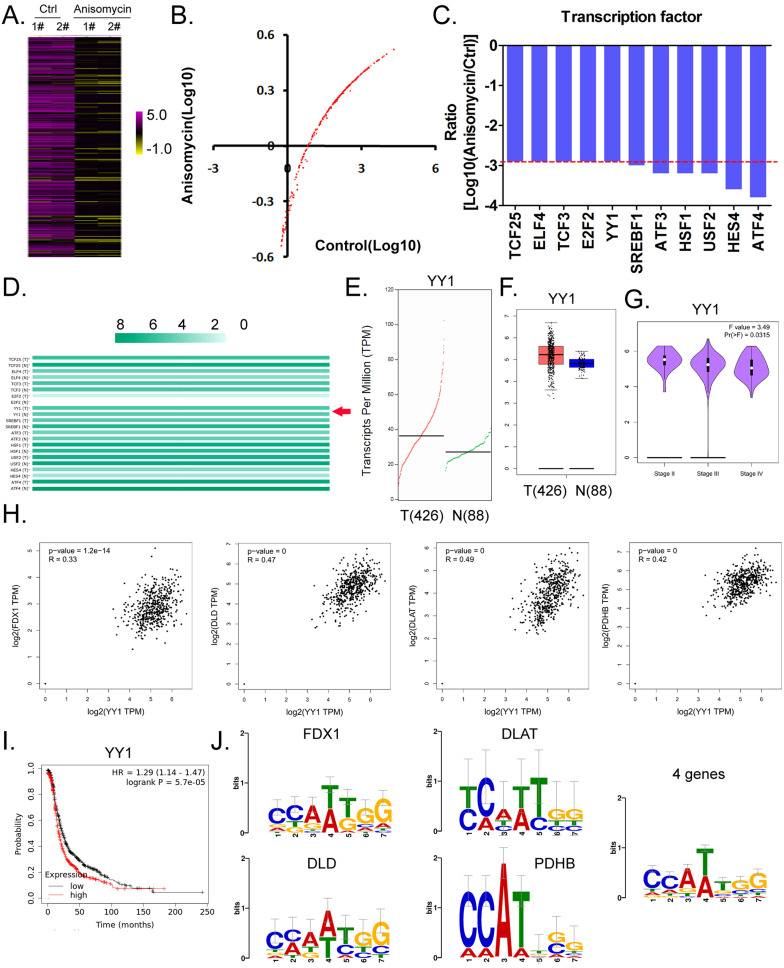
Ovarian cancer is a highly malignant gynecologic tumor that seriously endangers women's health. We previously demonstrated that anisomycin significantly inhibited the activity of ovarian cancer stem cells (OCSCs) in vitro and in vivo. In the present study, anisomycin treatment of OCSCs significantly reduced ATP and T-GSH content; and increased pyruvate, LPO, and MDA. Anisomycin also significantly inhibited the proliferation of OCSCs in vitro, and its effect was similar to that of elesclomol and buthionine sulfoximine (BSO), suggesting that it has the potential to promote cuproptosis of OCSCs. Our subsequent cDNA microarray analysis results showed that anisomycin significantly reduced the transcriptional levels of genes that protect copper metabolism and cuproptosis, including the PDH complex, metallothionein, lipoid acid pathway, and FeS cluster proteins. Bioinformatics analysis revealed that four core factors (lipoic acid pathway FDX1, DLD, DLAT, PDH), and transcription factor YY1 were highly expressed in ovarian cancer tissues and were significantly correlated with an unfavorable prognosis. Further analysis depicted multiple YY1-recognized motif basic sites as existing in the promoters of the above four factors. In addition, the expression levels of YY1 in the tissue samples from ovarian cancer patients were significantly positively correlated with the expression levels of FDX1, DLD, DLAT, PDHB, and other genes. Finally, the analysis of the peripheral blood exosome database disclosed that the contents of the four key factors of YY1 and the lipoic acid pathway in the peripheral blood exosomes of patients with ovarian cancer were significantly elevated relative to those of normal healthy individuals. Therefore, our molecular biology experiments combined with bioinformatics analysis results suggest that the direct target of anisomycin-induced cuproptosis in ovarian cancer stem cells is probably a YY1 transcription factor. By inhibiting the expression and activity of YY1, anisomycin could not activate the transcriptional activity of the core genes of the lipoic acid pathway (i.e.,FDX1, DLD, DLAT, and PDHB), and induced the accumulation of cytotoxic substances, eventually leading to potential cuproptosis in ovarian cancer stem cells.
卵巢癌是一种高度恶性的妇科肿瘤,严重危及女性健康。我们之前证明茴香霉素在体外和体内均能显著抑制卵巢癌干细胞(OCSCs)的活性。在本研究中,用茴香霉素处理OCSCs可显著降低ATP和总谷胱甘肽(T-GSH)含量;并增加丙酮酸、脂质过氧化(LPO)和丙二醛(MDA)。茴香霉素在体外也显著抑制OCSCs的增殖,其效果与依斯氯铵和丁硫氨酸亚砜胺(BSO)相似,表明它有促进OCSCs铜死亡的潜力。我们随后的cDNA微阵列分析结果表明,茴香霉素显著降低了保护铜代谢和铜死亡的基因的转录水平,包括丙酮酸脱氢酶复合物(PDH complex)、金属硫蛋白、硫辛酸途径和铁硫簇蛋白。生物信息学分析显示,四个核心因子(硫辛酸途径的FDX1、DLD、DLAT、PDH)和转录因子YY1在卵巢癌组织中高表达,且与不良预后显著相关。进一步分析表明,上述四个因子的启动子中存在多个YY1识别基序基本位点。此外,卵巢癌患者组织样本中YY1的表达水平与FDX1、DLD、DLAT、PDHB等基因的表达水平显著正相关。最后,对外周血外泌体数据库的分析显示,与正常健康个体相比,卵巢癌患者外周血外泌体中YY1和硫辛酸途径的四个关键因子的含量显著升高。因此,我们的分子生物学实验结合生物信息学分析结果表明,茴香霉素诱导卵巢癌干细胞铜死亡的直接靶点可能是YY1转录因子。通过抑制YY1的表达和活性,茴香霉素无法激活硫辛酸途径核心基因(即FDX1、DLD、DLAT和PDHB)的转录活性,并诱导细胞毒性物质的积累,最终导致卵巢癌干细胞发生潜在的铜死亡。