William Harvey Research Institute, Queen Mary University of London, Charterhouse Square, UK (E.J.W., S.B., S.F., C.G., N.P.D., M.P., F.M.M.-B., S.N.).
European Bioinformatics Institute, Wellcome Genome Campus, Hinxton, Cambridge, UK (K.M.M.).
Circulation. 2023 Mar 21;147(12):956-972. doi: 10.1161/CIRCULATIONAHA.122.061934. Epub 2022 Dec 9.
Placental heart development and embryonic heart development occur in parallel, and these organs have been proposed to exert reciprocal regulation during gestation. Poor placentation has been associated with congenital heart disease, an important cause of infant mortality. However, the mechanisms by which altered placental development can lead to congenital heart disease remain unresolved.
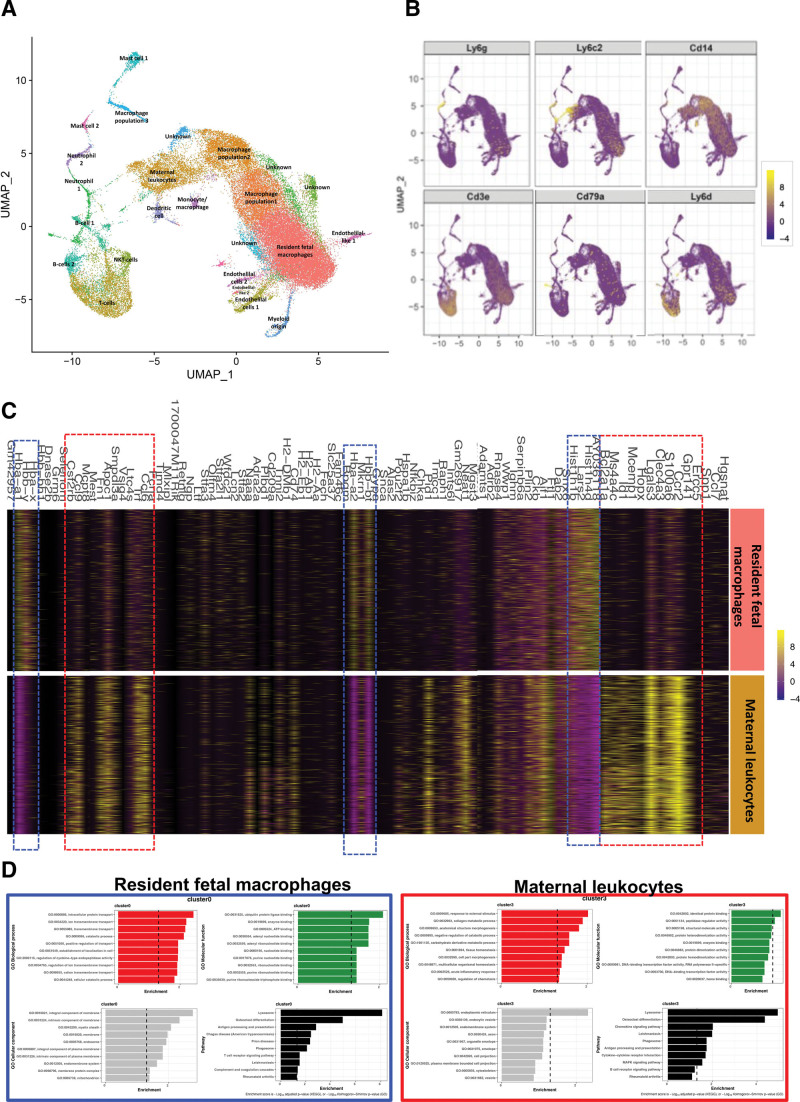
In this study, we use an in vivo neutrophil-driven placental inflammation model through antibody depletion of maternal circulating neutrophils at key stages during time-mated murine pregnancy: embryonic days 4.5 and 7.5. Pregnant mice were culled at embryonic day 14.5 to assess placental and embryonic heart development. A combination of flow cytometry, histology, and bulk RNA sequencing was used to assess placental immune cell composition and tissue architecture. We also used flow cytometry and single-cell sequencing to assess embryonic cardiac immune cells at embryonic day 14.5 and histology and gene analyses to investigate embryonic heart structure and development. In some cases, offspring were culled at postnatal days 5 and 28 to assess any postnatal cardiac changes in immune cells, structure, and cardiac function, as measured by echocardiography.
In the present study, we show that neutrophil-driven placental inflammation leads to inadequate placental development and loss of barrier function. Consequently, placental inflammatory monocytes of maternal origin become capable of migration to the embryonic heart and alter the normal composition of resident cardiac macrophages and cardiac tissue structure. This cardiac impairment continues into postnatal life, hindering normal tissue architecture and function. Last, we show that tempering placental inflammation can prevent this fetal cardiac defect and is sufficient to promote normal cardiac function in postnatal life.
Taken together, these observations provide a mechanistic paradigm whereby neutrophil-driven inflammation in pregnancy can preclude normal embryonic heart development as a direct consequence of poor placental development, which has major implications on cardiac function into adult life.
胎盘心脏发育和胚胎心脏发育是平行发生的,这两个器官在妊娠期间被认为存在相互调节作用。不良的胎盘形成与先天性心脏病有关,后者是婴儿死亡的一个重要原因。然而,改变胎盘发育如何导致先天性心脏病的机制仍未解决。
在这项研究中,我们使用了一种体内中性粒细胞驱动的胎盘炎症模型,通过在时间匹配的小鼠妊娠的关键阶段耗尽母体循环中性粒细胞来实现:胚胎第 4.5 天和第 7.5 天。在胚胎第 14.5 天处死怀孕小鼠以评估胎盘和胚胎心脏发育。我们使用流式细胞术、组织学和批量 RNA 测序来评估胎盘免疫细胞组成和组织结构。我们还使用流式细胞术和单细胞测序在胚胎第 14.5 天评估胚胎心脏免疫细胞,使用组织学和基因分析来研究胚胎心脏结构和发育。在某些情况下,在产后第 5 天和第 28 天处死后代,以评估免疫细胞、结构和心脏功能的任何产后变化,通过超声心动图进行测量。
在本研究中,我们表明中性粒细胞驱动的胎盘炎症导致胎盘发育不足和屏障功能丧失。因此,母体来源的胎盘炎症单核细胞能够迁移到胚胎心脏,并改变常驻心脏巨噬细胞的正常组成和心脏组织结构。这种心脏损伤持续到产后,阻碍了正常的组织结构和功能。最后,我们表明,减轻胎盘炎症可以预防这种胎儿心脏缺陷,并足以促进产后的正常心脏功能。
综上所述,这些观察结果提供了一个机制范例,即在妊娠期间,中性粒细胞驱动的炎症可以阻止正常的胚胎心脏发育,这是由于不良的胎盘发育直接导致的,这对成年后的心脏功能有重大影响。