
一组绝经后女性中脂肪组织与肌肉骨骼单位之间的关系。
Relation between adipose tissue and the musculoskeletal unit in a group of postmenopausal women.
作者信息
Madejska Natalia, Amarowicz Jarosław, Warzecha Maja
机构信息
Institute of Physiotherapy, Faculty of Health Sciences, Jagiellonian University Medical College, Cracow, Poland.
Rehabilitation Clinic, Faculty of Health Sciences, Jagiellonian University Medical College, Cracow, Poland.
出版信息
Prz Menopauzalny. 2022 Dec;21(4):259-265. doi: 10.5114/pm.2022.123345. Epub 2022 Dec 28.
INTRODUCTION
Involutional changes observed during aging increase rapidly in the postmenopausal period. These changes include body composition by affecting bone, muscle and fat tissue. A number of studies have investigated the mutual interaction between bone and muscle tissue, whereas adipose tissue had not been studied thoroughly.The aim of the present study was to assess the relation between fat tissue parameters and the musculoskeletal unit.
MATERIAL AND METHODS
The study was conducted in a group of 120 postmenopausal women with an average age of 69 years (59-81; SD 5.3). All women had been asked to complete a questionnaire (medical history) and underwent a total body composition analysis [bone mineral density (BMD)] testing (spine and/or neck) followed by a handgrip test.
RESULTS
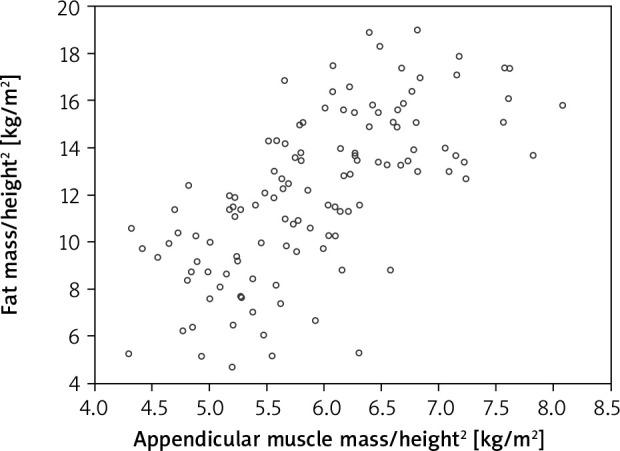
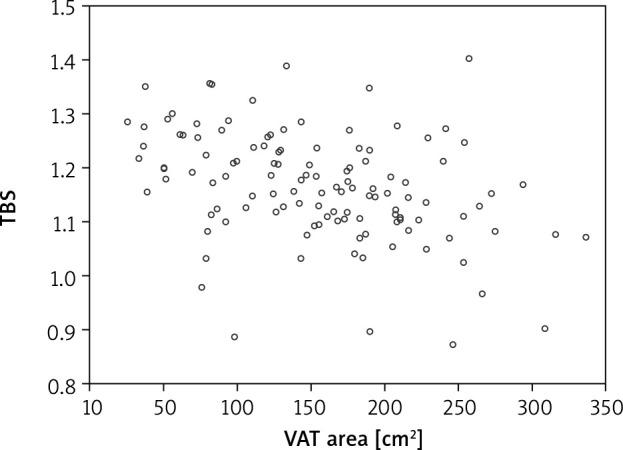
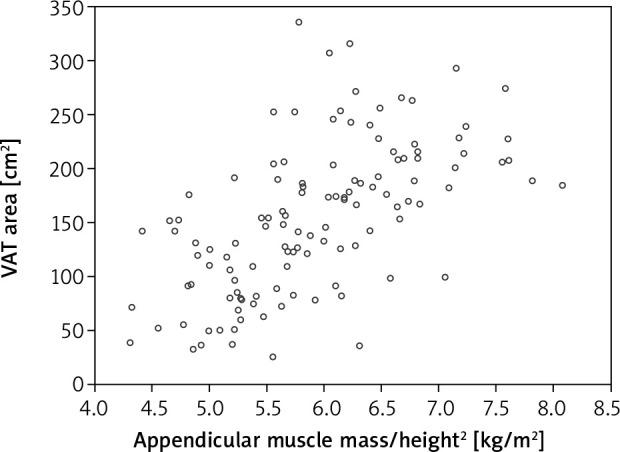
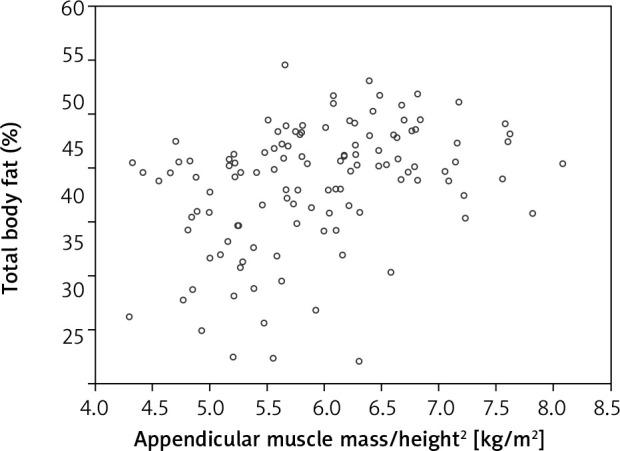
The study revealed strong correlations between appendicular skeletal muscle mass index - appen.lean/height, visceral adipose tissue area (VAT) and fat/mass/height index ( = 0.589 and 0.658 respectively; < 0.001). The results were not supported by muscle strength (handgrip). The authors identified correlations between the bone parameters and adipose tissue but these were identified as weak or moderate ( < 0.05). Special emphasis should be placed on the relation between the trabecular bone score (TBS) and VAT area ( = -0.385, < 0.001).
CONCLUSIONS
There is a strong dependence between muscle and adipose tissues. Despite the fact that the increase in fat is correlated with the growth of muscle tissue, it is not accompanied by better quality of the muscle (handgrip). Bone microarchitecture is more related to VAT area than neck/spine BMD.
引言
衰老过程中观察到的退行性变化在绝经后期迅速增加。这些变化包括通过影响骨骼、肌肉和脂肪组织来改变身体成分。许多研究调查了骨骼和肌肉组织之间的相互作用,而脂肪组织尚未得到充分研究。本研究的目的是评估脂肪组织参数与肌肉骨骼系统之间的关系。
材料与方法
该研究对一组平均年龄为69岁(59 - 81岁;标准差5.3)的120名绝经后女性进行。所有女性都被要求填写一份问卷(病史),并接受全身成分分析[骨矿物质密度(BMD)]测试(脊柱和/或颈部),随后进行握力测试。
结果
研究发现四肢骨骼肌质量指数 - appen.lean/身高、内脏脂肪组织面积(VAT)与脂肪/质量/身高指数之间存在强相关性(分别为r = 0.589和0.658;P < 0.001)。但这些结果未得到肌肉力量(握力)的支持。作者发现骨骼参数与脂肪组织之间存在相关性,但这些相关性被确定为弱或中等(P < 0.05)。应特别强调小梁骨评分(TBS)与VAT面积之间的关系(r = -0.385,P < 0.001)。
结论
肌肉和脂肪组织之间存在很强的依赖性。尽管脂肪增加与肌肉组织生长相关,但这并未伴随着肌肉质量(握力)的改善。骨微结构与VAT面积的关系比与颈部/脊柱BMD的关系更密切。
 Zotero 插件