School of Medicine, Creighton University, Omaha, USA.
Department of Clinical Research, Creighton University, Omaha, USA.
Int J Infect Dis. 2023 May;130:1-5. doi: 10.1016/j.ijid.2023.01.038. Epub 2023 Feb 2.
By better understanding the long-term effects of COVID-19 and assessing rehabilitation placement among the patients in our study, we hope to determine the predictors of rehabilitation needs in individuals suffering from the long-term sequelae of COVID-19.
A retrospective chart review was performed of adult patients with a positive COVID-19 polymerase chain reaction test among multiple hospitals in a regional health system. The main outcomes measured were discharge disposition, total length of hospital stay, and overall all-cause mortality and readmission rates within 30 and 90 days of discharge.
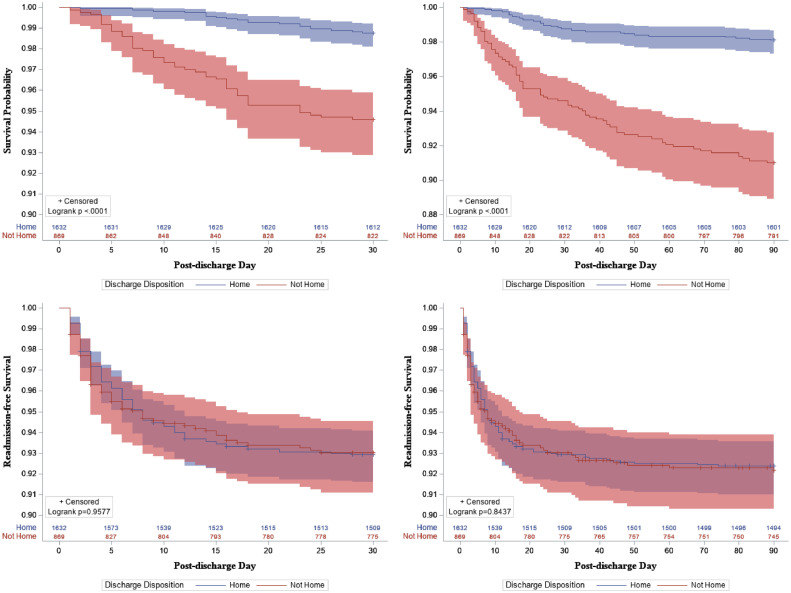
Of the 2502 patients included in the study, we found that 65.2% were discharged to home, while the remaining patients were discharged to home healthcare (33.6%), skilled nursing facilities (31.7%), or long-term acute rehabilitation centers (11.6%). The overall all-cause mortality rate at 30 and 90 days were 2.7% and 4.4%, respectively. The overall all-cause 30-day and 90-day readmission rates were 7.0% and 7.6%, respectively.
Younger age and shorter hospitalization stays were the most important predictors of home discharge. Discharge to home was also significantly associated with lower all-cause mortality rates at 30 and 90 days after discharge.
通过更好地了解 COVID-19 的长期影响,并评估我们研究中的患者的康复安置情况,我们希望确定 COVID-19 长期后遗症患者康复需求的预测因素。
对区域卫生系统多家医院的 COVID-19 聚合酶链反应检测呈阳性的成年患者进行了回顾性图表审查。主要测量的结果是出院处置、总住院时间以及出院后 30 天和 90 天内的全因死亡率和再入院率。
在纳入研究的 2502 名患者中,我们发现 65.2%的患者出院回家,其余患者出院到家庭医疗保健(33.6%)、熟练护理设施(31.7%)或长期急性康复中心(11.6%)。30 天和 90 天的全因死亡率分别为 2.7%和 4.4%。全因 30 天和 90 天再入院率分别为 7.0%和 7.6%。
年龄较小和住院时间较短是出院回家的最重要预测因素。出院回家也与出院后 30 天和 90 天的全因死亡率显著降低相关。