Department of Epidemiology and Public Health, Swiss Tropical and Public Health Institute, Allschwil, Switzerland.
University of Basel, Basel, Switzerland.
JAMA Netw Open. 2023 Feb 1;6(2):e2253806. doi: 10.1001/jamanetworkopen.2022.53806.
Antimicrobial resistance continues to spread rapidly at a global scale. Little evidence exists on the association of antimicrobial stewardship programs (ASPs) with the consumption of antibiotics across health care and income settings.
To synthesize current evidence regarding the association between antimicrobial stewardship programs and the consumption of antibiotics globally.
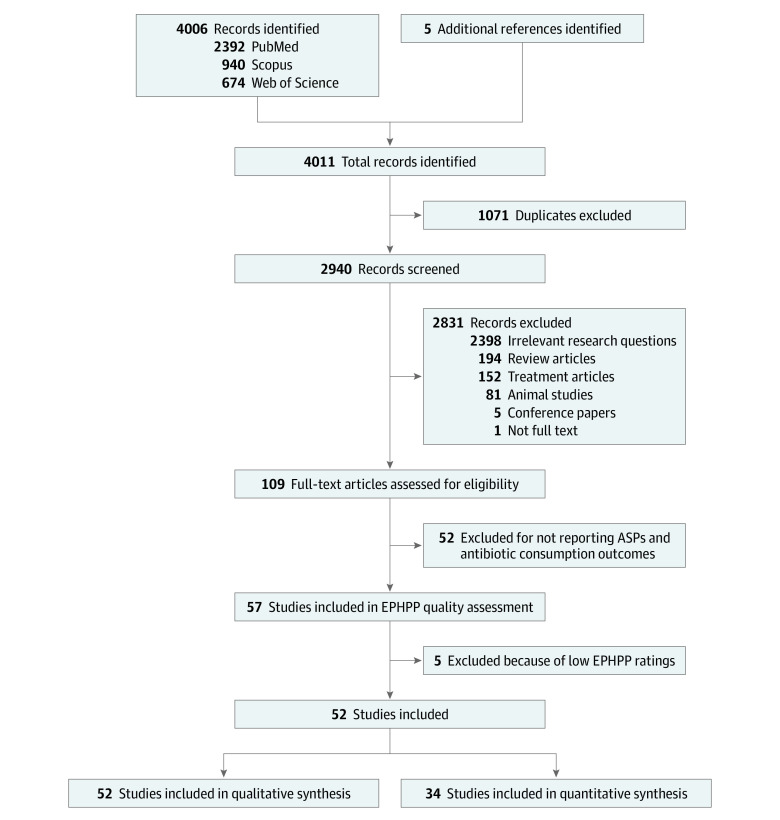
PubMed, Web of Science, and Scopus databases were searched from August 1, 2010, to Aug 1, 2020. Additional studies from the bibliography sections of previous systematic reviews were included.
Original studies of the association of ASPs with antimicrobial consumption across health care and income settings. Animal and environmental studies were excluded.
Following the Preferred Reporting Items in Systematic Reviews and Meta-Analyses guideline, the pooled association of targeted ASPs with antimicrobial consumption was measured using multilevel random-effects models. The Effective Public Health Practice Project quality assessment tool was used to assess study quality.
The main outcome measures were proportion of patients receiving an antibiotic prescription and defined daily doses per 100 patient-days.
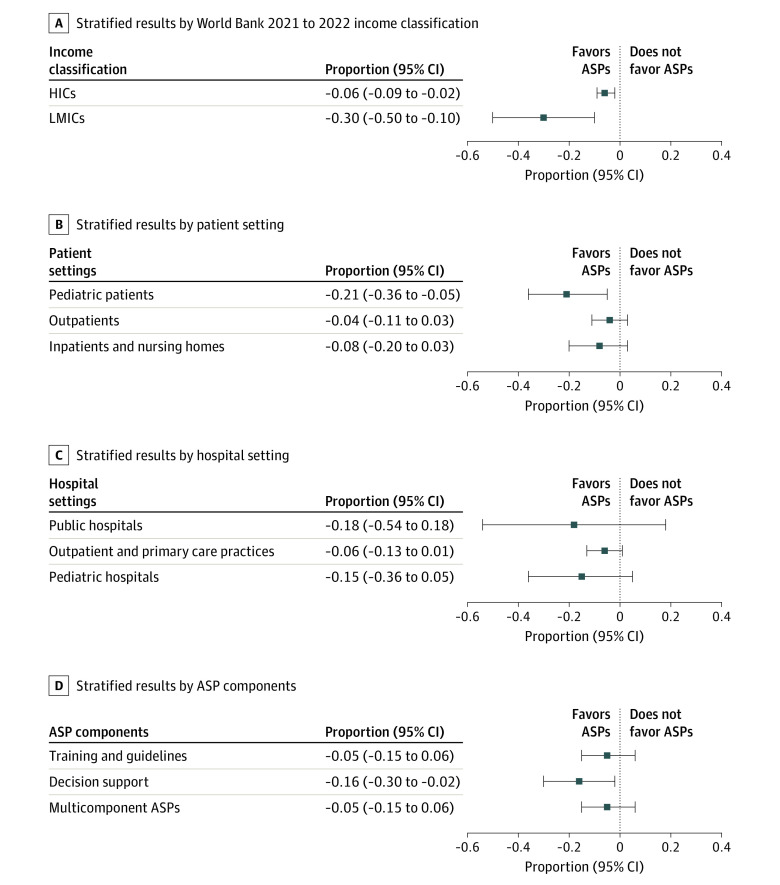
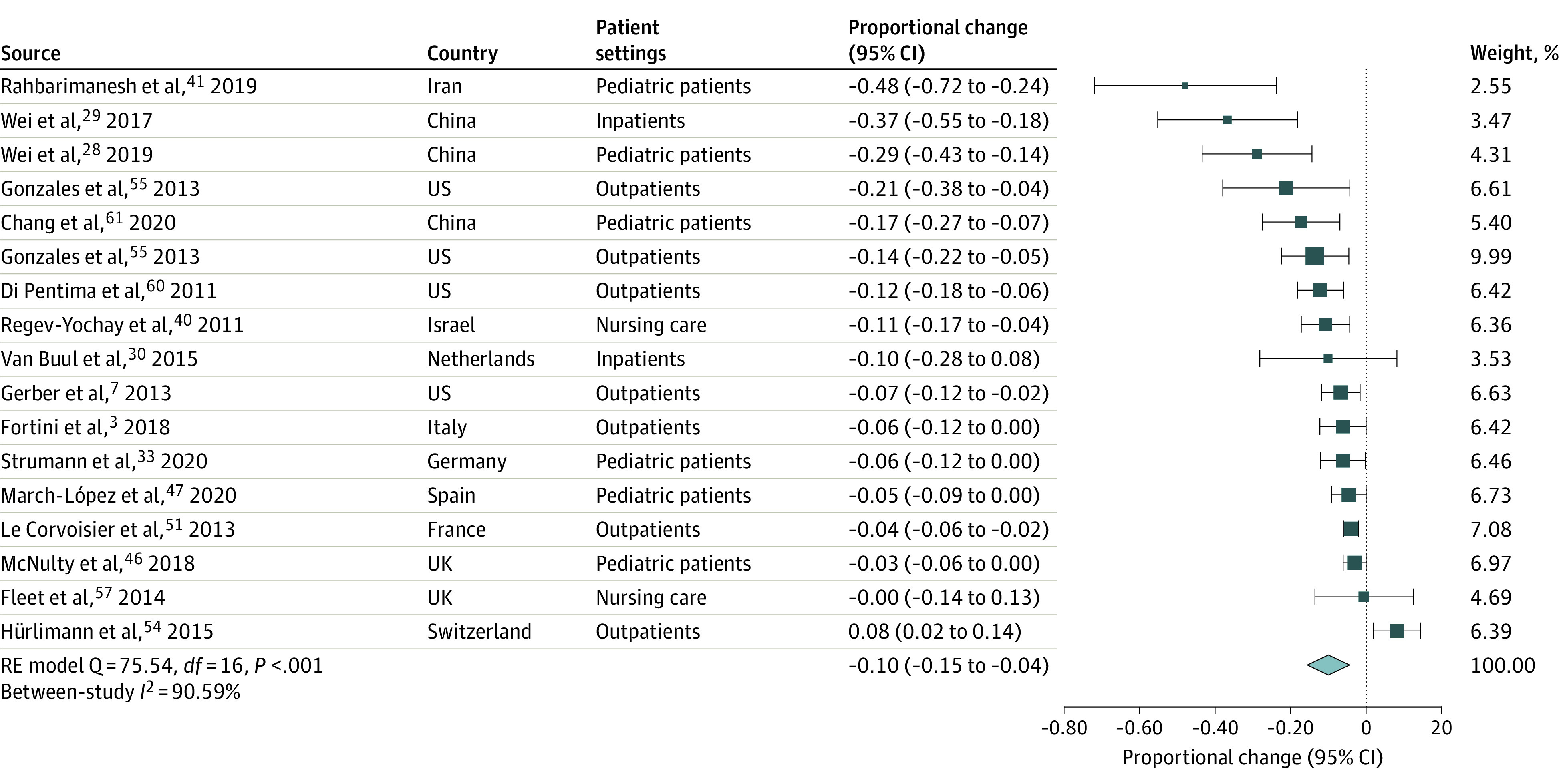
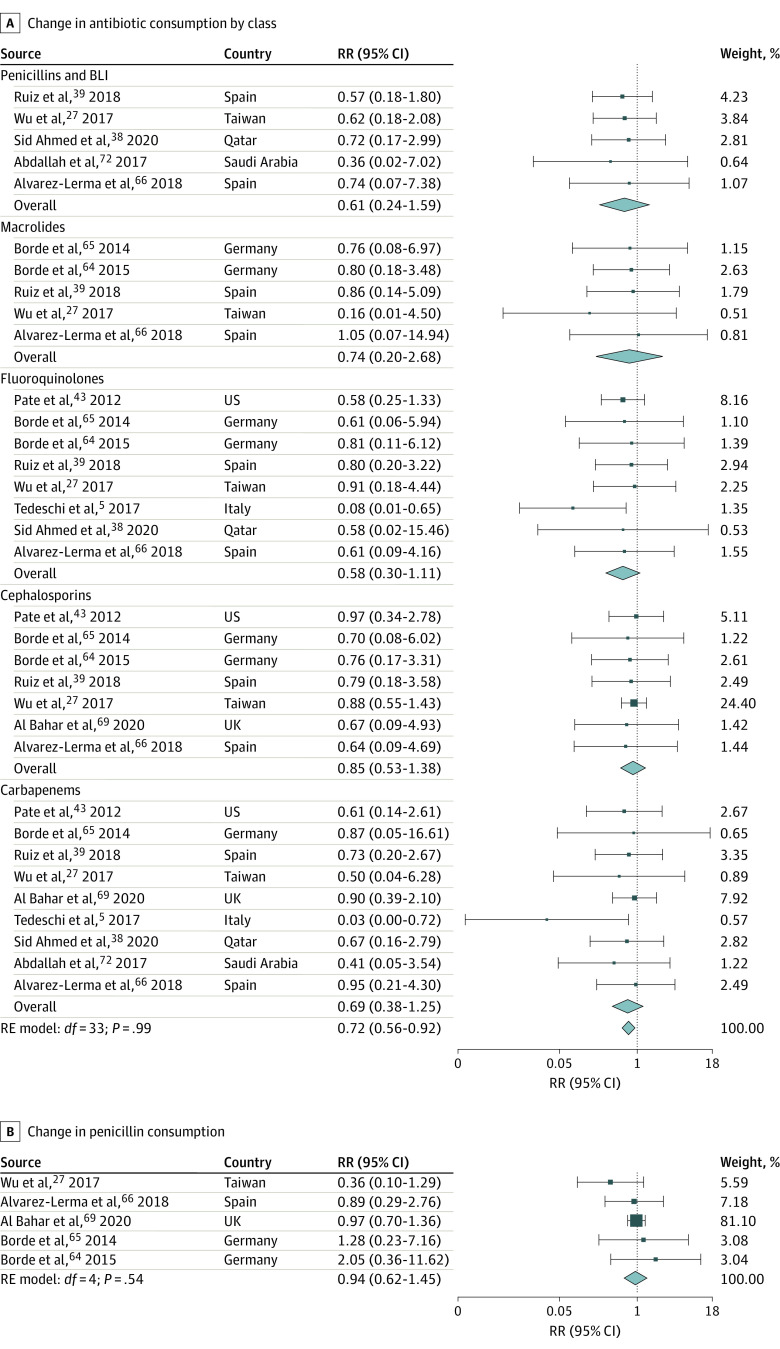
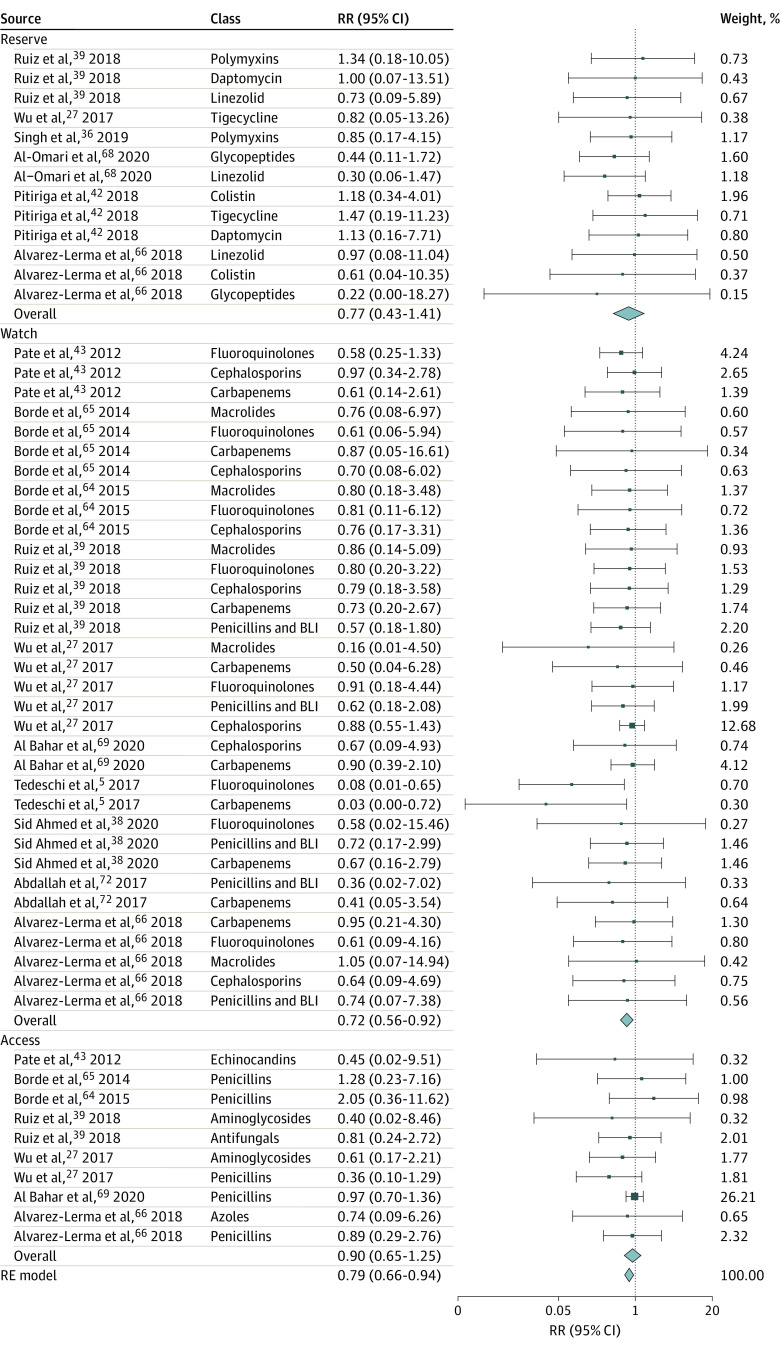
Overall, 52 studies (with 1 794 889 participants) measured the association between ASPs and antimicrobial consumption and were included, with 40 studies conducted in high-income countries and 12 in low- and middle-income countries (LMICs). ASPs were associated with a 10% (95% CI, 4%-15%) reduction in antibiotic prescriptions and a 28% reduction in antibiotic consumption (rate ratio, 0.72; 95% CI, 0.56-0.92). ASPs were also associated with a 21% (95% CI, 5%-36%) reduction in antibiotic consumption in pediatric hospitals and a 28% reduction in World Health Organization watch groups antibiotics (rate ratio, 0.72; 95% CI, 0.56-0.92).
In this systematic review and meta-analysis, ASPs appeared to be effective in reducing antibiotic consumption in both hospital and nonhospital settings. Impact assessment of ASPs in resource-limited settings remains scarce; further research is needed on how to best achieve reductions in antibiotic use in LMICs.
抗菌药物耐药性在全球范围内迅速蔓延。关于抗菌药物管理计划(ASPs)与医疗保健和收入环境中抗生素使用之间的关联,几乎没有证据。
综合目前关于全球抗菌药物管理计划与抗生素使用之间关联的证据。
从 2010 年 8 月 1 日至 2020 年 8 月 1 日,在 PubMed、Web of Science 和 Scopus 数据库中进行了搜索。还包括以前系统评价的参考文献部分的其他研究。
针对医疗保健和收入环境中 ASPs 与抗菌药物使用之间关联的原始研究。排除了动物和环境研究。
根据系统评价和荟萃分析的首选报告项目,使用多级随机效应模型测量靶向 ASPs 与抗菌药物使用的综合关联。使用有效公共卫生实践项目质量评估工具评估研究质量。
主要结果指标是接受抗生素处方的患者比例和每 100 名患者天的定义日剂量。
共有 52 项研究(涉及 1794889 名参与者)测量了 ASPs 与抗菌药物使用之间的关联,并将其纳入研究,其中 40 项研究在高收入国家进行,12 项在低收入和中等收入国家(LMICs)进行。ASPs 与抗生素处方减少 10%(95%CI,4%-15%)和抗生素使用减少 28%相关(率比,0.72;95%CI,0.56-0.92)。ASPs 还与儿科医院抗生素使用减少 21%(95%CI,5%-36%)和世界卫生组织观察药物组抗生素使用减少 28%相关(率比,0.72;95%CI,0.56-0.92)。
在这项系统评价和荟萃分析中,ASPs 似乎在减少医院和非医院环境中的抗生素使用方面是有效的。在资源有限的环境中对抗菌药物管理计划影响的评估仍然很少;需要进一步研究如何在中低收入国家实现抗生素使用的减少。