Matio Kemkuignou Blondelle, Schweizer Lena, Lambert Christopher, Anoumedem Elodie Gisèle M, Kouam Simeon F, Stadler Marc, Marin-Felix Yasmina
Department of Microbial Drugs, Helmholtz Centre for Infection Research (HZI) and German Centre for Infection Research (DZIF), Partner Site Hannover/Braunschweig, Inhoffenstrasse 7, 38124 Braunschweig, Germany Department of Microbial Drugs, Helmholtz Centre for Infection Research (HZI) and German Centre for Infection Research (DZIF) Braunschweig Germany.
Institute of Microbiology, Technische Universität Braunschweig, Spielmannstraße 7, 38106 Braunschweig, Germany Technische Universität Braunschweig Braunschweig Germany.
MycoKeys. 2022 Jun 14;90:85-118. doi: 10.3897/mycokeys.90.82871. eCollection 2022.
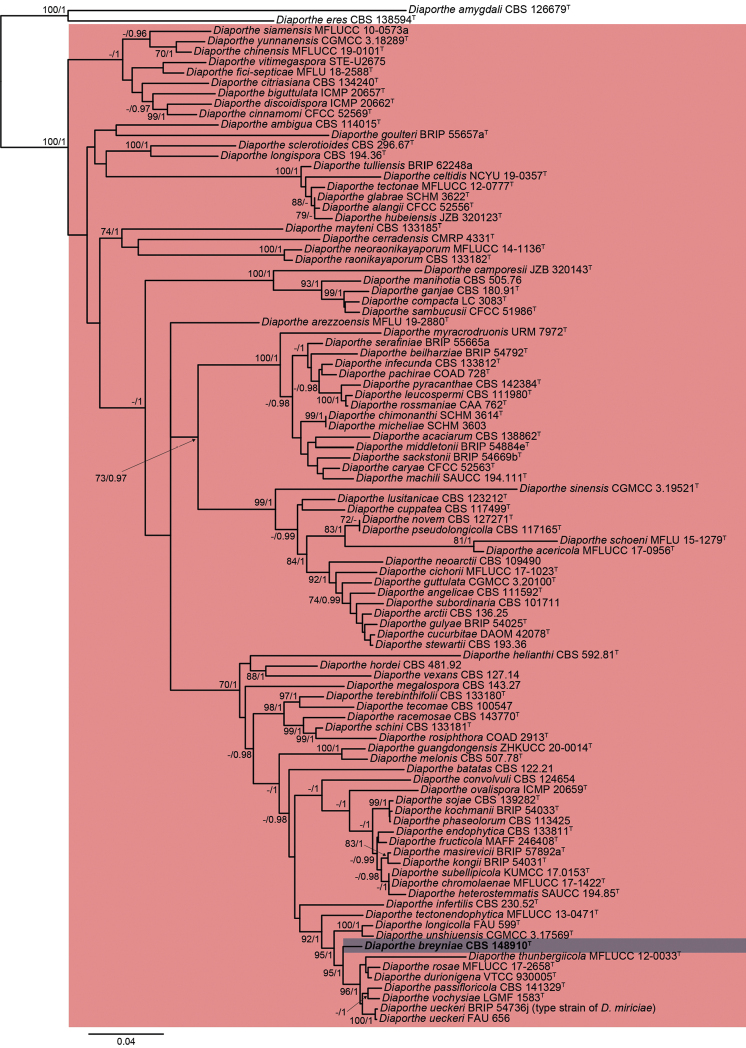
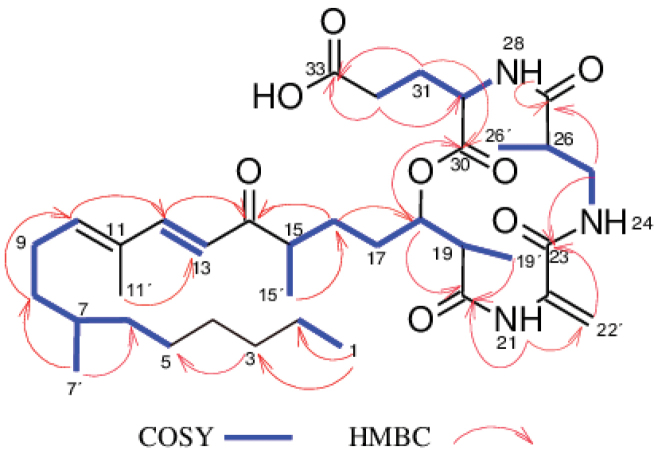
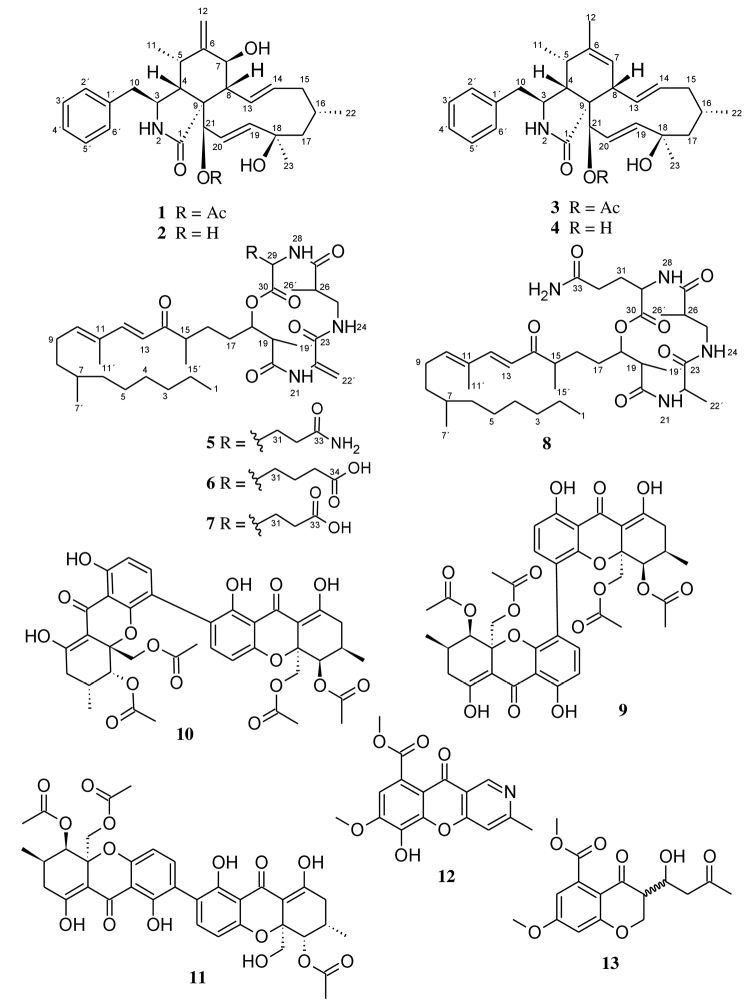
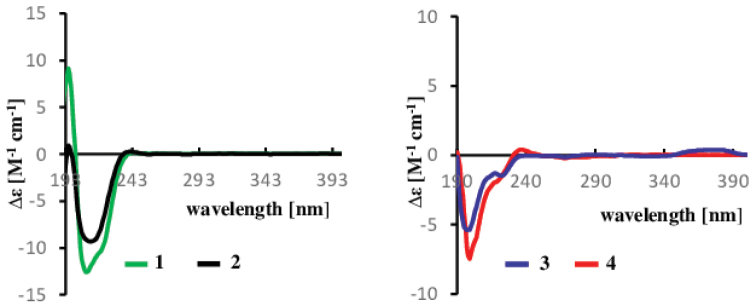
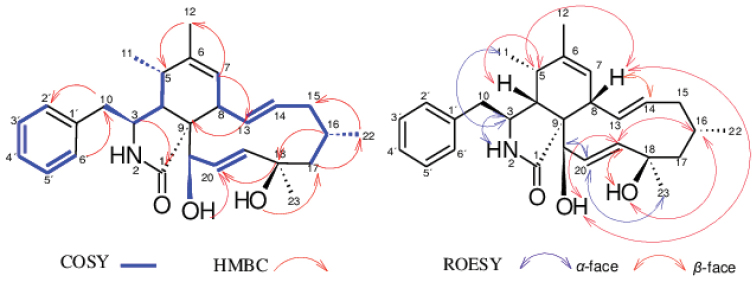
During the course of a study on the biodiversity of endophytes from Cameroon, a fungal strain was isolated. A multigene phylogenetic inference using five DNA loci revealed that this strain represents an undescribed species of , which is introduced here as . Investigation into the chemistry of this fungus led to the isolation of two previously undescribed secondary metabolites for which the trivial names fusaristatins G () and H () are proposed, together with eleven known compounds. The structures of all of the metabolites were established by using one-dimensional (1D) and two-dimensional (2D) Nuclear Magnetic Resonance (NMR) spectroscopic data in combination with High-Resolution ElectroSpray Ionization Mass Spectrometry (HR-ESIMS) data. The absolute configuration of phomopchalasin N (), which was reported for the first time concurrently to the present publication, was determined by analysis of its Rotating frame Overhauser Effect SpectroscopY (ROESY) spectrum and by comparison of its Electronic Circular Dichroism (ECD) spectrum with that of related compounds. A selection of the isolated secondary metabolites were tested for antimicrobial and cytotoxic activities, and compounds and showed weak antifungal and antibacterial activity. On the other hand, compound showed moderate cytotoxic activity against all tested cancer cell lines with IC values in the range of 5.8-45.9 µM. The latter was found to be less toxic than the other isolated cytochalasins (-) and gave hints in regards to the structure-activity relationship (SAR) of the studied cytochalasins. Fusaristatin H () also exhibited weak cytotoxicity against KB3.1 cell lines with an IC value of 30.3 µM. .
在一项关于喀麦隆内生菌生物多样性的研究过程中,分离出了一种真菌菌株。使用五个DNA位点进行的多基因系统发育推断表明,该菌株代表了一个未描述的物种,在此将其命名为 。对这种真菌的化学研究导致分离出两种以前未描述的次生代谢产物,分别为其提出了俗名镰刀菌素G( )和H( ),以及十一种已知化合物。所有代谢产物的结构均通过结合一维(1D)和二维(2D)核磁共振(NMR)光谱数据以及高分辨率电喷雾电离质谱(HR-ESIMS)数据来确定。与本出版物同时首次报道的稻瘟菌素N( )的绝对构型,是通过分析其旋转框架奥弗豪泽效应光谱(ROESY)以及将其电子圆二色性(ECD)光谱与相关化合物的光谱进行比较来确定的。对部分分离出的次生代谢产物进行了抗菌和细胞毒性活性测试,化合物 和 表现出较弱的抗真菌和抗菌活性。另一方面,化合物 对所有测试的癌细胞系均表现出中等程度的细胞毒性,IC值在5.8 - 45.9 μM范围内。发现后者的毒性低于其他分离出的细胞松弛素(-),并为所研究细胞松弛素的构效关系(SAR)提供了线索。镰刀菌素H( )对KB3.1细胞系也表现出较弱的细胞毒性,IC值为30.3 μM。