Ikeda Sorato, Kobayashi Masanori, Aoki Soken, Terukina Takayuki, Kanazawa Takanori, Kojima Hiroyuki, Kondo Hiromu
Pharmaceutical Research and Technology Labs., Technology, Astellas Pharma Inc., 180 Ozumi, Yaizu, Shizuoka 425-0072, Japan.
School of Pharmaceutical Sciences, University of Shizuoka, 52-1 Yada, Suruga-ku, Shizuoka 422-8526, Japan.
Pharmaceutics. 2023 Jan 24;15(2):395. doi: 10.3390/pharmaceutics15020395.
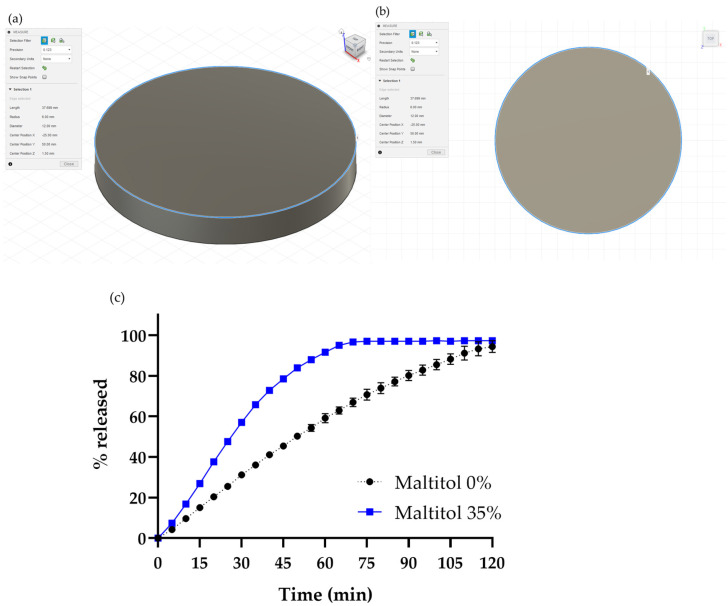
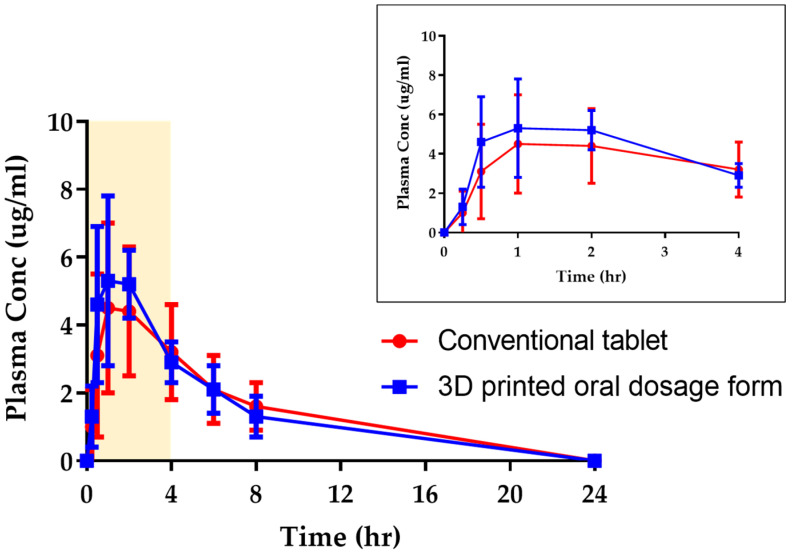
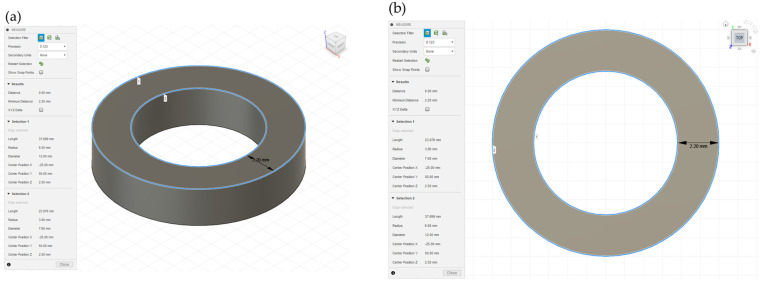
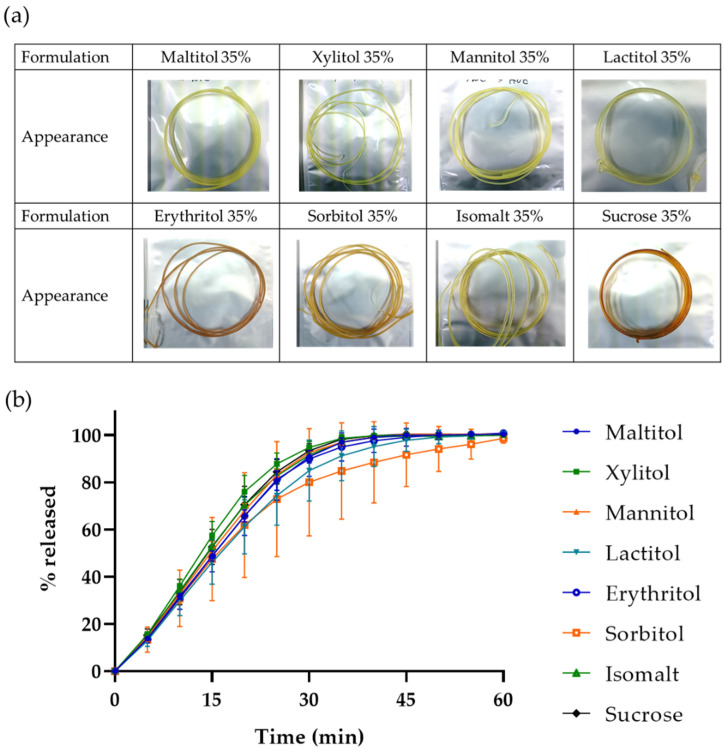
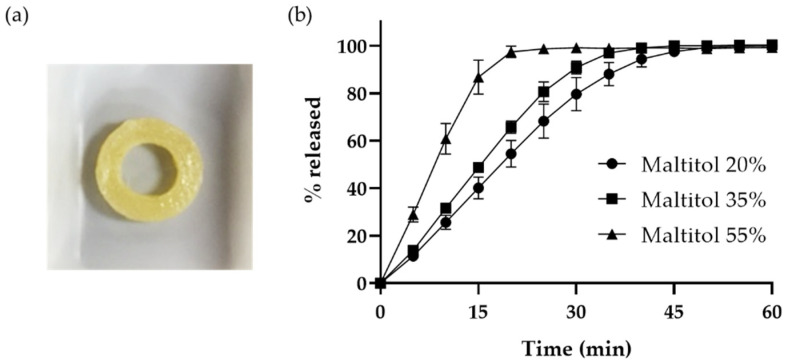
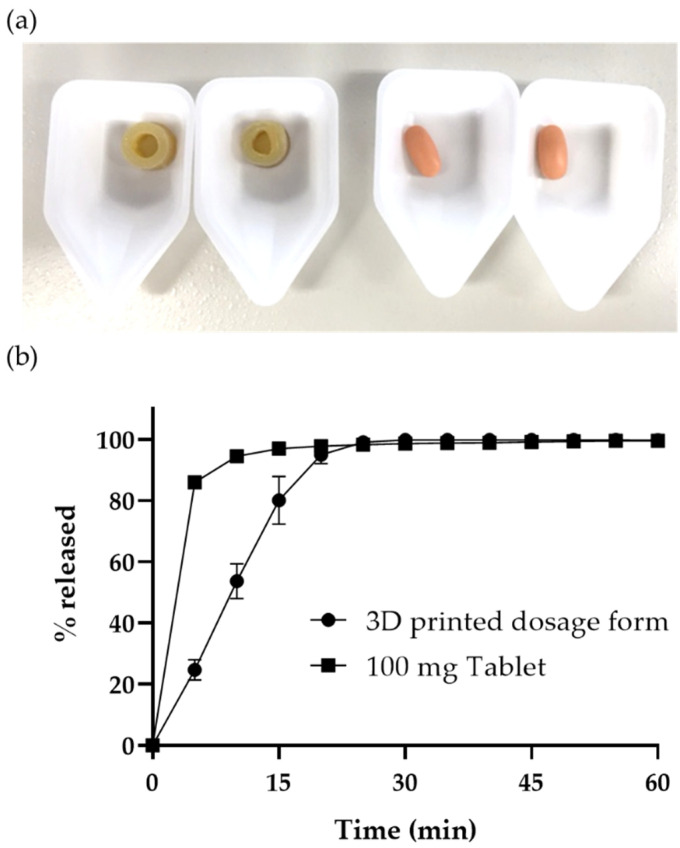
Three-dimensional printing technology holds marked promise for the pharmaceutical industry and is now under intense investigation. Most research is aimed at a greater efficiency in printing oral dosage forms using powder bed printing or fused deposition modeling (FDM). Oral dosage forms printed by FDM tend to be hard objects, which reduce the risk of cracking and chipping. However, one challenge in printing oral dosage forms via FDM is achieving rapid drug release, because the materials for FDM are basically thermoplastic polymers with slow drug release properties. In this study, we investigated printing a fast-dissolving oral dosage form by adding sugar alcohol to a poly(vinyl alcohol)-based formulation for FDM. Filaments which contain sugar alcohol were successfully prepared, and objects were printed with them as oral dosage forms by FDM. On drug release testing, a printed oral dosage form in a ring shape which contained 55% maltitol showed a more than 85% drug release in 15 min. In vivo oral absorption of this printed oral dosage form in dogs was comparable to that of a conventional fast-dissolving tablet. Of particular interest, the drug release profile and drug amount of the oral dosage forms can be easily controlled by a change in shape using 3D Computer Aided Design. These characteristics will encourage the prevalence of FDM by the pharmaceutical industry, and contribute to the promotion of personalized medicine.
三维打印技术在制药行业有着显著的前景,目前正处于深入研究阶段。大多数研究旨在通过粉末床打印或熔融沉积建模(FDM)提高口服剂型的打印效率。通过FDM打印的口服剂型往往是坚硬的物体,这降低了开裂和剥落的风险。然而,通过FDM打印口服剂型的一个挑战是实现快速药物释放,因为用于FDM的材料基本上是具有缓慢药物释放特性的热塑性聚合物。在本研究中,我们研究了通过向基于聚乙烯醇的FDM配方中添加糖醇来打印速溶口服剂型。成功制备了含有糖醇的长丝,并通过FDM将其作为口服剂型打印出物体。在药物释放测试中,含有55%麦芽糖醇的环形打印口服剂型在15分钟内药物释放率超过85%。这种打印口服剂型在犬体内的口服吸收与传统速溶片相当。特别值得注意的是,口服剂型的药物释放曲线和药物量可以通过使用三维计算机辅助设计改变形状来轻松控制。这些特性将促进制药行业对FDM的应用,并有助于推动个性化医疗。