Dahiya Devika, Matos Claudia Marques, Lim Ming, Madureira Ines, Duarte Sofia, Byrne Susan, Rossor Thomas
The School of Medicine and Department of Paediatrics, Royal College of Surgeons in Ireland, Department of Paediatric Neurology, Dublin 2, Ireland.
Pediatric Neurology Department, Hospital Dona Estefânia, Centro Hospitalar Universitário Lisboa Central, Lisboa, Portugal.
Brain Behav Immun Health. 2023 Feb 11;28:100602. doi: 10.1016/j.bbih.2023.100602. eCollection 2023 Mar.
Viral or bacterial infections can trigger auto-immune inflammatory reactions and conditions in children. Self-reactivity arises due to similarities in molecular structures between pathogenic microorganisms and regular body structures with consequent immune-cross reactions. Reactivation of latent Varicella Zoster Virus (VZV) infections can cause neurological sequalae, including cerebellitis, post-herpetic neuralgias, meningo/encephalitis, vasculopathy and myelopathy. We propose a syndrome caused by auto-immune reactivity triggered by molecular mimicry between VZV and the brain, culminating in a post-infectious psychiatric syndrome with childhood VZV infections.
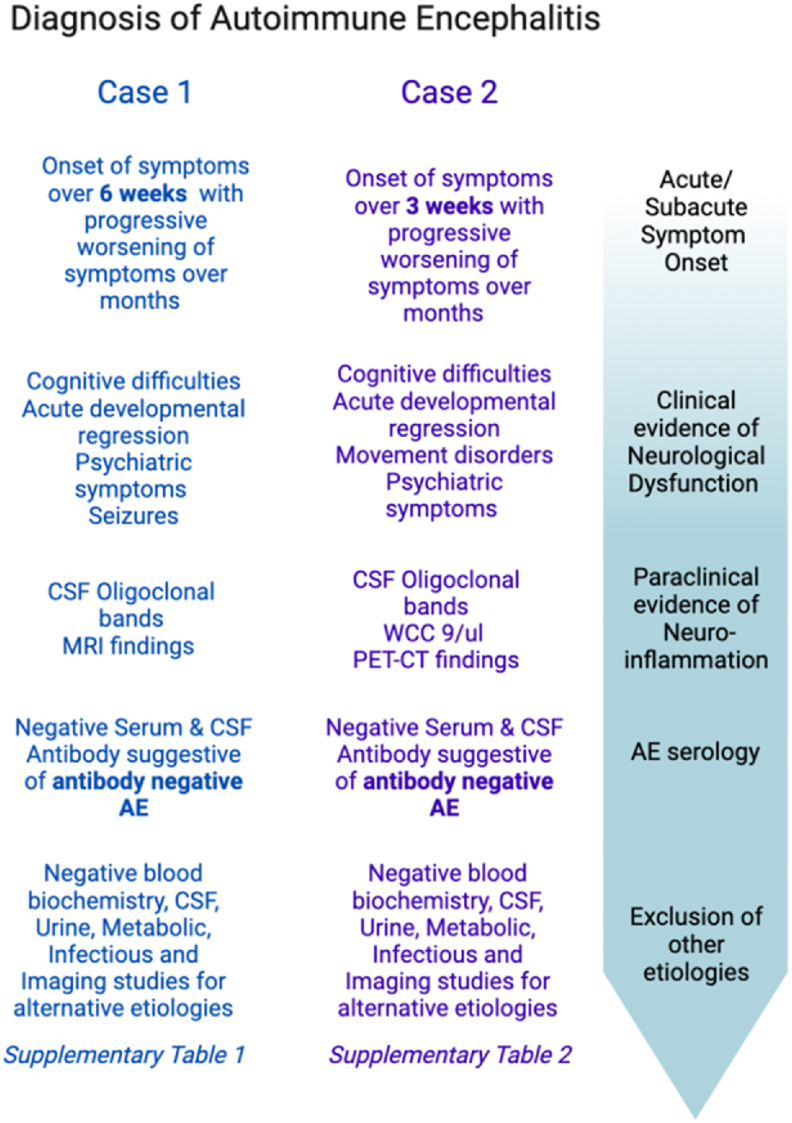
Two individuals, a 6-year-old male and 10-year-old female developed a neuro-psychiatric syndrome 3-6 weeks following a confirmed VZV infection with intrathecal oligoclonal bands. The 6-year-old male presented with a myasthenic syndrome, behavior deterioration and regression in school, he was poorly responsive to IVIG and risperidone, however had a pronounced response to steroid treatment. The 10-year-old female presented with marked insomnia, agitation, and behavioral regression as well as mild bradykinesia. A trial of neuroleptics and sedatives resulted in a mild unsustained reduction in psychomotor agitation and IVIG was also unsuccessful, however the patient was very responsive to steroid therapy.
Psychiatric syndromes with evidence of intrathecal inflammation temporally related to VZV infections that are responsive to immune modulation have not been described before. Here we report two cases demonstrating neuro-psychiatric symptoms following VZV infection, with evidence of persistent CNS inflammation following the resolution of infection, and response to immune modulation.
病毒或细菌感染可引发儿童自身免疫性炎症反应及病症。由于致病微生物与正常身体结构之间分子结构相似,从而产生免疫交叉反应,导致自身反应性。潜伏性水痘带状疱疹病毒(VZV)感染的重新激活可引起神经后遗症,包括小脑炎、疱疹后神经痛、脑膜/脑炎、血管病变和脊髓病。我们提出一种由VZV与大脑之间的分子模拟引发的自身免疫反应性所致的综合征,最终导致儿童VZV感染后的感染后精神综合征。
两名患者,一名6岁男性和一名10岁女性,在确诊VZV感染并出现鞘内寡克隆带3 - 6周后出现神经精神综合征。6岁男性表现为肌无力综合征、行为恶化及学业退步,对静脉注射免疫球蛋白(IVIG)和利培酮反应不佳,但对类固醇治疗反应显著。10岁女性表现为明显失眠、烦躁和行为退步以及轻度运动迟缓。使用抗精神病药和镇静剂试验使精神运动性激越有轻度短暂缓解,IVIG治疗也未成功,但患者对类固醇治疗反应良好。
以前尚未描述过与VZV感染在时间上相关且对免疫调节有反应的伴有鞘内炎症证据的精神综合征。在此我们报告两例VZV感染后出现神经精神症状的病例,有感染消退后持续性中枢神经系统炎症的证据,且对免疫调节有反应。