School of Natural Sciences, Institute for Advanced Study, Princeton, NJ 08540.
Center for Cosmology and Particle Physics, Department of Physics, New York University, New York, NY 10003.
Proc Natl Acad Sci U S A. 2023 Mar 21;120(12):e2202074120. doi: 10.1073/pnas.2202074120. Epub 2023 Mar 17.
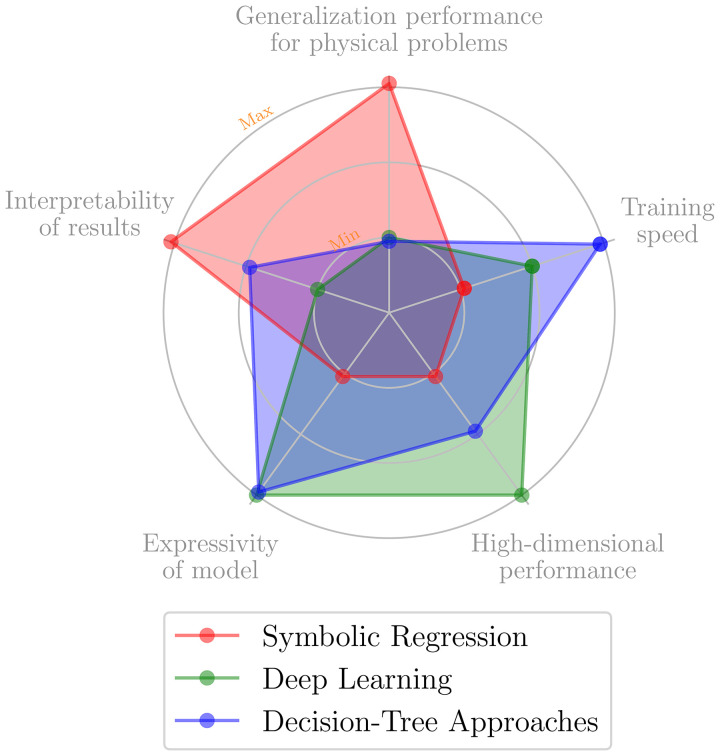
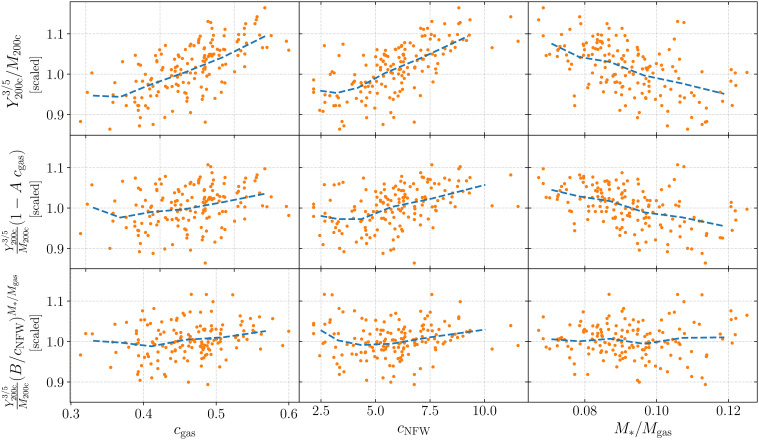
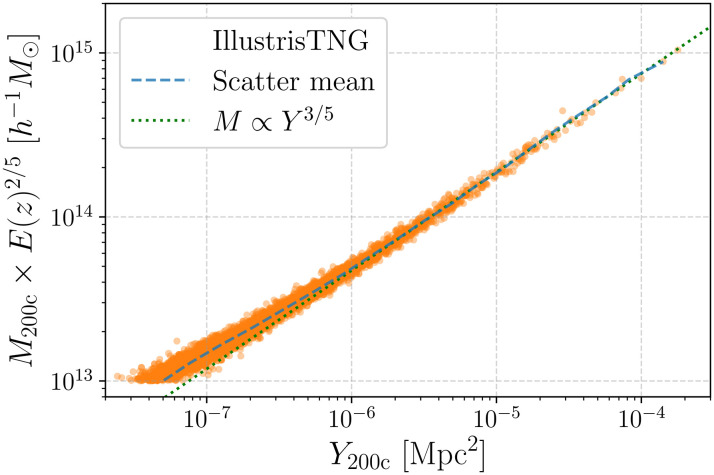
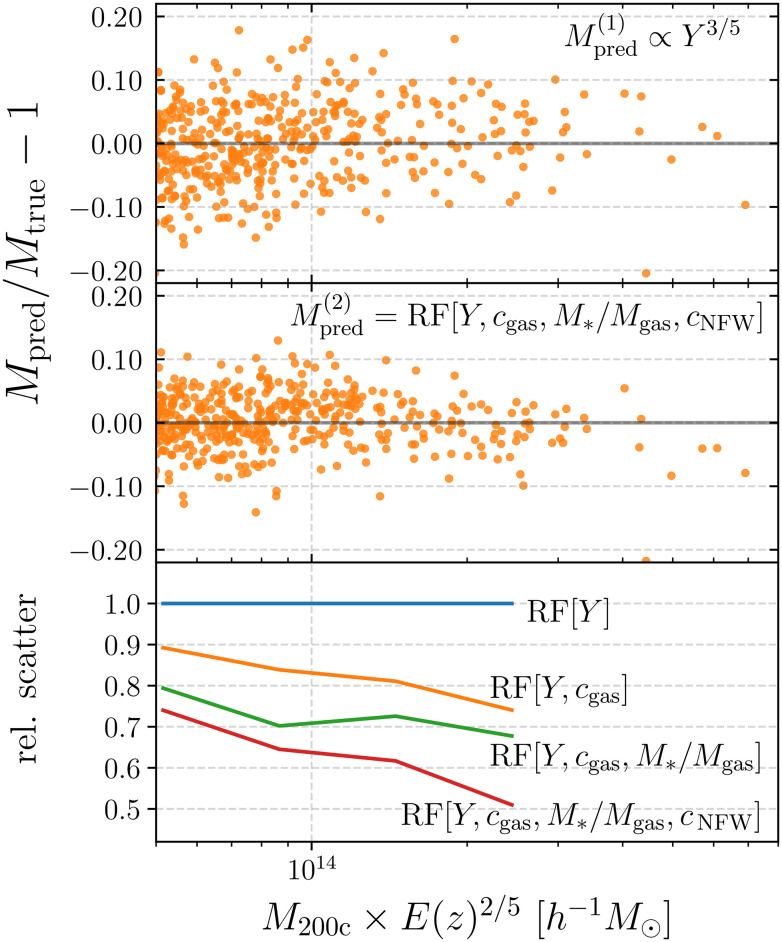
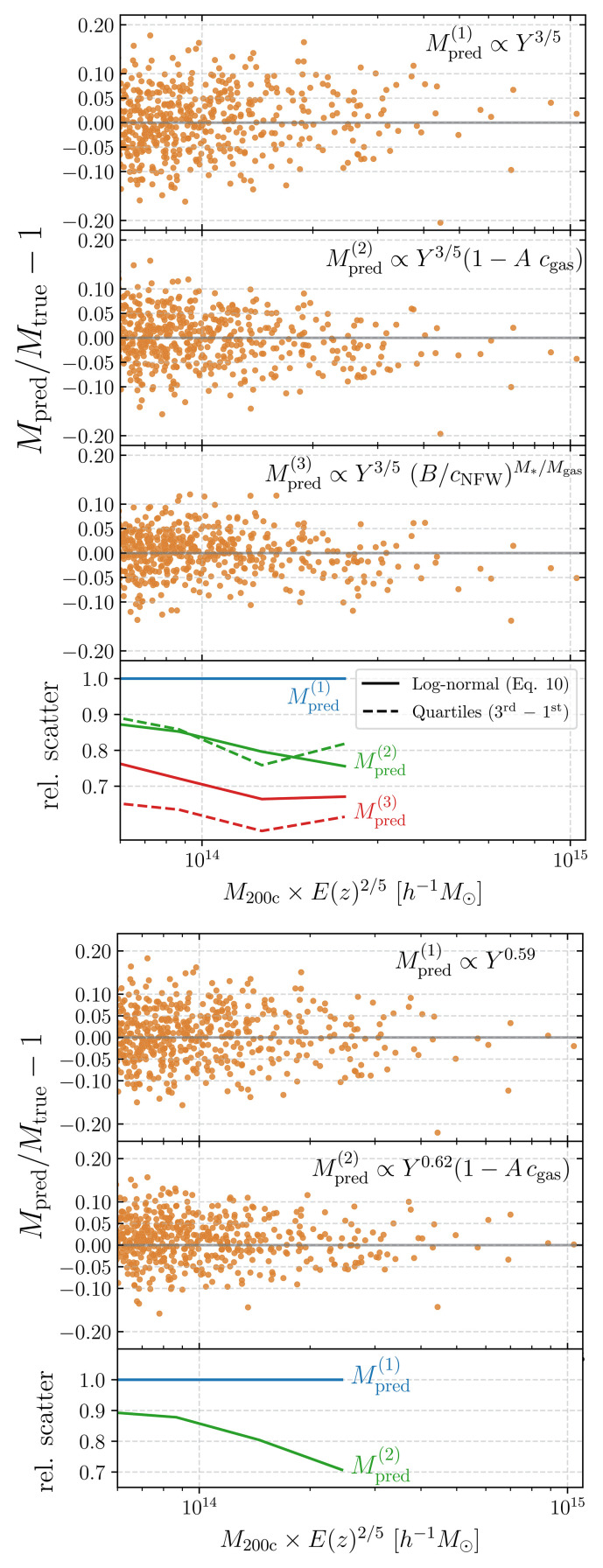
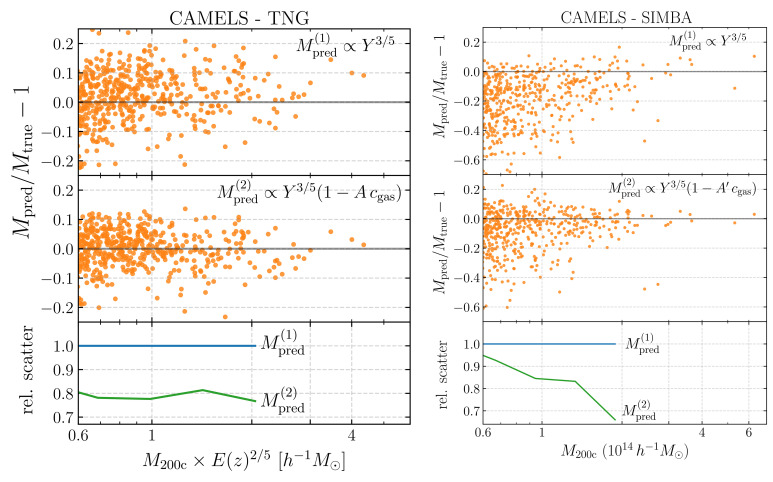
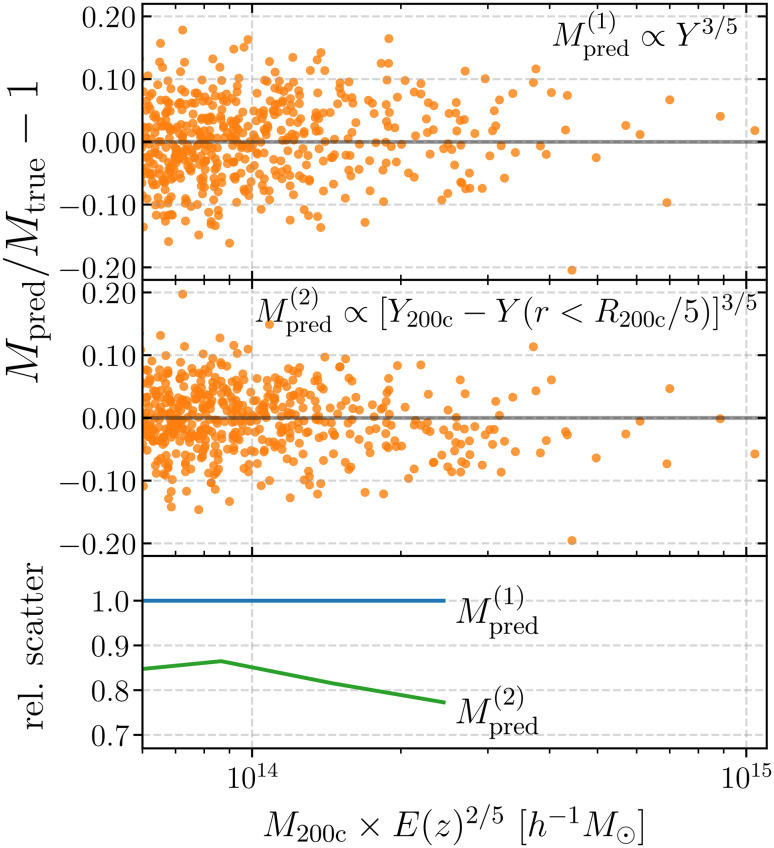
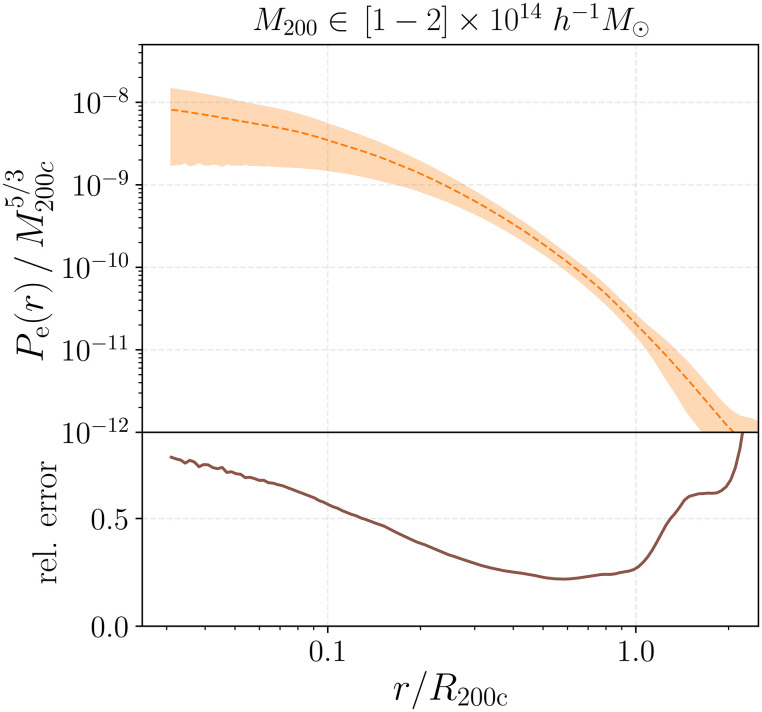
Complex astrophysical systems often exhibit low-scatter relations between observable properties (e.g., luminosity, velocity dispersion, oscillation period). These scaling relations illuminate the underlying physics, and can provide observational tools for estimating masses and distances. Machine learning can provide a fast and systematic way to search for new scaling relations (or for simple extensions to existing relations) in abstract high-dimensional parameter spaces. We use a machine learning tool called symbolic regression (SR), which models patterns in a dataset in the form of analytic equations. We focus on the Sunyaev-Zeldovich flux-cluster mass relation ( - ), the scatter in which affects inference of cosmological parameters from cluster abundance data. Using SR on the data from the IllustrisTNG hydrodynamical simulation, we find a new proxy for cluster mass which combines and concentration of ionized gas (): ∝ ≡ (1 - ). reduces the scatter in the predicted by ∼20 - 30% for large clusters ( ≳ 10 ), as compared to using just . We show that the dependence on is linked to cores of clusters exhibiting larger scatter than their outskirts. Finally, we test on clusters from CAMELS simulations and show that is robust against variations in cosmology, subgrid physics, and cosmic variance. Our results and methodology can be useful for accurate multiwavelength cluster mass estimation from upcoming CMB and X-ray surveys like ACT, SO, eROSITA and CMB-S4.
复杂的天体物理系统通常表现出可观测性质之间的低散射关系(例如,光度、速度弥散、振荡周期)。这些标度关系揭示了潜在的物理机制,并为估计质量和距离提供了观测工具。机器学习可以提供一种快速而系统的方法,在抽象的高维参数空间中搜索新的标度关系(或对现有关系进行简单扩展)。我们使用一种名为符号回归(SR)的机器学习工具,该工具以解析方程的形式对数据集的模式进行建模。我们专注于 Sunyaev-Zeldovich 通量-星系团质量关系( - ),其散射影响了从星系团丰度数据推断宇宙学参数的结果。我们在 IllustrisTNG 流体动力学模拟的数据上使用 SR,发现了一个新的星系团质量代理,它结合了 和电离气体的浓度(): ∝ ≡ (1 - )。与仅使用 相比, 减少了大星系团(≳10 )中预测 的散射约 20-30%。我们表明,对 的依赖与表现出比其外部更大散射的星系团核心有关。最后,我们在 CAMELS 模拟的星系团上测试了 ,并表明 对宇宙学、子网格物理和宇宙方差的变化具有稳健性。我们的结果和方法可以为即将进行的 ACT、SO、eROSITA 和 CMB-S4 等 CMB 和 X 射线巡天中从多波长准确估计星系团质量提供有用的信息。