
巴西、墨西哥和秘鲁男男性行为者(MSM)中艾滋病病毒自我检测(HIVST)的知晓情况、意愿及障碍:一项基于网络的横断面研究。
Awareness, willingness and barriers to HIV Self-testing (HIVST) among Men who Have Sex with Men (MSM) in Brazil, Mexico, and Peru: A web-based cross-sectional study.
作者信息
Elorreaga Oliver A, Torres Thiago S, Vega-Ramirez E Hamid, Konda Kelika A, Hoagland Brenda, Benedetti Marcos, Pimenta Cristina, Diaz-Sosa Dulce, Robles-Garcia Rebeca, Grinsztejn Beatriz, Caceres Carlos F, Veloso Valdilea G
机构信息
Centro de Investigación Interdisciplinaria en Sexualidad Sida y Sociedad, UPCH, Lima, Peru.
Instituto Nacional de Infectologia Evandro Chagas, Fundação Oswaldo Cruz (INI-Fiocruz), Rio de Janeiro, Brazil.
出版信息
PLOS Glob Public Health. 2022 Jul 29;2(7):e0000678. doi: 10.1371/journal.pgph.0000678. eCollection 2022.
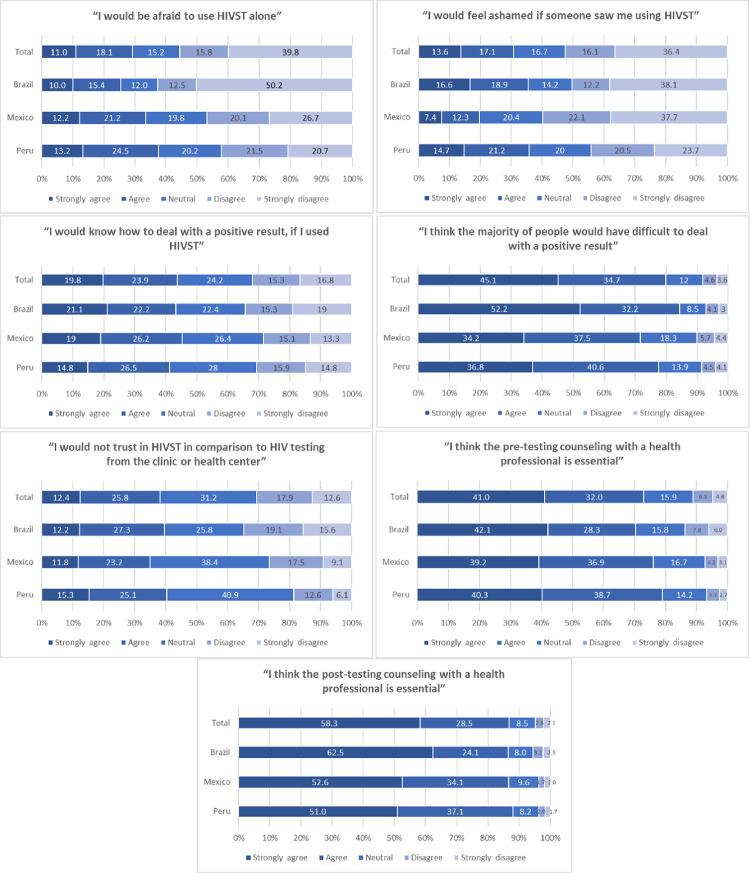
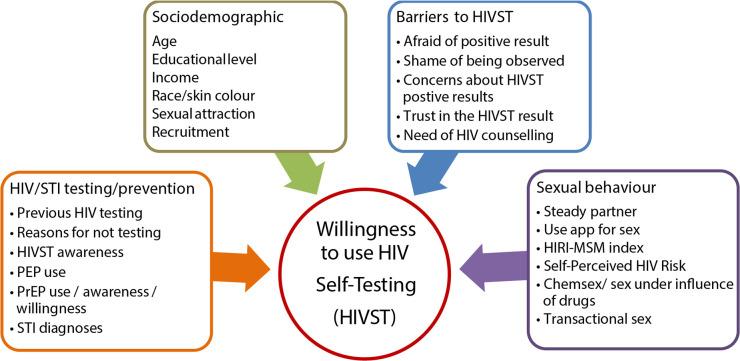
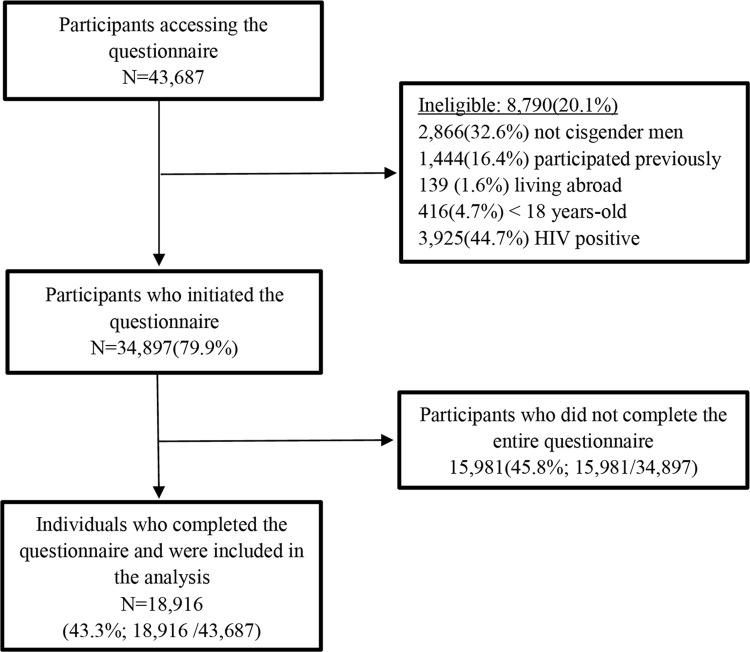
HIV self-testing (HIVST) is an essential tool within the combined HIV prevention package and has been available in Latin America since 2015. However, HIVST use among key populations remains low. This study describes awareness, willingness, and barriers to HIVST among MSM in Brazil, Mexico, and Peru. A cross-sectional web-based survey was advertised in two geosocial networking apps (Grindr and Hornet) and Facebook in 2018. We included cisgender men ≥18 years old who self-reported HIV-negative status. We used multivariable Poisson regression models to calculate adjusted prevalence ratios (aPR) to assess the factors associated with willingness to use HIVST for each country. A total of 18,916 completed the survey, 59% from Brazil, 30% from Mexico, and 11% from Peru. Overall, 20% of MSM had never tested for HIV. Awareness and willingness to use HIVST were higher in Brazil than in Peru and Mexico (p < .001). Across the countries, the patterns of association of willingness with HIVST barriers were similar. Most participants think post-test counseling is essential and that dealing with a positive result would be difficult (aPR 1.13 to 1.37, range of aPRs across the three countries). Having the knowledge to deal with a positive HIVST resulted in increased willingness to use HIVST (aPR range: 1.11 to 1.22), while a lack of trust in HIVST compared to HIV testing in clinics was inversely associated (aPR range: 0.80 to 0.90). In general, willingness to use HIVST was associated with higher income (aPR range: 1.49 to 1.97), higher education (aPR range: 1.13 to 1.42), and willingness to use PrEP (aPR range: 1.19 to 1.72). Efforts to increase HIVST knowledge and resolve perceived barriers are warranted, especially among MSM with lower income and education from Brazil, Mexico, and Peru. Personalized virtual counseling could be crucial among this population. In addition, those willing to use HIVST are also willing to use PrEP. It indicates that HIVST delivery could be incorporated into PrEP programs within the Brazilian Public Health System and eventually in Mexico and Peru.
艾滋病毒自我检测(HIVST)是综合艾滋病毒预防措施中的一项重要工具,自2015年起在拉丁美洲就已可用。然而,关键人群中HIVST的使用率仍然很低。本研究描述了巴西、墨西哥和秘鲁男男性行为者(MSM)对HIVST的知晓情况、使用意愿及障碍。2018年,在两款地理社交网络应用程序(Grindr和Hornet)以及脸书上发布了一项基于网络的横断面调查。我们纳入了自我报告HIV阴性状态的18岁及以上的顺性别男性。我们使用多变量泊松回归模型来计算调整患病率比(aPR),以评估每个国家与使用HIVST意愿相关的因素。共有18916人完成了调查,其中59%来自巴西,30%来自墨西哥,11%来自秘鲁。总体而言,20%的MSM从未进行过艾滋病毒检测。巴西MSM对HIVST的知晓率和使用意愿高于秘鲁和墨西哥(p <.001)。在这几个国家中,使用意愿与HIVST障碍的关联模式相似。大多数参与者认为检测后咨询至关重要,且认为应对检测结果呈阳性会很困难(aPR为1.13至1.37,三国aPR范围)。了解应对HIVST检测结果呈阳性的知识会提高使用HIVST的意愿(aPR范围:1.11至1.22)而与诊所艾滋病毒检测相比,对HIVST缺乏信任则呈负相关(aPR范围:0.80至0.90)。总体而言,使用HIVST的意愿与较高收入(aPR范围:1.49至1.97)、较高教育水平(aPR范围:1.13至1.42)以及使用暴露前预防(PrEP)的意愿(aPR范围:1.19至1.72)相关。有必要努力提高对HIVST的认识并消除认知障碍,尤其是在巴西、墨西哥和秘鲁收入和教育水平较低的MSM中。个性化虚拟咨询对这一人群可能至关重要。此外,愿意使用HIVST的人也愿意使用PrEP。这表明在巴西公共卫生系统内,最终在墨西哥和秘鲁,HIVST的推广可以纳入PrEP项目。
 Zotero 插件