
干眼疾病中眼表面免疫细胞的多样性。
Ocular surface immune cell diversity in dry eye disease.
机构信息
GROW Research Laboratory, Narayana Nethralaya Foundation, Bangalore, Karnataka, India; Manipal Academy of Higher Education, Manipal, Karnataka, India.
Department of Cornea and Refractive Surgery, Narayana Nethralaya, Bangalore, Karnataka, India.
出版信息
Indian J Ophthalmol. 2023 Apr;71(4):1237-1247. doi: 10.4103/IJO.IJO_2986_22.
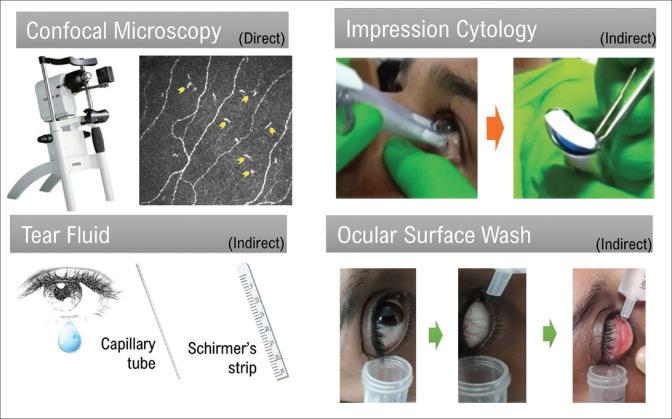
Dry eye disease (DED) is a multifactorial chronic ocular surface inflammatory condition. Disease severity has been directly related to the immuno-inflammatory status of the ocular surface. Any perturbation in the orchestrated functional harmony between the ocular surface structural cells and immune cells, both resident and trafficking ones, can adversely affect ocular surface health. The diversity and contribution of ocular surface immune cells in DED have been of interest for over a couple of decades. As is true with any mucosal tissue, the ocular surface harbors a variety of immune cells of the innate-adaptive continuum and some of which are altered in DED. The current review curates and organizes the knowledge related to the ocular surface immune cell diversity in DED. Ten different major immune cell types and 21 immune cell subsets have been studied in the context of DED in human subjects and in animal models. The most pertinent observations are increased ocular surface proportions of neutrophils, dendritic cells, macrophages, and T cell subsets (CD4+; CD8+; Th17) along with a decrease in T regulatory cells. Some of these cells have demonstrated disease-causal association with ocular surface health parameters such as OSDI score, Schirmer's test-1, tear break-up time, and corneal staining. The review also summarizes various interventional strategies studied to modulate specific immune cell subsets and reduce DED severity. Further advancements would enable the use of ocular surface immune cell diversity, in patient stratification, i.e. DED-immunotypes, disease monitoring, and selective targeting to resolve the morbidity related to DED.
干眼症(DED)是一种多因素的慢性眼表炎症性疾病。疾病的严重程度与眼表的免疫炎症状态直接相关。眼表结构细胞和免疫细胞之间协调的功能和谐受到任何干扰,都会对眼表健康产生不利影响。眼表免疫细胞的多样性及其在 DED 中的作用已引起关注数十年。与任何粘膜组织一样,眼表含有多种固有-适应性连续体的免疫细胞,其中一些在 DED 中发生改变。本综述对 DED 中眼表免疫细胞多样性的相关知识进行了整理和组织。在人类和动物模型中,已经研究了十种不同的主要免疫细胞类型和 21 种免疫细胞亚群在 DED 中的作用。最相关的观察结果是,眼表面中性粒细胞、树突状细胞、巨噬细胞和 T 细胞亚群(CD4+;CD8+;Th17)的比例增加,而 T 调节细胞的比例减少。其中一些细胞已证明与眼表健康参数(如 OSDI 评分、Schirmer 测试 1、泪膜破裂时间和角膜染色)存在因果关系。该综述还总结了各种已研究的干预策略,以调节特定的免疫细胞亚群并减轻 DED 严重程度。进一步的进展将使我们能够利用眼表免疫细胞多样性,对患者进行分层,即 DED-免疫型、疾病监测和选择性靶向,以解决与 DED 相关的发病率。



 Zotero 插件