Phalswal Uma, Pujari Vani, Sethi Rasmita, Verma Ranjana
Nursing Officer, College of Nursing, All India Institute of Medical Sciences, Bhopal, Madhya Pradesh, India.
Senior Nursing Officer, College of Nursing, All India Institute of Medical Sciences, Bhopal, Madhya Pradesh, India.
J Educ Health Promot. 2023 Jan 31;12:23. doi: 10.4103/jehp.jehp_460_22. eCollection 2023.
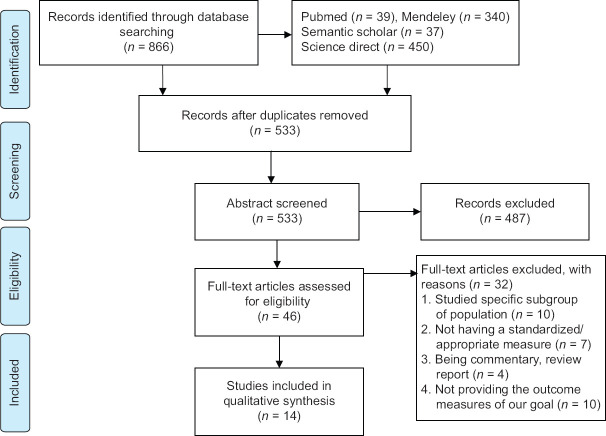
During the COVID-19 pandemic, people are using social media more than usual routine because they rely on online sources to seek health information for themselves and their loved ones. The spread of inaccurate and misleading information via social media has a number of detrimental psychological effects on members of society. The aim of this systematic review was to describe the impact of social media on the mental health of the general population. An extensive systematic search was done till the last month of 2021 for collecting the evidence using the PRISMA technique. The search was mainly focused on the article leading with keywords and search engines used during the course of the study were Pubmed, Semantic Scholar, Mendeley, and Science direct. Articles for this study were selected based on the predetermined eligibility criteria and performed quality assessment by using the NHLBI quality assessment tool. Most of the studies included in this review are found fair (score between 9 and 12) quality. Out of 866 publications, 533 articles were included in the initial screening, after duplication removal 46 full-text articles were assessed for eligibility and 14 studies were selected for systematic review. In most of the studies, maximum participants used social media as a primary source of information. Relatively high rates of symptoms of depression (14.14% to 48.3%), anxiety (7.4% to 47.82%), and prevalence of stress increased to 37.67% are reported after exposure to social media for coverage of COVID-19 news in the general population. Risk factors of psychological distress are associated with female gender, younger age group, marital status, staying alone, and duration of exposure to mass media. Increased exposure to COVID-19 information through mass/social media is associated with highly significant levels of psychological health issues; mitigating the hazardous effect of social media exposure during the COVID-19 pandemic on the psychological health of the general population is an international public health priority.
在新冠疫情期间,人们使用社交媒体的频率高于日常,因为他们依靠网络资源为自己和亲人寻求健康信息。不准确和误导性信息通过社交媒体传播,对社会成员产生了许多有害的心理影响。本系统评价的目的是描述社交媒体对普通人群心理健康的影响。采用PRISMA技术进行了广泛的系统检索,直至2021年最后一个月以收集证据。检索主要集中在以关键词为首的文章,研究过程中使用的搜索引擎有PubMed、语义学者、Mendeley和科学直投。本研究的文章根据预先确定的纳入标准进行选择,并使用美国国立心肺血液研究所(NHLBI)质量评估工具进行质量评估。本评价纳入的大多数研究质量为中等(评分在9至12分之间)。在866篇出版物中,初步筛选纳入533篇文章,去除重复后,对46篇全文进行了纳入资格评估,选择了14项研究进行系统评价。在大多数研究中,大多数参与者将社交媒体作为主要信息来源。在普通人群中,接触社交媒体上关于新冠疫情新闻报道后,抑郁症状(14.14%至48.3%)、焦虑症状(7.4%至47.82%)的发生率相对较高,压力患病率增至37.67%。心理困扰的风险因素与女性、年轻年龄组、婚姻状况、独居以及接触大众媒体的时长有关。通过大众/社交媒体增加对新冠疫情信息的接触与高度显著的心理健康问题相关;减轻新冠疫情期间社交媒体接触对普通人群心理健康的有害影响是一项国际公共卫生重点工作。