Advanced Organ bioengineering and Therapeutics, Faculty of Science and Technology, Technical Medical Centre, University of Twente, P.O Box 217, 7500, AE Enschede, The Netherlands.
Department of Nephrology and Hypertension, University Medical Center Utrecht, Utrecht, The Netherlands.
Nat Rev Nephrol. 2023 Aug;19(8):481-490. doi: 10.1038/s41581-023-00726-9. Epub 2023 Jun 5.
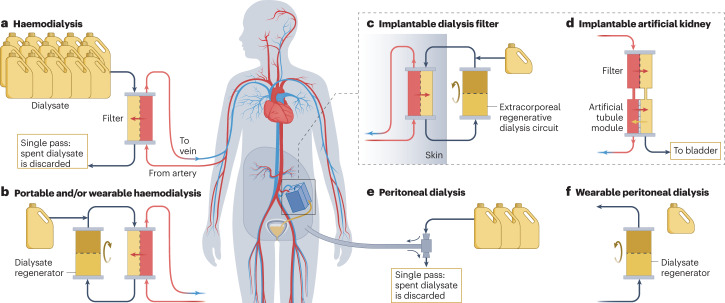
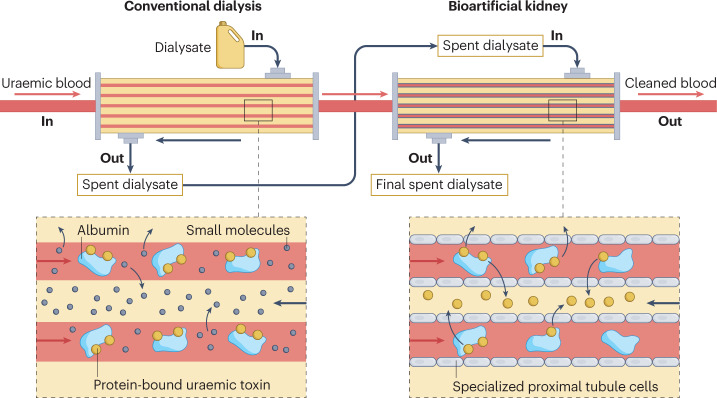
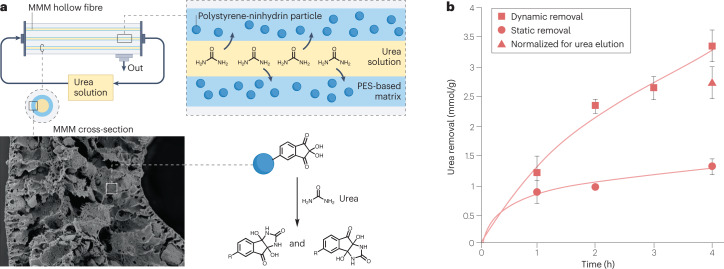
Haemodialysis is life sustaining but expensive, provides limited removal of uraemic solutes, is associated with poor patient quality of life and has a large carbon footprint. Innovative dialysis technologies such as portable, wearable and implantable artificial kidney systems are being developed with the aim of addressing these issues and improving patient care. An important challenge for these technologies is the need for continuous regeneration of a small volume of dialysate. Dialysate recycling systems based on sorbents have great potential for such regeneration. Novel dialysis membranes composed of polymeric or inorganic materials are being developed to improve the removal of a broad range of uraemic toxins, with low levels of membrane fouling compared with currently available synthetic membranes. To achieve more complete therapy and provide important biological functions, these novel membranes could be combined with bioartificial kidneys, which consist of artificial membranes combined with kidney cells. Implementation of these systems will require robust cell sourcing; cell culture facilities annexed to dialysis centres; large-scale, low-cost production; and quality control measures. These challenges are not trivial, and global initiatives involving all relevant stakeholders, including academics, industrialists, medical professionals and patients with kidney disease, are required to achieve important technological breakthroughs.
血液透析虽然可以维持生命,但费用高昂,对尿毒症溶质的清除能力有限,会降低患者的生活质量,且碳足迹较大。目前正在开发便携式、可穿戴和可植入人工肾系统等创新透析技术,以期解决这些问题,改善患者的护理。这些技术的一个重要挑战是需要持续再生小体积的透析液。基于吸附剂的透析液回收系统在这种再生方面具有巨大潜力。新型透析膜由聚合物或无机材料组成,旨在改善对广泛尿毒症毒素的清除,与现有合成膜相比,其膜污染程度较低。为了实现更全面的治疗并提供重要的生物学功能,这些新型膜可以与生物人工肾结合使用,生物人工肾由人工膜与肾细胞结合而成。这些系统的实施需要强大的细胞来源;附属在透析中心的细胞培养设施;大规模、低成本的生产;以及质量控制措施。这些挑战不小,需要涉及学术、工业、医疗专业人员和肾病患者等所有相关利益攸关方的全球举措,才能实现重要的技术突破。