• 文献检索
  • 文档翻译
  • 深度研究
  • 学术资讯
  • Suppr Zotero 插件Zotero 插件
  • 邀请有礼
  • 套餐&价格
  • 历史记录
应用&插件
Suppr Zotero 插件Zotero 插件浏览器插件Mac 客户端Windows 客户端微信小程序
定价
高级版会员购买积分包购买API积分包
服务
文献检索文档翻译深度研究API 文档MCP 服务
关于我们
关于 Suppr公司介绍联系我们用户协议隐私条款
关注我们

Suppr 超能文献

核心技术专利:CN118964589B侵权必究
粤ICP备2023148730 号-1Suppr @ 2026

文献检索

告别复杂PubMed语法,用中文像聊天一样搜索,搜遍4000万医学文献。AI智能推荐,让科研检索更轻松。

立即免费搜索

文件翻译

保留排版,准确专业,支持PDF/Word/PPT等文件格式,支持 12+语言互译。

免费翻译文档

深度研究

AI帮你快速写综述,25分钟生成高质量综述,智能提取关键信息,辅助科研写作。

立即免费体验

mTOR 抑制剂在肝癌肝移植术后的作用。

The Role of mTOR Inhibitors after Liver Transplantation for Hepatocellular Carcinoma.

机构信息

Faculty of Medicine and Surgery, University of Verona, 37134 Verona, Italy.

Department of Surgery, University of Illinois Chicago, Chicago, IL 60607, USA.

出版信息

Curr Oncol. 2023 Jun 9;30(6):5574-5592. doi: 10.3390/curroncol30060421.

DOI:10.3390/curroncol30060421
PMID:37366904
原文链接:https://pmc.ncbi.nlm.nih.gov/articles/PMC10297627/
Abstract

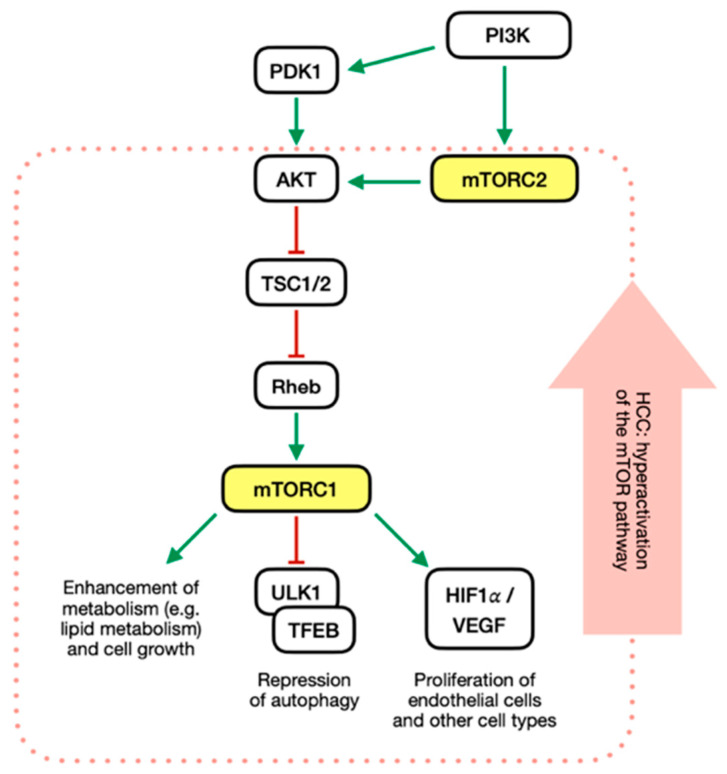
Liver transplantation is a treatment option for nonresectable patients with early-stage HCC, with more significant advantages when Milan criteria are fulfilled. An immunosuppressive regimen is required to reduce the risk of graft rejection after transplantation, and CNIs represent the drugs of choice in this setting. However, their inhibitory effect on T-cell activity accounts for a higher risk of tumour regrowth. mTOR inhibitors (mTORi) have been introduced as an alternative immunosuppressive approach to conventional CNI-based regimens to address both immunosuppression and cancer control. The PI3K-AKT-mTOR signalling pathway regulates protein translation, cell growth, and metabolism, and the pathway is frequently deregulated in human tumours. Several studies have suggested the role of mTORi in reducing HCC progression after LT, accounting for a lower recurrence rate. Furthermore, mTOR immunosuppression controls the renal damage associated with CNI exposure. Conversion to mTOR inhibitors is associated with stabilizing and recovering renal dysfunction, suggesting an essential renoprotective effect. Limitations in this therapeutic approach are related to their negative impact on lipid and glucose metabolism as well as on proteinuria development and wound healing. This review aims to summarize the roles of mTORi in managing patients with HCC undergoing LT. Strategies to overcome common adverse effects are also proposed.

摘要

肝移植是治疗早期不可切除 HCC 患者的一种选择,当满足米兰标准时具有更大的优势。为了降低移植后移植物排斥的风险,需要使用免疫抑制方案,而在这种情况下,CNI 是首选药物。然而,它们对 T 细胞活性的抑制作用导致肿瘤复发的风险更高。mTOR 抑制剂(mTORi)已被引入作为替代传统 CNI 为基础的方案的免疫抑制方法,以解决免疫抑制和癌症控制的问题。PI3K-AKT-mTOR 信号通路调节蛋白质翻译、细胞生长和代谢,该通路在人类肿瘤中经常失调。几项研究表明 mTORi 在减少 LT 后 HCC 进展中的作用,其复发率较低。此外,mTOR 免疫抑制控制与 CNI 暴露相关的肾损伤。转换为 mTOR 抑制剂与稳定和恢复肾功能有关,提示具有重要的肾保护作用。这种治疗方法的局限性与它们对脂质和葡萄糖代谢以及蛋白尿发展和伤口愈合的负面影响有关。本文旨在总结 mTORi 在管理接受 LT 的 HCC 患者中的作用。还提出了克服常见不良反应的策略。
https://cdn.ncbi.nlm.nih.gov/pmc/blobs/2355/10297627/d394a2151951/curroncol-30-00421-g001.jpg

相似文献

1
The Role of mTOR Inhibitors after Liver Transplantation for Hepatocellular Carcinoma.mTOR 抑制剂在肝癌肝移植术后的作用。
Curr Oncol. 2023 Jun 9;30(6):5574-5592. doi: 10.3390/curroncol30060421.
2
Long-Term Renal Function in Liver Transplant Recipients After Conversion From Calcineurin Inhibitors to mTOR Inhibitors.从钙调神经磷酸酶抑制剂转换为雷帕霉素靶蛋白抑制剂后肝移植受者的长期肾功能
Ann Transplant. 2015 Nov 26;20:707-13. doi: 10.12659/aot.895320.
3
Immunosuppressive Treatment With mTOR Inhibitors for Malignancies After Liver Transplantation: Long-Term Survival Retrospective Analysis.肝移植后使用mTOR抑制剂进行免疫抑制治疗恶性肿瘤:长期生存回顾性分析
Transplant Proc. 2020 Jun;52(5):1507-1510. doi: 10.1016/j.transproceed.2020.02.058. Epub 2020 Mar 22.
4
A prospective randomised, open-labeled, trial comparing sirolimus-containing versus mTOR-inhibitor-free immunosuppression in patients undergoing liver transplantation for hepatocellular carcinoma.一项前瞻性随机、开放标签、比较在因肝细胞癌接受肝移植的患者中应用含西罗莫司与不含 mTOR 抑制剂免疫抑制方案的临床试验。
BMC Cancer. 2010 May 11;10:190. doi: 10.1186/1471-2407-10-190.
5
Mammalian target of rapamycin inhibitors are associated with lower rates of hepatocellular carcinoma recurrence after liver transplantation: a systematic review.雷帕霉素哺乳动物靶点抑制剂与肝移植后肝细胞癌复发率较低相关:一项系统评价
Transpl Int. 2014 Oct;27(10):1039-49. doi: 10.1111/tri.12372. Epub 2014 Jul 18.
6
mTORi-based immunosuppression reduces HCC recurrence at the expense of increased adverse side effects: A systematic review and meta-analysis.基于mTOR抑制剂的免疫抑制以增加不良副作用为代价降低肝癌复发:一项系统评价和荟萃分析。
Clin Transplant. 2022 Dec;36(12):e14823. doi: 10.1111/ctr.14823. Epub 2022 Dec 2.
7
Reduced exposure to calcineurin inhibitors early after liver transplantation prevents recurrence of hepatocellular carcinoma.肝移植后早期减少钙调神经磷酸酶抑制剂的暴露可预防肝细胞癌的复发。
J Hepatol. 2013 Dec;59(6):1193-9. doi: 10.1016/j.jhep.2013.07.012. Epub 2013 Jul 16.
8
Examinations of Factors Influencing Survival of Liver Transplantation for Hepatocellular Carcinoma: A Single-Center Experience From Budapest.影响肝细胞癌肝移植生存因素的研究:来自布达佩斯的单中心经验
Transplant Proc. 2015 Sep;47(7):2201-6. doi: 10.1016/j.transproceed.2015.07.026.
9
Systematic review with meta-analysis: sirolimus- or everolimus-based immunosuppression following liver transplantation for hepatocellular carcinoma.系统评价与荟萃分析:肝移植治疗肝细胞癌后使用西罗莫司或依维莫司为基础的免疫抑制治疗。
Aliment Pharmacol Ther. 2019 May;49(10):1260-1273. doi: 10.1111/apt.15253. Epub 2019 Apr 15.
10
Modification of immunosuppressive therapy as risk factor for complications after liver transplantation.免疫抑制治疗的调整作为肝移植术后并发症的危险因素。
Best Pract Res Clin Gastroenterol. 2017 Apr;31(2):199-209. doi: 10.1016/j.bpg.2017.03.001. Epub 2017 Apr 12.

引用本文的文献

1
Prevention of liver cancer in the era of next-generation antivirals and obesity epidemic.下一代抗病毒药物与肥胖流行时代的肝癌预防
Hepatology. 2025 Jan 14. doi: 10.1097/HEP.0000000000001227.
2
Maintenance immunosuppressive therapy in liver transplantation: results from CESIT study, an Italian retrospective cohort study.肝移植中的维持免疫抑制治疗:来自 CESIT 研究的结果,一项意大利回顾性队列研究。
BMJ Open. 2024 Nov 12;14(11):e087373. doi: 10.1136/bmjopen-2024-087373.
3
mTOR inhibitor reduces nontumour-related death in liver transplantation for hepatocellular carcinoma.

本文引用的文献

1
Safety and efficacy of everolimus initiation from the first month after liver transplantation: A systematic review and meta-analysis.肝移植后第一个月开始使用依维莫司的安全性和疗效:系统评价和荟萃分析。
Clin Transplant. 2023 May;37(5):e14957. doi: 10.1111/ctr.14957. Epub 2023 Mar 7.
2
The Role of Growth Hormone and Insulin Growth Factor 1 in the Development of Non-Alcoholic Steato-Hepatitis: A Systematic Review.生长激素和胰岛素样生长因子 1 在非酒精性脂肪性肝炎发展中的作用:系统评价。
Cells. 2023 Feb 4;12(4):517. doi: 10.3390/cells12040517.
3
Three-year results of renal function in liver transplant recipients on low-dose sirolimus and tacrolimus: a multicenter, randomized, controlled trial.
mTOR 抑制剂可降低肝癌肝移植中非肿瘤相关死亡。
Mol Biomed. 2024 Mar 10;5(1):9. doi: 10.1186/s43556-024-00170-6.
4
Therapeutic Approach to Post-Transplant Recurrence of Hepatocellular Carcinoma: Certainties and Open Issues.肝细胞癌移植后复发的治疗方法:确定因素与未决问题
Cancers (Basel). 2023 Nov 26;15(23):5593. doi: 10.3390/cancers15235593.
5
The long-term effects of multidrug immunosuppressive protocols based on calcineurin inhibitors and conversion to rapamycin on the morphology, apoptosis, and proliferation of rat salivary glands.基于钙调磷酸酶抑制剂的多药物免疫抑制方案及其转换为雷帕霉素对大鼠唾液腺形态、细胞凋亡和增殖的长期影响。
Pharmacol Rep. 2023 Oct;75(5):1240-1253. doi: 10.1007/s43440-023-00521-0. Epub 2023 Sep 2.
肝移植受者应用小剂量西罗莫司和他克莫司的肾功能 3 年结果:一项多中心、随机、对照试验。
Liver Transpl. 2023 Feb 1;29(2):184-195. doi: 10.1097/LVT.0000000000000003. Epub 2023 Jan 3.
4
Long-Term Effects of Everolimus-Facilitated Tacrolimus Reduction in Living-Donor Liver Transplant Recipients with Hepatocellular Carcinoma.肝癌肝移植受者中依维莫司辅助降低他克莫司治疗的长期效果。
Ann Transplant. 2022 Nov 22;27:e937988. doi: 10.12659/AOT.937988.
5
A mixed blessing for liver transplantation patients - Rapamycin.肝移植患者的祸福参半之物——雷帕霉素。
Hepatobiliary Pancreat Dis Int. 2023 Feb;22(1):14-21. doi: 10.1016/j.hbpd.2022.10.004. Epub 2022 Oct 20.
6
Hepatocellular Carcinoma Recurrence and Mortality Rate Post Liver Transplantation: Meta-Analysis and Systematic Review of Real-World Evidence.肝移植术后肝细胞癌的复发率和死亡率:基于真实世界证据的Meta分析和系统评价
Cancers (Basel). 2022 Oct 19;14(20):5114. doi: 10.3390/cancers14205114.
7
Cumulative exposure to tacrolimus and incidence of cancer after liver transplantation.肝移植后他克莫司的累积暴露量与癌症发生率
Am J Transplant. 2022 Jun;22(6):1671-1682. doi: 10.1111/ajt.17021. Epub 2022 Mar 31.
8
Sirolimus or Everolimus Improves Survival After Liver Transplantation for Hepatocellular Carcinoma: A Systematic Review and Meta-Analysis.西罗莫司或依维莫司改善肝癌肝移植术后的生存:系统评价和荟萃分析。
Liver Transpl. 2022 Jun;28(6):1063-1077. doi: 10.1002/lt.26387. Epub 2022 Jan 17.
9
De Novo Malignancy After Liver Transplantation: Risk Assessment, Prevention, and Management-Guidelines From the ILTS-SETH Consensus Conference.肝移植后新发恶性肿瘤:风险评估、预防和管理——ILTS-SETH 共识会议指南。
Transplantation. 2022 Jan 1;106(1):e30-e45. doi: 10.1097/TP.0000000000003998.
10
An overview of the efficacy and safety of everolimus in adult solid organ transplant recipients.依维莫司在成人实体器官移植受者中的疗效和安全性概述。
Transplant Rev (Orlando). 2022 Jan;36(1):100655. doi: 10.1016/j.trre.2021.100655. Epub 2021 Sep 24.