Department of Surgery and Critical Care, Burn Center, Hangang Sacred Heart Hospital, College of Medicine, Hallym University Medical Center, 12, Beodeunaru-Ro 7-gil, Youngdeungpo-gu, Seoul, 07247, Korea.
Burn Institutes, Hangang Sacred Heart Hospital, Hallym University Medical Center, 12, Beodeunaru-Ro 7-gil, Youngdeungpo-gu, Seoul, 07247, Korea.
Eur J Med Res. 2023 Aug 25;28(1):295. doi: 10.1186/s40001-023-01268-3.
Sepsis is a grave medical disorder characterized by a systemic inflammatory response to infection. Furthermore, it is a leading cause of morbidity and mortality, especially in hospitalized patients. Acute kidney injury (AKI) is a common complication of sepsis and is associated with increased morbidity and mortality. Patients with burns are particularly vulnerable to developing sepsis and AKI due to the extensive tissue damage and immune suppression resulting from burn injury. In this study, unsupervised clustering algorithms were used to track longitudinal biomarkers in patients with burns and assess their impact on mortality.
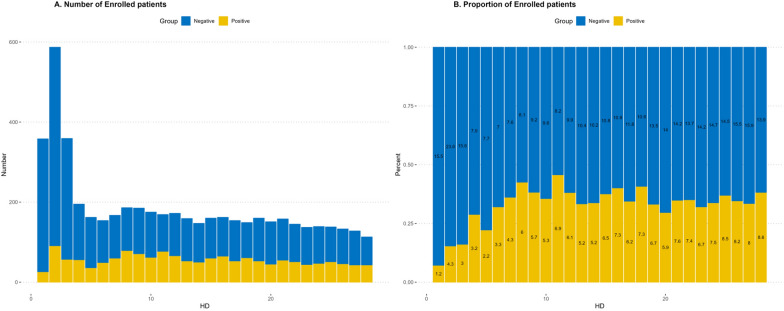
This retrospective study included adult patients with burns aged ≥ 18 years, who were admitted to the burn intensive care unit of Hallym University and Hangang Sacred Heart Hospital between July 2010 and December 2021. The patients were divided into two subgroups: those with sepsis (538 patients) and those without sepsis (826 patients). The longitudinal biomarkers were grouped into three clusters using the k-means clustering algorithm. Each cluster was assigned a letter from A to C according to its mortality rate.
The odds ratio (OR) of pH was 9.992 in the positive group and 31.745 in the negative group in cluster C. The OR for lactate dehydrogenase (LD) was 3.704 in the positive group and 6.631 in the negative group in cluster C. The OR for creatinine was 2.784 in the positive group and 8.796 in the negative group in cluster C. The OR for blood urea nitrogen (BUN) in the negative group was 0.348, indicating a negative predictor of mortality. Regarding the application of Continuous Renal Replacement Therapy (CRRT) and ventilation, ventilation was significant in both groups. In contrast, CRRT application was not significant in the sepsis-positive group. Furthermore, it was not selected as a variable in the negative group.
The pH, LD, and creatinine were significant in both groups, while lactate and platelets were significant in the sepsis-positive group. In addition, albumin, glucose, and BUN were significant in the sepsis-negative group. Continuous renal replacement therapy was not significant in either group. However, the use of a ventilator was associated with poor prognosis.
败血症是一种严重的医学疾病,其特征是全身性炎症反应感染。此外,它是发病率和死亡率的主要原因,特别是在住院患者中。急性肾损伤(AKI)是败血症的常见并发症,与发病率和死亡率增加有关。烧伤患者由于烧伤引起的广泛组织损伤和免疫抑制,特别容易发生败血症和 AKI。在这项研究中,使用无监督聚类算法跟踪烧伤患者的纵向生物标志物,并评估其对死亡率的影响。
这是一项回顾性研究,纳入 2010 年 7 月至 2021 年 12 月期间在翰林大学和韩江圣心医院烧伤重症监护病房住院的年龄≥18 岁的成年烧伤患者。患者分为败血症组(538 例)和非败血症组(826 例)。使用 k-均值聚类算法将纵向生物标志物分为三组。根据死亡率,每个簇被分配一个从 A 到 C 的字母。
在 C 簇中,pH 值阳性组的比值比(OR)为 9.992,阴性组为 31.745。乳酸脱氢酶(LD)阳性组的 OR 为 3.704,阴性组为 6.631。在 C 簇中,肌酐阳性组的 OR 为 2.784,阴性组为 8.796。在 C 簇中,阴性组血尿素氮(BUN)的 OR 为 0.348,提示死亡率的阴性预测因子。关于连续肾脏替代疗法(CRRT)和通气的应用,两组均有统计学意义。相反,在败血症阳性组中,CRRT 的应用并不显著。此外,它在阴性组中也没有被选为变量。
pH 值、LD 和肌酐在两组中均有统计学意义,而乳酸和血小板在败血症阳性组中具有统计学意义。此外,白蛋白、葡萄糖和 BUN 在败血症阴性组中具有统计学意义。在两组中,CRRT 均无统计学意义。然而,使用呼吸机与预后不良相关。