Warsi Zafar I, Khatoon Kahkashan, Singh Pooja, Rahman Laiq Ur
Central Institute of Medicinal and Aromatic Plants, Council of Scientific and Industrial Research (CSIR), Lucknow, India.
Front Plant Sci. 2023 Aug 11;14:1238838. doi: 10.3389/fpls.2023.1238838. eCollection 2023.
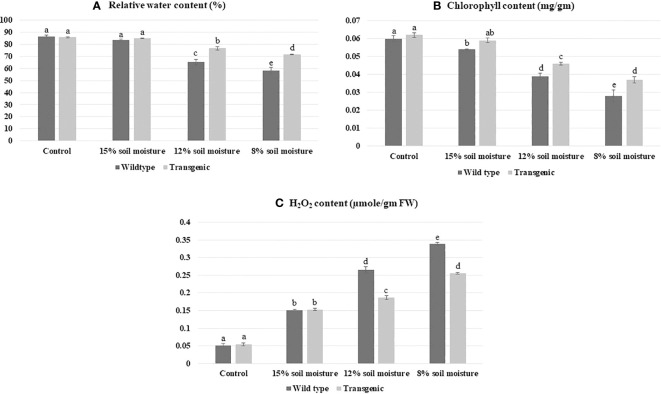
cultivation faces massive constraints because of its susceptability to drought stress that reduces patchouli propagation and oil yield. The present study has achieved an efficient and rapid direct regeneration system for the transgenic production of using Agrobacterium-mediated genetic transformation. To establish an efficient regeneration protocol for fast multiplication of patchouli plants, leaf, petiole, and transverse thin cell layer (tTCL) explants were used and inoculated on an MS medium supplemented with different combinations of phytohormones. A comparative study showed a maximum regeneration frequency of 93.30 ± 0.56% per explant was obtained from leaf segments on optimal MS medium fortified with 0.2mg/L BAP and 0.1mg/L NAA. Leaf and petiole explants took 25-35 days to regenerate while tTCL section showed regeneration in just 15-20 days on the same medium. Subsequently, productive genetic transformation protocol OD 0.6, AS 200µM, 30mg/L kanamycin, and infection time 5 min. was standardized and best-suited explants were infected at optimum conditions from the (LBA 4404) strain harboring to generate transgenic Benth. (CIM-Samarth) plants. The investigation suggested that the optimized protocol provides a maximum transformation frequency of 42 ± 1.9% in 15-20 days from tTCL. The transgenic plants were shifted to the greenhouse with a 52.0 ± 0.8% survival frequency. A molecular docking study confirmed significant binding affinity of ligand ACC with at the catalytic site, and ligand interactions showed four H-bonds at the binding pocket with amino acids Cys-196, Val-198, Thr-199, and Gly-200 that validate gene relative expression in transgenic plants. Among all transgenic acclimatized greenhouse-grown patchouli plants, line PT4 showed improved drought resistance under severe water stress as its RWC was 71.7 ± 2.3% to 75.7 ± 2.1% which is greater than the RWC of the control plant, 58.30 ± 0.21%. Analysis of the other physiological indicators, HO, chlorophyll content, and ROS result support drought resistance ability. Our study concluded that the first report on , tTCL direct regeneration, and standardized transformation protocol created a new opportunity for genetic manipulation to achieve drought-resistant patchouli plants for cultivation in all seasons at the commercial level.
由于广藿香易受干旱胁迫影响,导致其繁殖和出油率降低,种植面临巨大限制。本研究通过农杆菌介导的遗传转化,实现了一种高效快速的直接再生系统用于转基因生产。为建立广藿香植株快速增殖的高效再生方案,使用了叶片、叶柄和横向薄细胞层(tTCL)外植体,并接种在添加了不同植物激素组合的MS培养基上。一项比较研究表明,在添加0.2mg/L BAP和0.1mg/L NAA的优化MS培养基上,叶片外植体的最高再生频率为每外植体93.30±0.56%。叶片和叶柄外植体需要25 - 35天再生,而tTCL切片在相同培养基上仅需15 - 20天即可再生。随后,标准化了高效遗传转化方案,即OD 0.6、AS 200µM、30mg/L卡那霉素和感染时间5分钟,并在最佳条件下用携带[相关基因]的(LBA 4404)菌株感染最适合的外植体,以产生转基因广藿香(CIM - Samarth)植株。研究表明,优化后的方案在15 - 20天内从tTCL获得的最高转化频率为42±1.9%。转基因植株以52.0±0.8%的存活频率转移到温室中。分子对接研究证实配体ACC与[相关蛋白]在催化位点具有显著的结合亲和力,配体相互作用在结合口袋处与氨基酸Cys - 196、Val - 198、Thr - 199和Gly - 200形成四个氢键,这验证了转基因植株中的基因相对表达。在所有适应温室生长的转基因广藿香植株中,品系PT4在严重水分胁迫下表现出增强的抗旱性,其相对含水量为71.7±2.3%至75.7±2.1%,高于对照植株的相对含水量58.30±0.21%。对其他生理指标、HO、叶绿素含量和ROS结果的分析支持了其抗旱能力。我们的研究得出结论,关于广藿香、tTCL直接再生和标准化转化方案的首次报道为基因操作创造了新机会,以实现可在商业水平全年种植的抗旱广藿香植株。