
全喉切除术后患者与吞咽相关的脑活动:一项病例系列研究。
Swallow-related Brain Activity in Post-total Laryngectomy Patients: A Case Series Study.
作者信息
Ogawa Akari, Koganemaru Satoko, Takahashi Toshimitsu, Takemura Yuu, Irisawa Hiroshi, Goto Kazutaka, Matsuhashi Masao, Mima Tatsuya, Mizushima Takashi, Kansaku Kenji
机构信息
Cognitive Motor Neuroscience, Human Health Sciences, Graduate School of Medicine, Kyoto University, Kyoto, Japan.
Department of Regenerative Systems Neuroscience, Human Brain Research Center, Graduate School of Medicine, Kyoto University, Kyoto, Japan.
出版信息
Prog Rehabil Med. 2023 Sep 1;8:20230026. doi: 10.2490/prm.20230026. eCollection 2023.
BACKGROUND
Total laryngectomy is a surgical procedure to completely remove the hyoid bone, larynx, and associated muscles as a curative treatment for laryngeal cancer. This leads to insufficient swallowing function with compensative movements of the residual tongue to propel the food bolus to the pharynx and esophagus. However, the neurophysiological mechanisms of compensative swallowing after total laryngectomy remain unclear. Recently, swallowing-related cortical activation such as event-related desynchronization (ERD) during swallowing has been reported in healthy participants and neurological patients with dysphagia. Abnormal ERD elucidates the pathophysiological cortical activities that are related to swallowing. No report has investigated ERD in post-total laryngectomy patients.
CASE
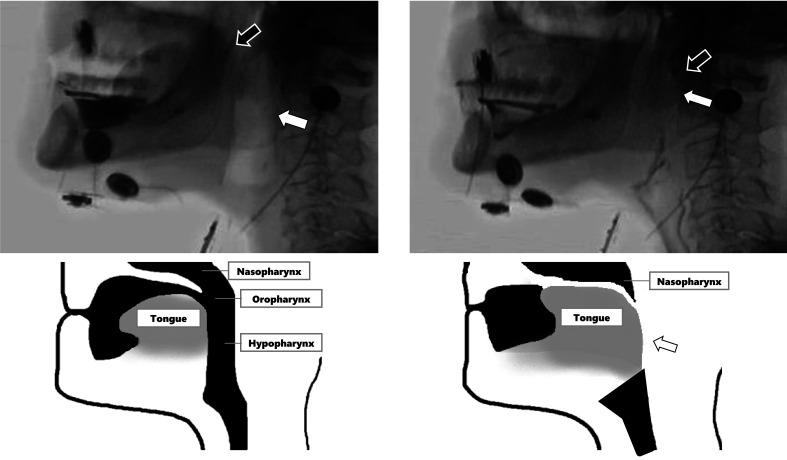
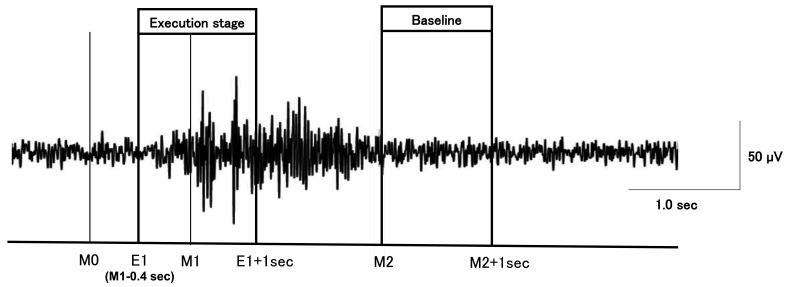
We investigated ERD during volitional swallowing using electroencephalography in three male patients after total laryngectomy for laryngeal cancer (age and time after surgery: Case 1, 75 years, 10 years; Case 2, 85 years, 19 years; Case 3, 73 years, 19 years). In video fluorographic swallowing studies, we observed compensatory tongue movements such as posterior-inferior retraction of the tongue and contact on the posterior pharyngeal wall in all three cases. Significant ERD was localized in the bilateral medial sensorimotor areas and the left lateral parietal area in Case 1, in the bilateral frontal and left temporal areas in Case 2, and in the left prefrontal and premotor areas in Case 3.
DISCUSSION
These results suggest that cortical activities related to swallowing might reflect cortical reorganization for modified swallowing movements of residual tongue muscles to compensate for reduced swallowing pressure in patients after total laryngectomy.
背景
全喉切除术是一种外科手术,旨在完全切除舌骨、喉及相关肌肉,作为喉癌的一种根治性治疗方法。这会导致吞咽功能不足,残余舌头通过代偿性运动将食团推送至咽部和食管。然而,全喉切除术后代偿性吞咽的神经生理机制仍不清楚。最近,在健康参与者和吞咽困难的神经疾病患者中,已报道了吞咽相关的皮层激活,如吞咽过程中的事件相关去同步化(ERD)。异常的ERD阐明了与吞咽相关的病理生理皮层活动。尚无关于全喉切除术后患者ERD的研究报告。
病例
我们对3例因喉癌行全喉切除术的男性患者(年龄及术后时间:病例1,75岁,术后10年;病例2,85岁,术后19年;病例3,73岁,术后19年)进行了脑电图检查,以研究自主吞咽过程中的ERD。在电视荧光吞咽造影研究中,我们观察到所有3例患者均有代偿性舌运动,如舌后下退缩及与咽后壁接触。病例1中,显著的ERD定位于双侧内侧感觉运动区和左侧顶叶外侧区;病例2中,定位于双侧额叶和左侧颞叶区;病例3中,定位于左侧前额叶和运动前区。
讨论
这些结果表明,与吞咽相关的皮层活动可能反映了皮层重组,以适应残余舌肌的改良吞咽运动,从而补偿全喉切除术后患者吞咽压力的降低。

 Zotero 插件