Kobmoo N, Arnamnart N, Pootakham W, Sonthirod C, Khonsanit A, Kuephadungphan W, Suntivich R, Mosunova O V, Giraud T, Luangsa-Ard J J
National Center for Genetic Engineering and Biotechnology (BIOTEC), National Science and Technology Development Agency (NSTDA), 113 Thailand Science Park, Phahonyothin Rd., Khlong Nueng, Khlong Luang, Pathum Thani 12120, Thailand.
National Omics Center, National Science and Technology Development Agency (NSTDA), Pathum Thani, Thailand.
Persoonia. 2021 Dec;47:136-150. doi: 10.3767/persoonia.2021.47.04. Epub 2021 Oct 1.
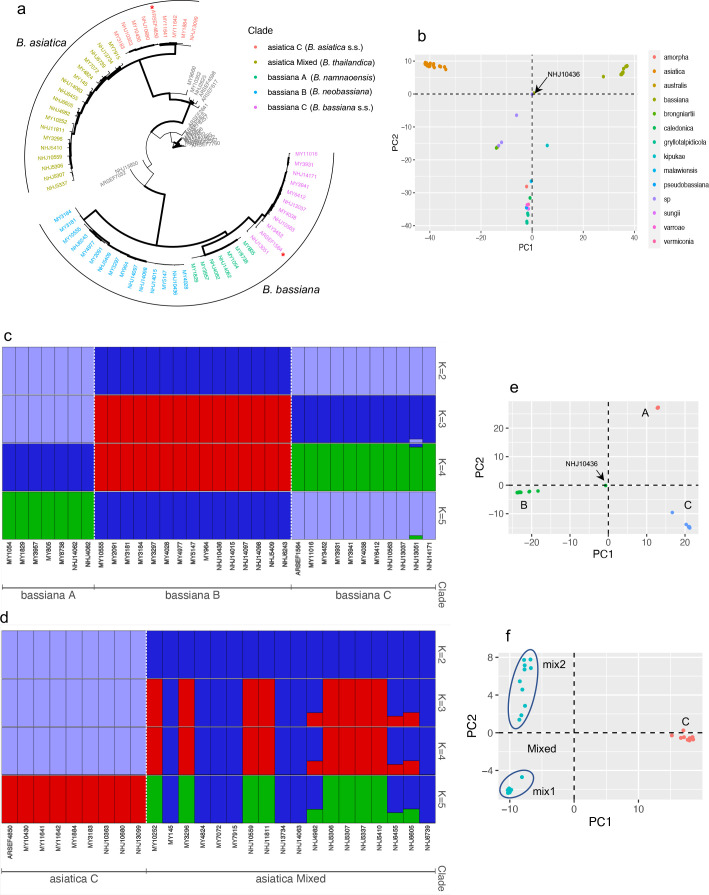
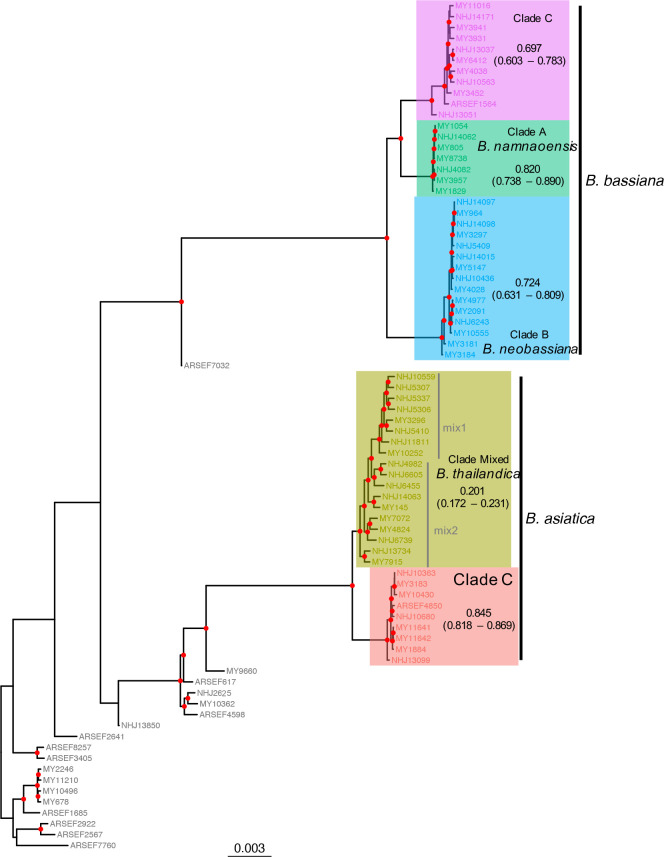
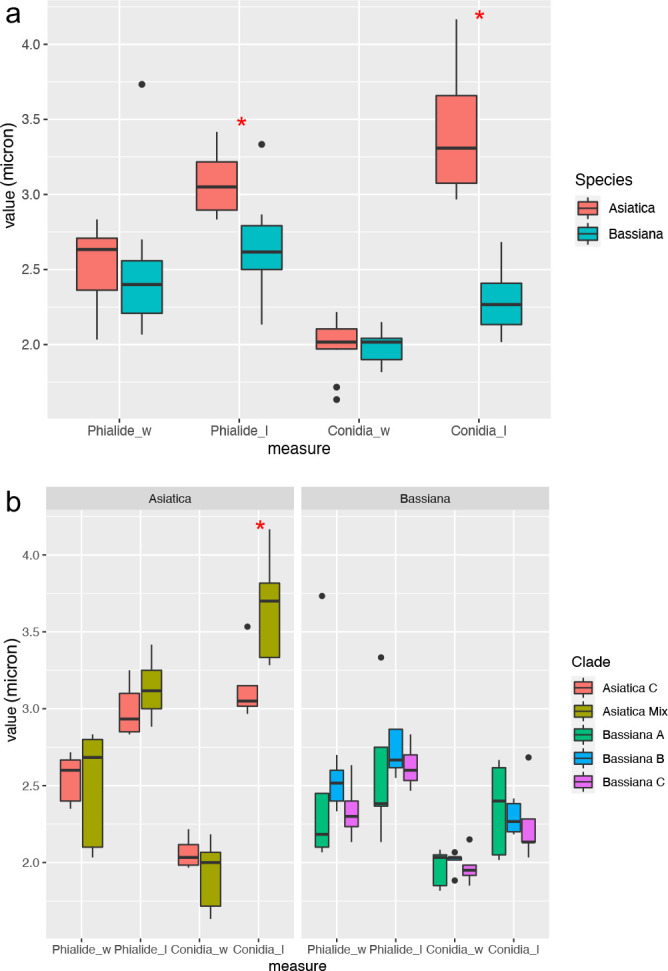
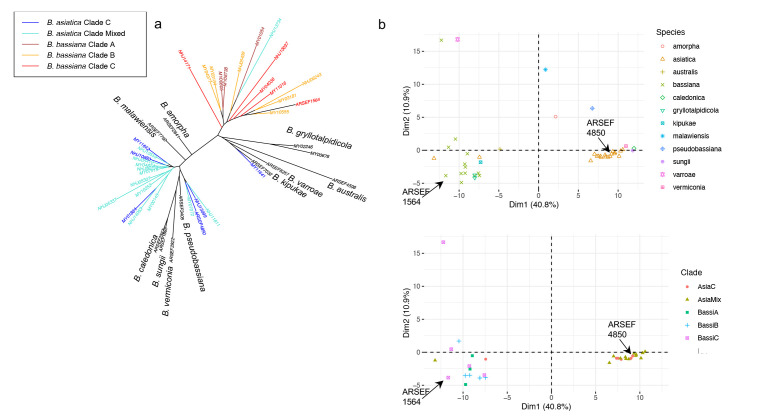
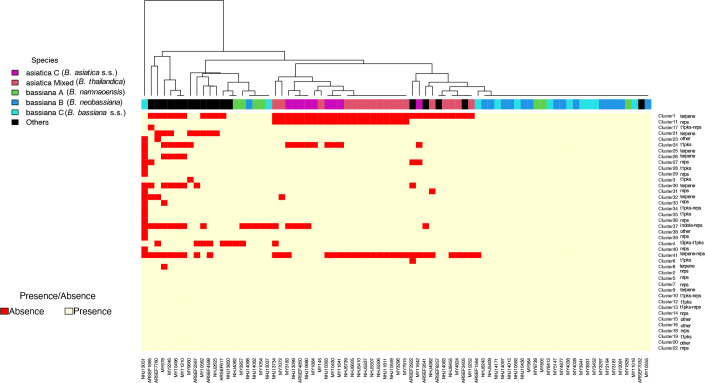
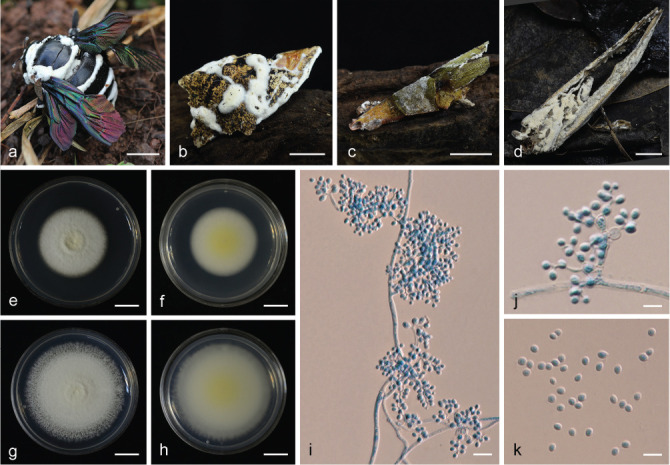
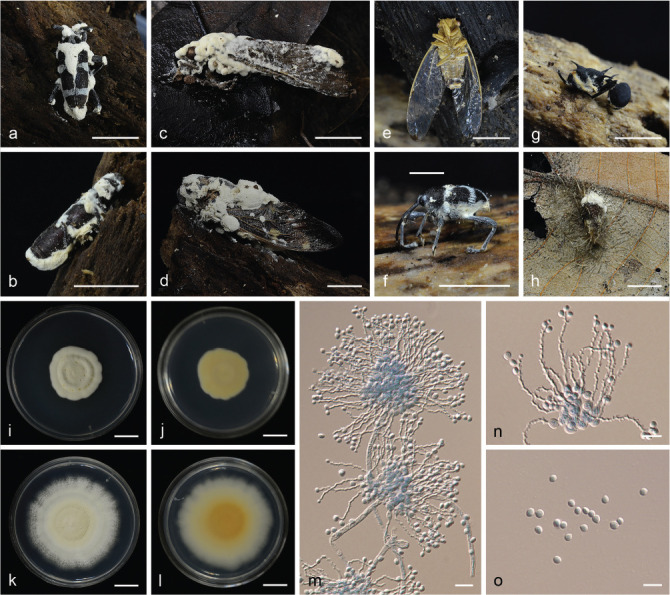
Fungi are rich in complexes of cryptic species that need a combination of different approaches to be delimited, including genomic information. (, ) is a well-known genus of entomopathogenic fungi, used as a biocontrol agent. In this study we present a polyphasic taxonomy regarding two widely distributed complexes of : and s.lat. Some of the genetic groups as previously detected within both taxa were either confirmed or fused using population genomics. High levels of divergence were found between two clades in and among three clades in , supporting their subdivision as distinct species. Morphological examination focusing on the width and the length of phialides and conidia showed no difference among the clades within while conidial length was significantly different among clades within . The secondary metabolite profiles obtained by liquid chromatography-mass spectrometry (LC-MS) allowed a distinction between and , but not between the clades therein. Based on these genomic, morphological, chemical data, we proposed a clade of as a new species, named , and two clades of to respectively represent and spp. nov. Such closely related but divergent species with different host ranges have potential to elucidate the evolution of host specificity, with potential biocontrol application. : Kobmoo N, Arnamnart N, Pootakham W, et al. 2021. The integrative taxonomy of Beauveria asiatica and B. bassiana species complexes with whole-genome sequencing, morphometric and chemical analyses. Persoonia 47: 136-150. https://doi.org/10.3767/persoonia.2021.47.04.
真菌富含隐性物种复合体,需要结合不同方法来界定,包括基因组信息。白僵菌属是一种著名的昆虫病原真菌属,用作生物防治剂。在本研究中,我们对白僵菌属的两个广泛分布的复合体:亚洲白僵菌复合体和球孢白僵菌复合群(狭义)进行了多相分类学研究。先前在这两个分类群中检测到的一些遗传组通过群体基因组学得到了确认或合并。在亚洲白僵菌复合体的两个分支之间以及球孢白僵菌复合群(狭义)的三个分支之间发现了高度的分歧,支持将它们细分为不同的物种。聚焦于瓶梗和分生孢子宽度与长度的形态学检查显示,亚洲白僵菌复合体内的分支之间没有差异,而球孢白僵菌复合体内的分支之间分生孢子长度存在显著差异。通过液相色谱 - 质谱联用(LC - MS)获得的次生代谢物谱允许区分亚洲白僵菌复合体和球孢白僵菌复合群(狭义),但不能区分其中的分支。基于这些基因组、形态学和化学数据,我们将亚洲白僵菌复合体的一个分支提议为一个新物种,命名为新亚洲白僵菌,以及球孢白僵菌复合群(狭义)的两个分支分别代表新球孢白僵菌和拟球孢白僵菌新种。这些具有不同宿主范围的密切相关但有差异的物种有可能阐明宿主特异性的进化,并具有潜在的生物防治应用价值。引用文献:Kobmoo N, Arnamnart N, Pootakham W, 等人。2021年。通过全基因组测序、形态测量和化学分析对白僵菌属亚洲种和球孢白僵菌物种复合体进行综合分类学研究。真菌学报47: 136 - 150。https://doi.org/10.3767/persoonia.2021.47.04 。