Department of Psychosociology and Social Work, Université Québec À Rimouski (UQAR), Campus de Lévis, Québec, Canada.
Faculty of Nursing Science, Université Laval, Québec, QC, Canada.
BMC Public Health. 2023 Oct 2;23(1):1902. doi: 10.1186/s12889-023-16729-x.
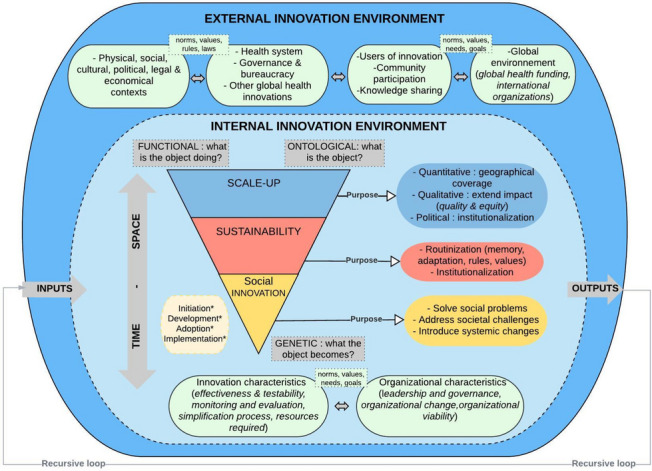
Scale-up and sustainability are often studied separately, with few studies examining the interdependencies between these two processes and the implementation contexts of innovations towards malaria prevention and control. Researchers and implementers offer much more attention to the content of innovations, as they focus on the technological dimensions and the conditions for expansion. Researchers have often considered innovation a linear sequence in which scaling up and sustainability represented the last stages. Using systems thinking in this manuscript, we analyze complex scaling and sustainability processes through adopting and implementing seasonal malaria chemoprevention (SMC) in Burkina Faso from 2014 to 2018.
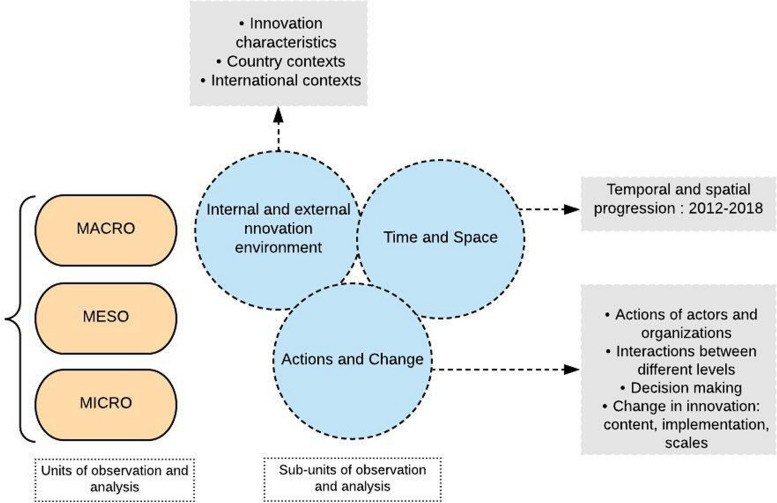
We conducted a qualitative case study involving 141 retrospective secondary data (administrative, press, scientific, tools and registries, and verbatim) spanning from 2012 to 2018. We complemented these data with primary data collected between February and March 2018 in the form of 15 personal semi-structured interviews with SMC stakeholders and non-participant observations. Processual analysis permitted us to conceptualize scale-up and sustainability processes over time according to different vertical and horizontal levels of analysis and their interconnections.
Our results indicated six internal and external determinants of SMC that may negatively or positively influence its scale-up and sustainability. These determinants are effectiveness, monitoring and evaluation systems, resources (financial, material, and human), leadership and governance, adaptation to the local context, and other external elements. Our results revealed that donors and implementing actors prioritized financial resources over other determinants. In contrast, our study clearly showed that the sustainability of the innovation, as well as its scaling up, depends significantly on the consideration of the interconnectedness of the determinants. Each determinant can concurrently constitute an opportunity and a challenge for the success of the innovation.
Our findings highlight the usefulness of the systemic perspective to consider all contexts (international, national, subnational, and local) to achieve large-scale improvements in the quality, equity, and effectiveness of global health interventions. Thus, complex and systems thinking have made it possible to observe emergent and dynamic innovation behaviors and the dynamics particular to sustainability and scaling up processes.
规模化和可持续性通常是分开研究的,很少有研究探讨这两个过程之间的相互关系以及创新在疟疾预防和控制方面的实施背景。研究人员和实施者更关注创新的内容,因为他们专注于技术层面和扩展条件。研究人员通常认为创新是一个线性序列,其中规模化和可持续性代表最后阶段。在本文中,我们运用系统思维,通过 2014 年至 2018 年在布基纳法索采用和实施季节性疟疾化学预防(SMC)来分析复杂的规模化和可持续性进程。
我们进行了一项定性案例研究,涉及 2012 年至 2018 年期间的 141 项回溯性二级数据(行政、新闻、科学、工具和登记册以及逐字记录)。我们还通过在 2018 年 2 月至 3 月之间进行的 15 次与 SMC 利益相关者的个人半结构化访谈和非参与式观察收集了主要数据来补充这些数据。过程分析使我们能够根据不同的垂直和水平分析层次及其相互关系来随时间概念化规模化和可持续性进程。
我们的结果表明,SMC 的六个内部和外部决定因素可能会对其规模化和可持续性产生负面影响或积极影响。这些决定因素是有效性、监测和评估系统、资源(财务、物质和人力)、领导力和治理、适应当地情况以及其他外部因素。我们的结果表明,捐助者和实施者优先考虑财务资源而不是其他决定因素。相比之下,我们的研究清楚地表明,创新的可持续性以及其规模化取决于对决定因素相互关联性的考虑。每个决定因素都可以同时成为创新成功的机会和挑战。
我们的研究结果强调了系统观点的有用性,即考虑所有背景(国际、国家、次国家和地方),以提高全球卫生干预措施的质量、公平性和效果。因此,复杂的系统思维使我们能够观察到创新的新兴和动态行为以及可持续性和规模化进程的特殊性。