Nakayama Keisuke, Komai Katsuaki, Amano Motoshi, Horii Shintarou, Somiya Yuichiro, Kumamoto Etsuko, Oyama Yoichi
Graduate School of Engineering, Kobe University, Kobe, 657-8501, Japan.
Faculty of Engineering, Kitami Institute of Technology, Kitami, 090-8507, Japan.
Sci Rep. 2023 Oct 6;13(1):16834. doi: 10.1038/s41598-023-43792-6.
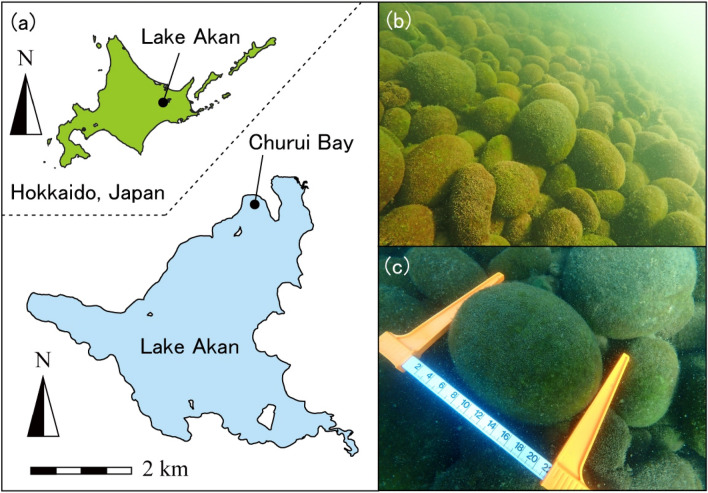
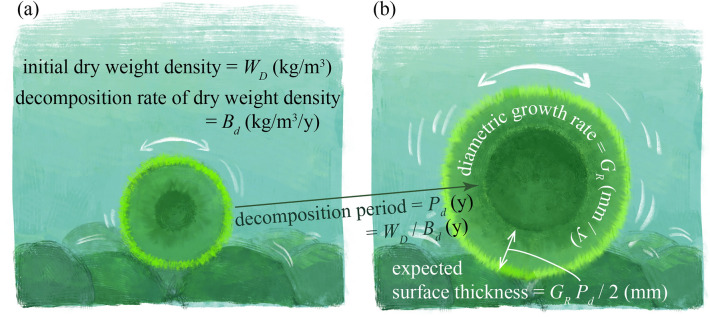
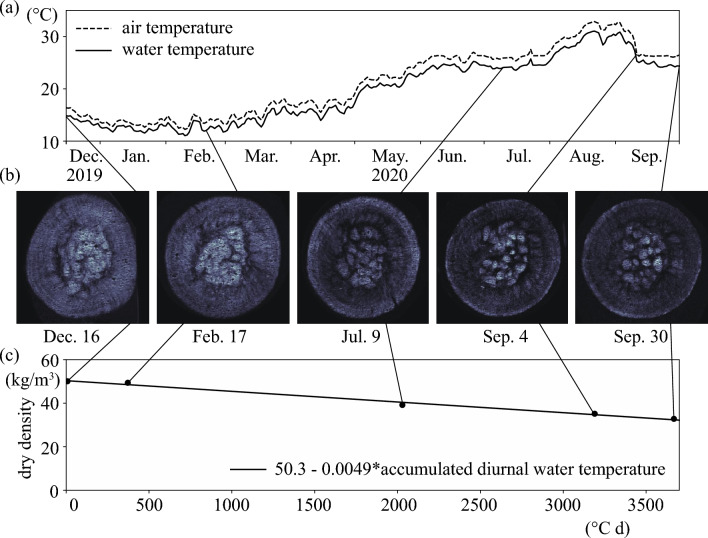
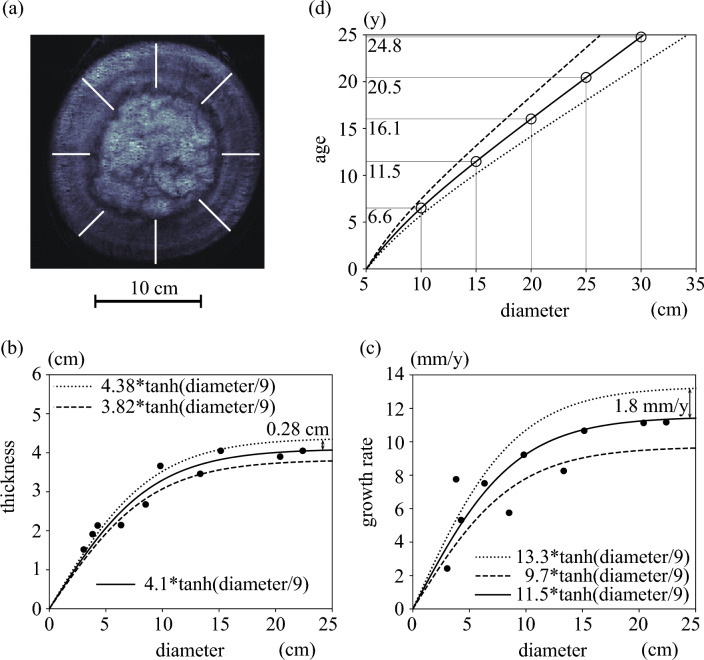
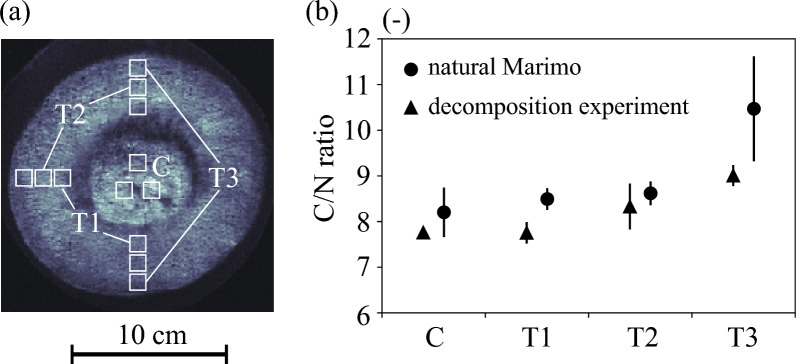
Aegagropila linnaei is a filamentous green algal species that often forms beautiful spherical shapes called "lake balls" or "Marimo". A. linnaei were once globally distributed around the world, but the population has been declining for several decades. Lake Akan, in Japan, is now the only lake in the world with a colony of giant Marimo (over 20 cm in diameter). Here we show the net growth rate of Marino resulting from photosynthesis and decomposition based on laboratory experiments, MRI analysis, and quantitative element analysis, which show the decomposition rate, the maximum annual Marimo diametric growth rate, and the carbon-to-nitrogen ratio, respectively. We found an explicit dependence of the decomposition rate of Marimo on the cumulative water temperature, with a threshold of 7 °C. MRI analysis showed a high correlation among a Marimo's diameter, surface thickness, and annual diametric growth rate. Moreover, the C/N ratio was high in the exterior side of the surface thickness, indicating that this layer is the main growth area for photosynthesis. These results suggest that the central cavity and the surface thickness represent the change in the growth environment such as water temperature and light intensity. Between the 1980s and the present, Between the 1980s and the present, the cumulative water temperature has increased from about 1250 to about 1600 °C-days. Therefore, the maximum surface thickness has decreased by approximately 1 cm, as estimated by water temperature records and annual diametric growth rates. As a measure to preserve preferable conditions for colonies of giant Marimo in the face of global warming, the flow of low-temperature river water into Marimo colonies should be protected.
球藻是一种丝状绿藻物种,常形成名为“湖球”或“玛珥莫”的美丽球形。球藻曾经在全球广泛分布,但几十年来其数量一直在下降。日本的阿寒湖是目前世界上唯一有巨型玛珥莫(直径超过20厘米)群落的湖泊。在此,我们基于实验室实验、磁共振成像(MRI)分析和定量元素分析,展示了光合作用和分解作用导致的玛珥莫净生长速率,这些分析分别显示了分解速率、玛珥莫的最大年直径生长速率以及碳氮比。我们发现玛珥莫的分解速率明显依赖于累积水温,阈值为7℃。MRI分析表明玛珥莫的直径、表面厚度和年直径生长速率之间存在高度相关性。此外,表面厚度外侧的碳氮比很高,表明该层是光合作用的主要生长区域。这些结果表明,中央空洞和表面厚度代表了水温及光照强度等生长环境的变化。在20世纪80年代到现在,累积水温从约1250℃ - 日增加到了约1600℃ - 日。因此,根据水温记录和年直径生长速率估算,最大表面厚度大约减少了1厘米。作为面对全球变暖为巨型玛珥莫群落维持适宜条件的一项措施,应保护低温河水流入玛珥莫群落。