Oncology, Department of Clinical and Experimental Medicine, University of Surrey, Guildford, UK.
Royal Marsden Hospital, Fulham Road, London, UK.
Cancer Immunol Immunother. 2023 Dec;72(12):4221-4234. doi: 10.1007/s00262-023-03558-5. Epub 2023 Nov 8.
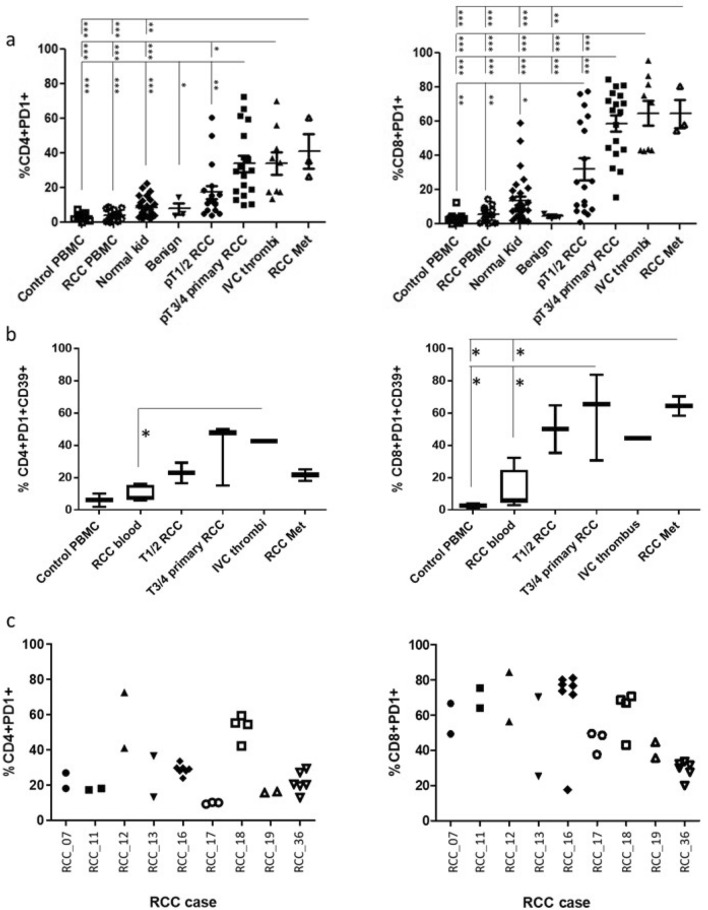
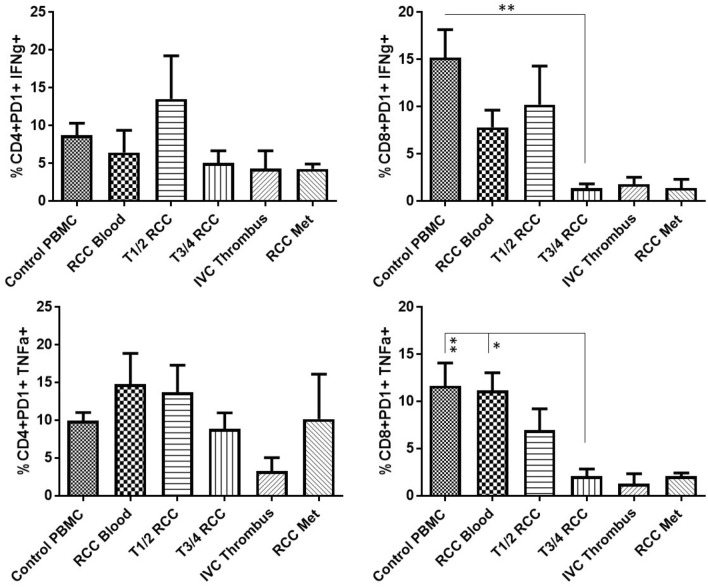
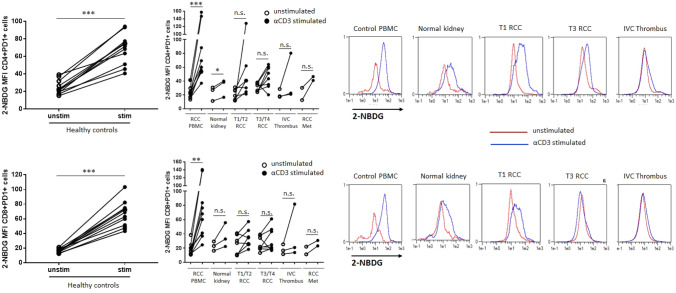
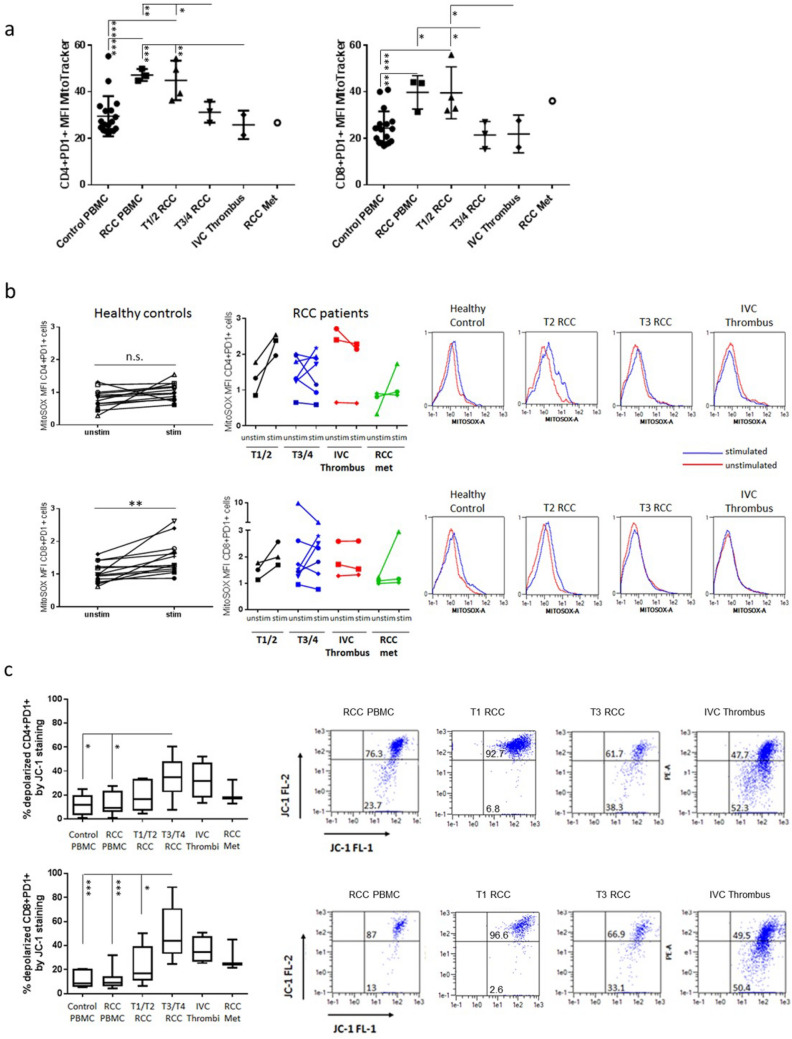
Renal cell carcinoma is an immunogenic tumour with a prominent dysfunctional immune cell infiltrate, unable to control tumour growth. Although tyrosine kinase inhibitors and immunotherapy have improved the outlook for some patients, many individuals are non-responders or relapse despite treatment. The hostile metabolic environment in RCC affects the ability of T-cells to maintain their own metabolic programme constraining T-cell immunity in RCC. We investigated the phenotype, function and metabolic capability of RCC TILs correlating this with clinicopathological features of the tumour and metabolic environment at the different disease stages. Flow cytometric analysis of freshly isolated TILs showed the emergence of exhausted T-cells in advanced disease based on their PD-1 and CD39 expression and reduced production of inflammatory cytokines upon in vitro stimulation. Exhausted T-cells from advanced stage disease also displayed an overall phenotype of metabolic insufficiency, characterized by mitochondrial alterations and defects in glucose uptake. Nanostring nCounter cancer metabolism assay on RNA obtained from 30 ccRCC cases revealed significant over-expression of metabolic genes even at early stage disease (pT1-2), while at pT3-4 and the locally advanced thrombi stages, there was an overall decrease in differentially expressed metabolic genes. Notably, the gene PPARGC1A was the most significantly down-regulated gene from pT1-2 to pT3-4 RCC which correlated with loss of mitochondrial function in tumour-infiltrating T-cells evident at this tumour stage. Down-regulation of PPARGC1A into stage pT3-4 may be the 'tipping-point' in RCC disease progression, modulating immune activity in ccRCC and potentially reducing the efficacy of immunotherapies in RCC and poorer patient outcomes.
肾细胞癌是一种免疫原性肿瘤,其浸润的免疫细胞功能失调,无法控制肿瘤生长。尽管酪氨酸激酶抑制剂和免疫疗法改善了一些患者的预后,但许多患者尽管接受了治疗,仍然没有反应或复发。RCC 中的敌对代谢环境影响 T 细胞维持自身代谢程序的能力,从而限制了 RCC 中的 T 细胞免疫。我们研究了 RCC TIL 的表型、功能和代谢能力,并将其与肿瘤的临床病理特征和不同疾病阶段的代谢环境相关联。对新鲜分离的 TILs 的流式细胞分析表明,晚期疾病中出现了耗竭的 T 细胞,其特征是 PD-1 和 CD39 的表达以及体外刺激时炎症细胞因子产生减少。晚期疾病的耗竭 T 细胞还表现出整体代谢不足的表型,其特征是线粒体改变和葡萄糖摄取缺陷。从 30 例 ccRCC 病例中获得的 RNA 进行的 Nanostring nCounter 癌症代谢分析显示,即使在早期疾病(pT1-2)时,代谢基因也存在显著的过度表达,而在 pT3-4 和局部晚期血栓形成阶段,差异表达的代谢基因总体减少。值得注意的是,从 pT1-2 到 pT3-4 的 RCC 中,PPARGC1A 基因是下调最显著的基因,这与肿瘤浸润 T 细胞中线粒体功能的丧失相关,这在肿瘤阶段是明显的。PPARGC1A 下调到 pT3-4 可能是 RCC 疾病进展的“转折点”,调节 ccRCC 中的免疫活性,并可能降低 RCC 免疫疗法的疗效和患者预后较差。