
MLL1 和 Jun 在控制结直肠癌增强子上的 H3K4me3 中的合作。
Cooperation of MLL1 and Jun in controlling H3K4me3 on enhancers in colorectal cancer.
机构信息
Frontier Science Center for Immunology and Metabolism, Hubei Key Laboratory of Cell Homeostasis, Hubei Key Laboratory of Developmentally Originated Disease, College of Life Sciences, Taikang Center for Life and Medical Sciences, Renmin Hospital of Wuhan University, Wuhan University, Wuhan, Hubei, 430072, China.
Department of Gastroenterology, Renmin Hospital of Wuhan University, Wuhan University, Wuhan, Hubei, 430072, China.
出版信息
Genome Biol. 2023 Nov 27;24(1):268. doi: 10.1186/s13059-023-03108-3.
BACKGROUND
Enhancer dysregulation is one of the important features for cancer cells. Enhancers enriched with H3K4me3 have been implicated to play important roles in cancer. However, their detailed features and regulatory mechanisms have not been well characterized.
RESULTS
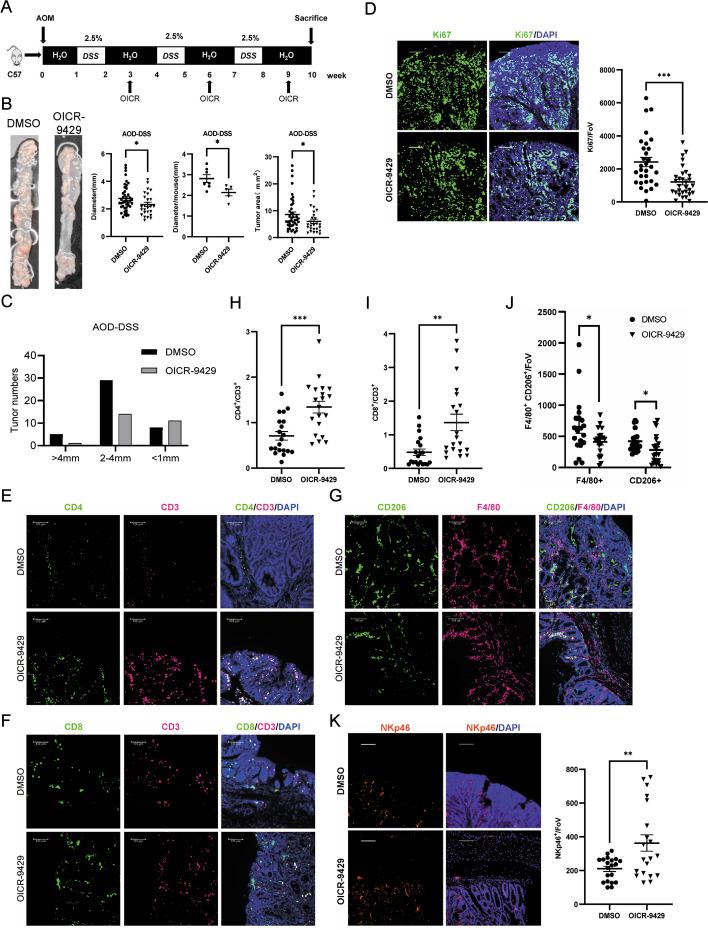
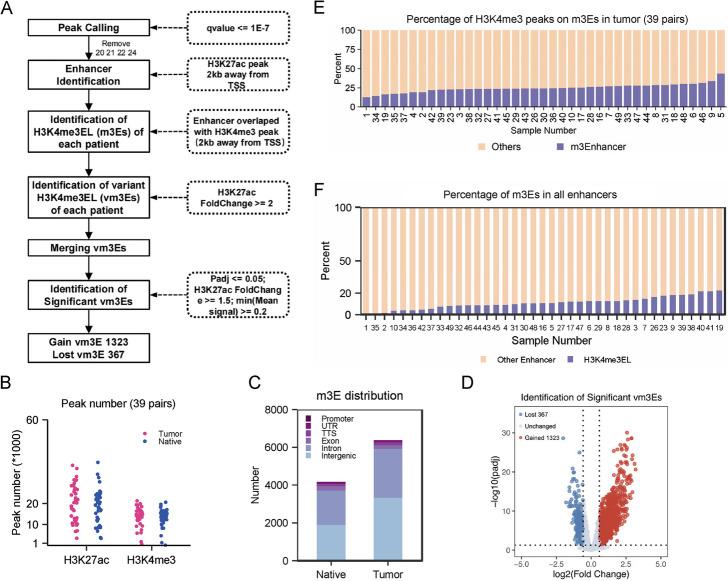
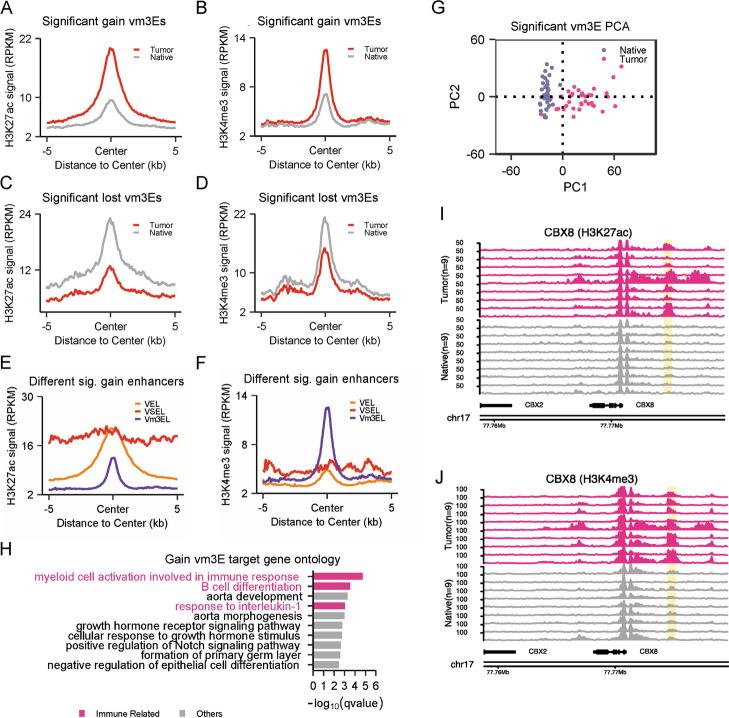
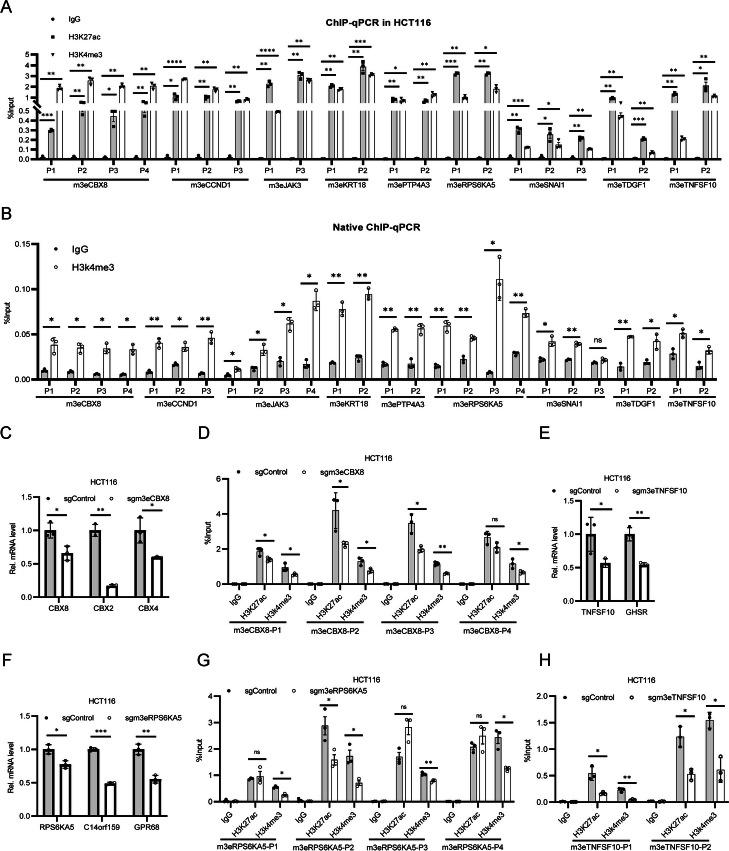
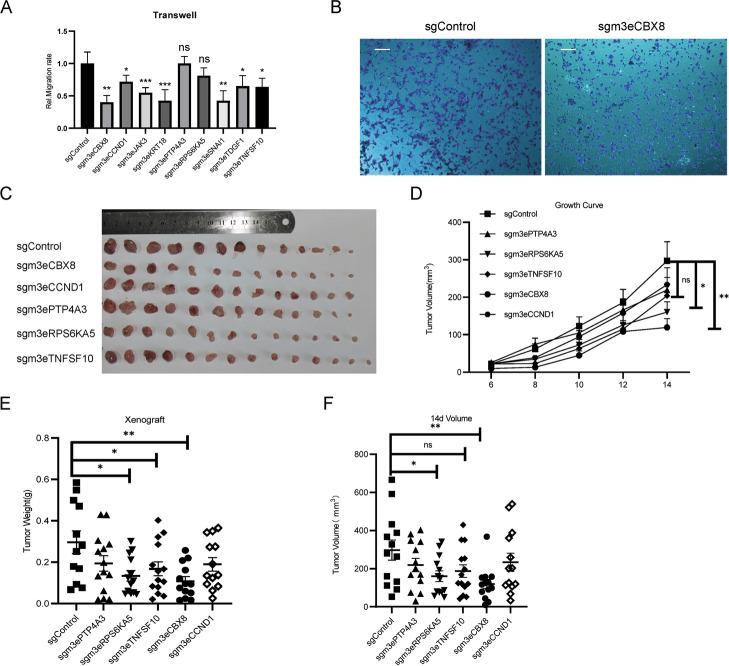
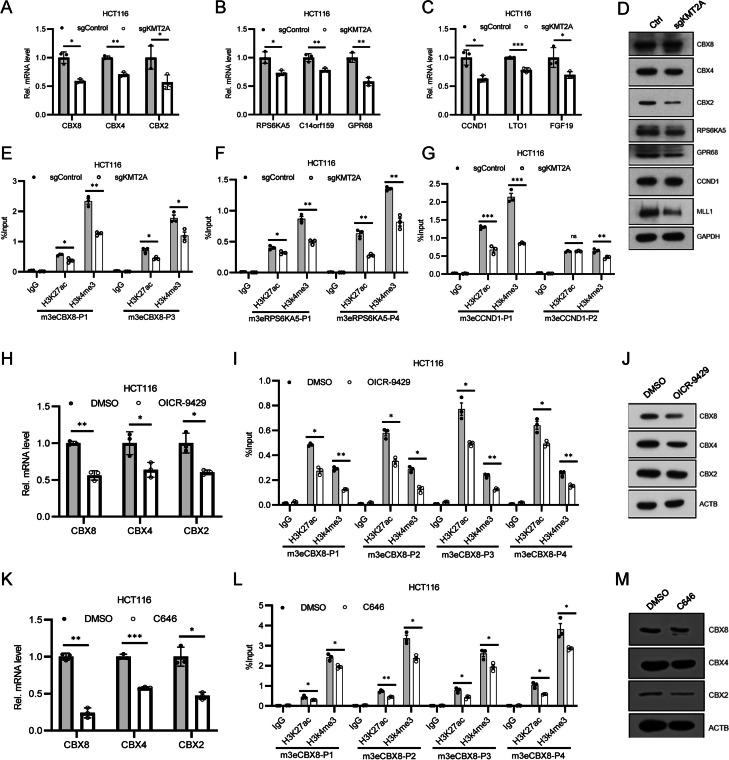
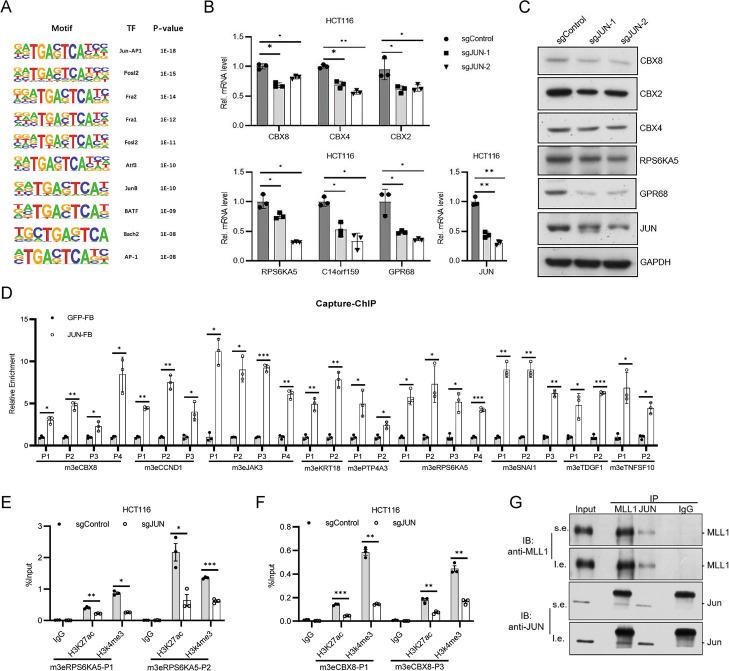
Here, we profile the landscape of H3K4me3-enriched enhancers (m3Es) in 43 pairs of colorectal cancer (CRC) samples. M3Es are widely distributed in CRC and averagely possess around 10% of total active enhancers. We identify 1322 gain variant m3Es and 367 lost variant m3Es in CRC. The target genes of the gain m3Es are enriched in immune response pathways. We experimentally prove that repression of CBX8 and RPS6KA5 m3Es inhibits target gene expression in CRC. Furthermore, we find histone methyltransferase MLL1 is responsible for depositing H3K4me3 on the identified Vm3Es. We demonstrate that the transcription factor AP1/JUN interacts with MLL1 and regulates m3E activity. Application of a small chemical inhibitor for MLL1 activity, OICR-9429, represses target gene expression of the identified Vm3Es, enhances anti-tumor immunity and inhibits CRC growth in an animal model.
CONCLUSIONS
Taken together, our study illustrates the genome-wide landscape and the regulatory mechanisms of m3Es in CRC, and reveals potential novel strategies for cancer treatment.
背景
增强子失调是癌细胞的重要特征之一。富含 H3K4me3 的增强子在癌症中发挥着重要作用。然而,它们的详细特征和调控机制尚未得到很好的描述。
结果
在这里,我们对 43 对结直肠癌(CRC)样本中的 H3K4me3 富集增强子(m3E)进行了分析。m3E 在 CRC 中广泛分布,平均约占总活性增强子的 10%。我们在 CRC 中鉴定出 1322 个增益变体 m3E 和 367 个丢失变体 m3E。增益 m3E 的靶基因富集在免疫反应途径中。我们通过实验证明,CBX8 和 RPS6KA5 m3E 的抑制可抑制 CRC 中靶基因的表达。此外,我们发现组蛋白甲基转移酶 MLL1 负责在鉴定出的 Vm3E 上沉积 H3K4me3。我们证明转录因子 AP1/JUN 与 MLL1 相互作用并调节 m3E 活性。MLL1 活性的小分子抑制剂 OICR-9429 的应用可抑制鉴定出的 Vm3E 的靶基因表达,增强抗肿瘤免疫并抑制动物模型中的 CRC 生长。
结论
综上所述,我们的研究说明了 m3E 在 CRC 中的全基因组图谱和调控机制,并揭示了潜在的癌症治疗新策略。
 Zotero 插件