Department of Dermatology, Tübingen University Hospital, Tübingen, Germany.
Cluster of Excellence iFIT (EXC 2180) Image Guided and Functionally Instructed Tumor Therapies, University Hospital Tübingen, Tübingen, 72076, Germany.
J Exp Clin Cancer Res. 2024 Jan 23;43(1):30. doi: 10.1186/s13046-023-02941-5.
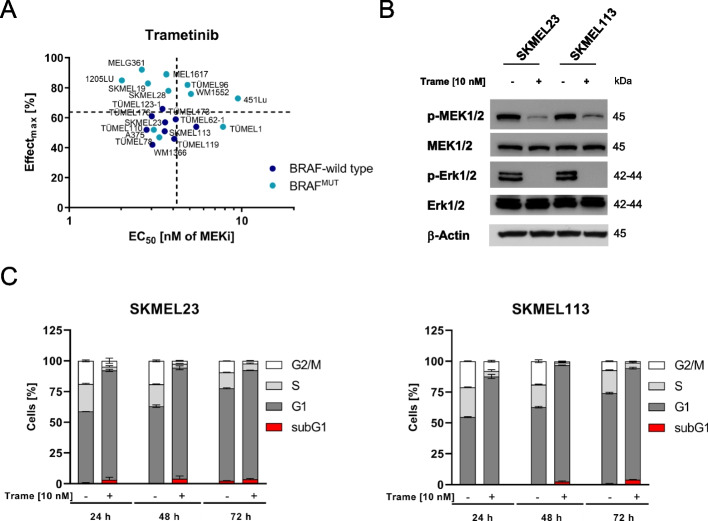
MEK inhibitors (MEKi) were shown to be clinically insufficiently effective in patients suffering from BRAF wild-type (BRAF WT) melanoma, even if the MAPK pathway was constitutively activated due to mutations in NRAS or NF-1. Thus, novel combinations are needed to increase the efficacy and duration of response to MEKi in BRAF WT melanoma. Disulfiram and its metabolite diethyldithiocarbamate are known to have antitumor effects related to cellular stress, and induction of endoplasmic reticulum (ER) stress was found to synergize with MEK inhibitors in NRAS-mutated melanoma cells. Therefore, we investigated the combination of both therapeutics to test their effects on BRAF-WT melanoma cells and compared them with monotherapy using the MEKi trametinib.
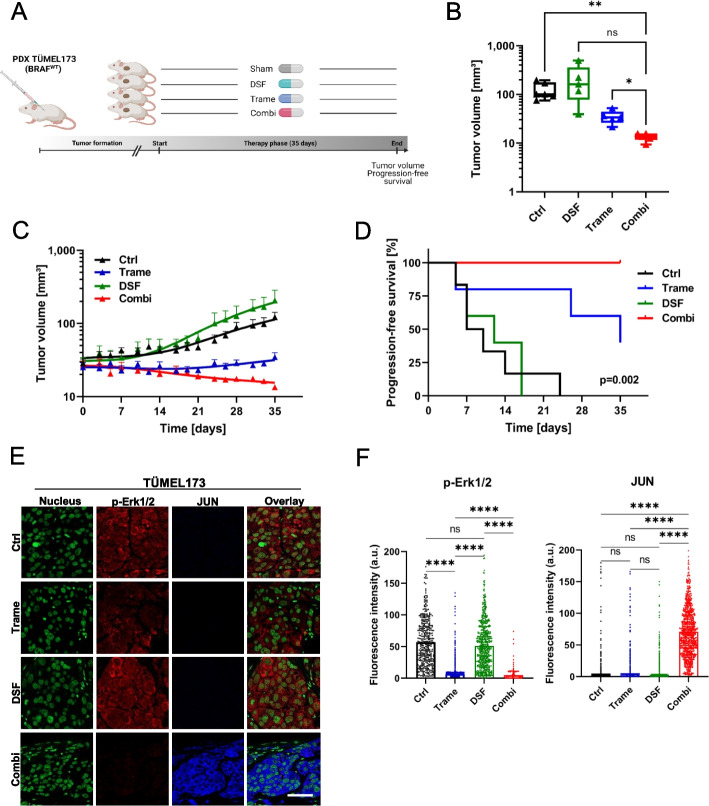
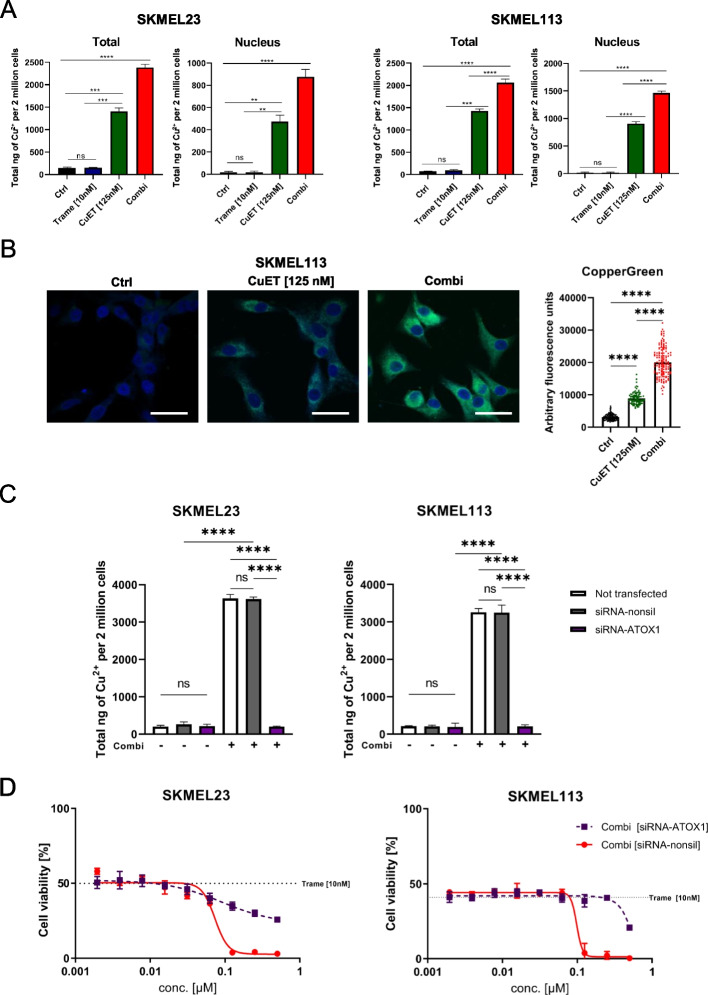
The effects of combined therapy with disulfiram or its metabolite diethyldithiocarbamate and the MEKi trametinib were evaluated in a series of BRAF-WT melanoma cell lines by measuring cell viability and apoptosis induction. Cytotoxicity was additionally assessed in 3D spheroids, ex vivo melanoma slice cultures, and in vivo xenograft mouse models. The response of melanoma cells to treatment was studied at the RNA and protein levels to decipher the mode of action. Intracellular and intratumoral copper measurements were performed to investigate the role of copper ions in the antitumor cytotoxicity of disulfiram and its combination with the MEKi.
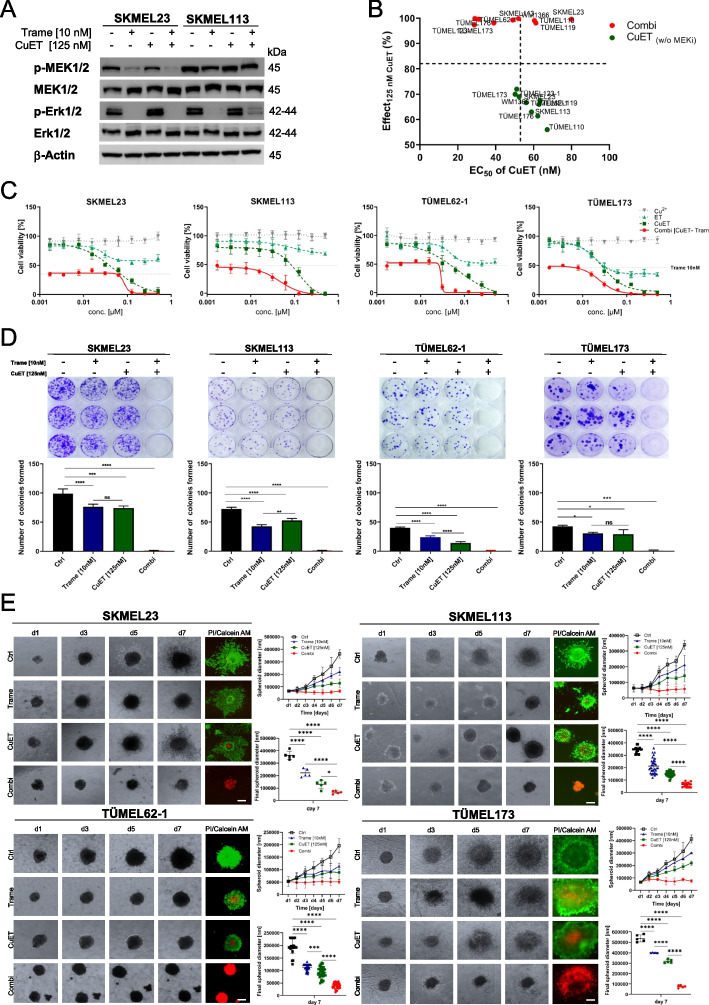
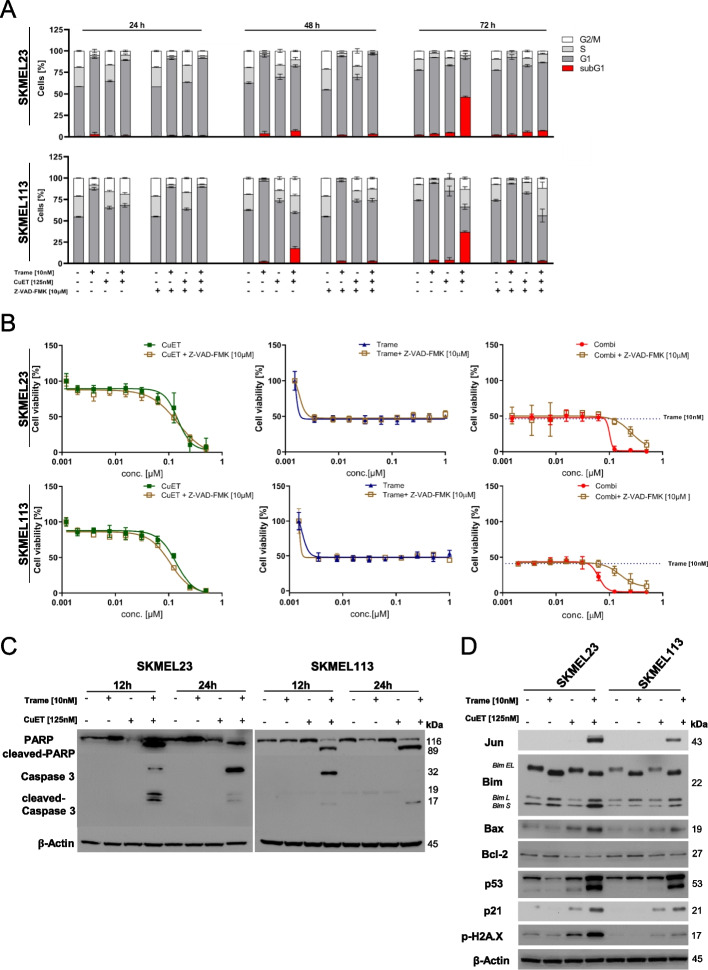
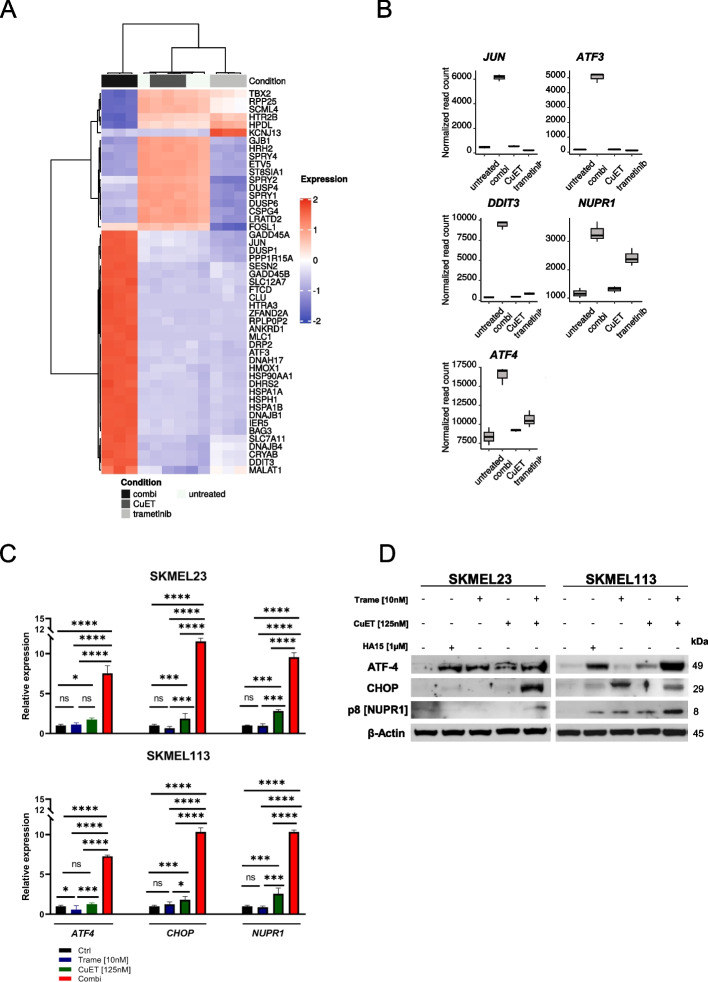
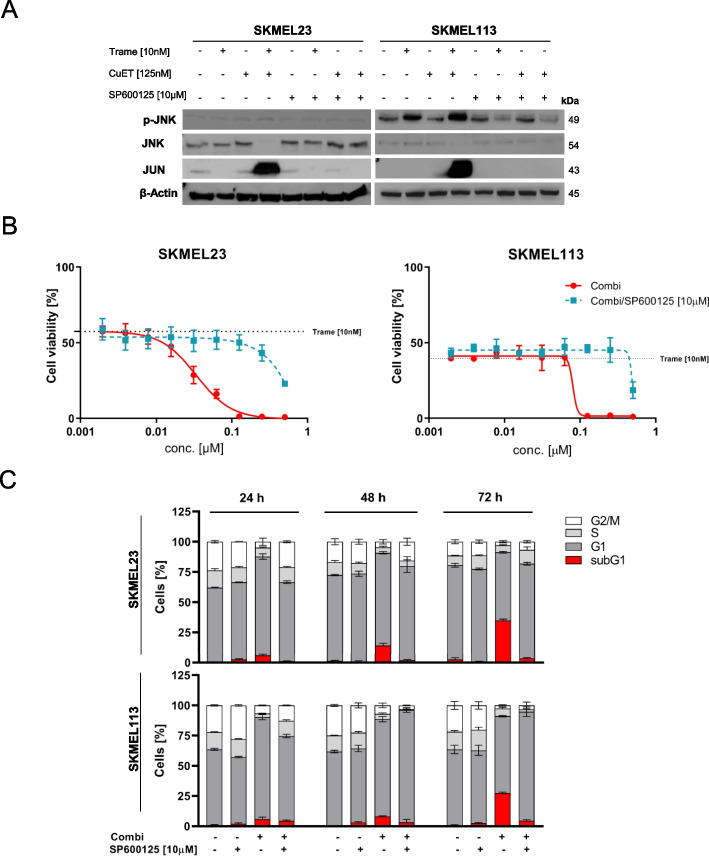
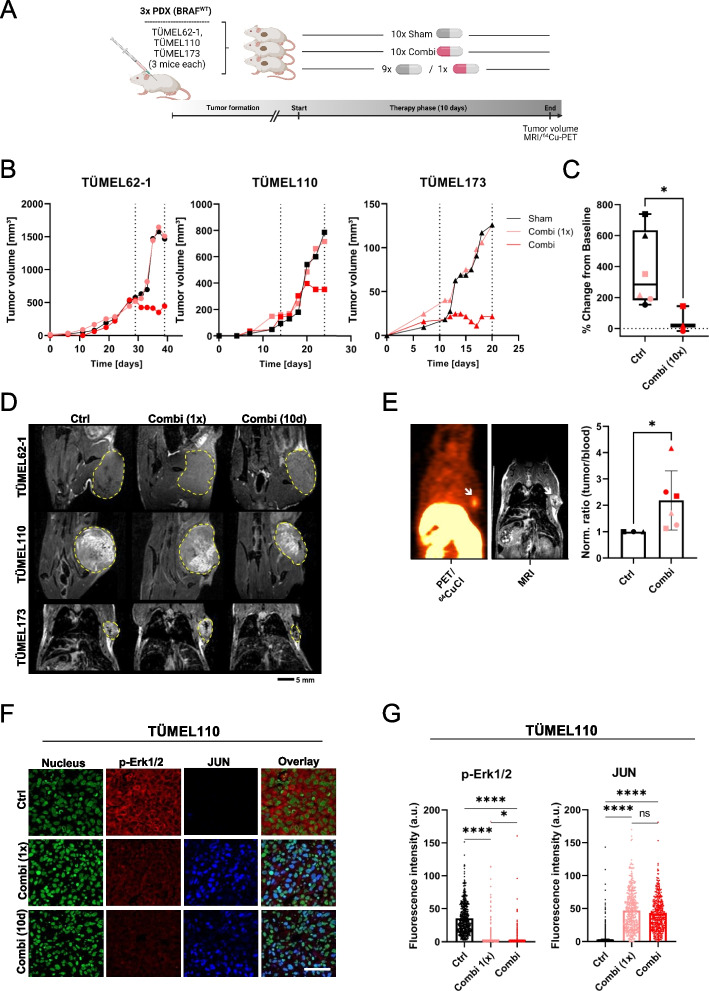
Diethyldithiocarbamate enhanced trametinib-induced cytotoxicity and apoptosis induction in 2D and 3D melanoma culture models. Mechanistically, copper-dependent induction of oxidative stress and ER stress led to Janus kinase (JNK)-mediated apoptosis in melanoma cells. This mechanism was also detectable in patient-derived xenograft melanoma models and resulted in a significantly improved therapeutic effect compared to monotherapy with the MEKi trametinib.
Disulfiram and its metabolite represent an attractive pharmaceutical approach to induce ER stress in melanoma cells that potentiates the antitumor effect of MEK inhibition and may be an interesting candidate for combination therapy of BRAF WT melanoma.
即使 MAPK 通路由于 NRAS 或 NF-1 中的突变而持续激活,MEK 抑制剂(MEKi)在患有 BRAF 野生型(BRAF WT)黑色素瘤的患者中临床疗效也不够充分。因此,需要新的联合治疗方法来提高 MEKi 在 BRAF WT 黑色素瘤中的疗效和反应持续时间。已知双硫仑及其代谢物二乙基二硫代氨基甲酸盐具有与细胞应激相关的抗肿瘤作用,并且在NRAS 突变黑色素瘤细胞中发现 ER 应激的诱导与 MEK 抑制剂具有协同作用。因此,我们研究了这两种治疗方法的联合治疗,以测试它们对 BRAF-WT 黑色素瘤细胞的影响,并将其与 MEKi 曲美替尼的单药治疗进行比较。
通过测量细胞活力和诱导细胞凋亡,在一系列 BRAF-WT 黑色素瘤细胞系中评估双硫仑或其代谢物二乙基二硫代氨基甲酸盐与 MEKi 曲美替尼联合治疗的效果。在 3D 球体、离体黑色素瘤切片培养物和体内异种移植小鼠模型中进一步评估细胞毒性。通过 RNA 和蛋白质水平研究黑色素瘤细胞对治疗的反应,以破译作用方式。进行细胞内和肿瘤内铜测量,以研究铜离子在双硫仑及其与 MEKi 联合的抗肿瘤细胞毒性中的作用。
二乙基二硫代氨基甲酸盐增强了曲美替尼在 2D 和 3D 黑色素瘤培养模型中的诱导细胞毒性和细胞凋亡作用。从机制上讲,铜依赖性诱导的氧化应激和 ER 应激导致黑色素瘤细胞中 JNK 介导的细胞凋亡。这种机制在患者来源的异种移植黑色素瘤模型中也是可检测的,与 MEKi 曲美替尼的单药治疗相比,显著改善了治疗效果。
双硫仑及其代谢物代表了一种有吸引力的药物方法,可诱导黑色素瘤细胞中的 ER 应激,增强 MEK 抑制的抗肿瘤作用,可能是 BRAF WT 黑色素瘤联合治疗的一个有趣候选药物。