Alič Špela, Bačnik Katarina, Dreo Tanja
National Institute of Biology, Ljubljana, Slovenia.
Front Microbiol. 2024 Feb 13;14:1249955. doi: 10.3389/fmicb.2023.1249955. eCollection 2023.
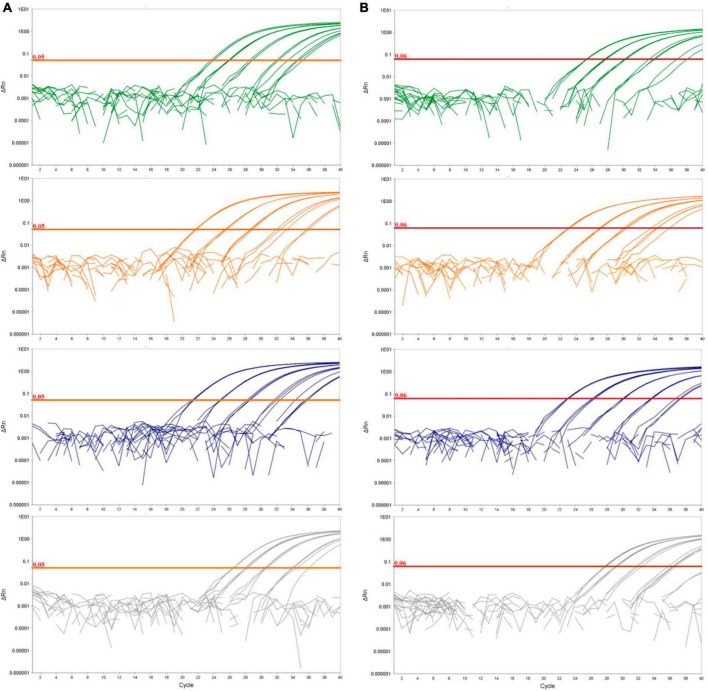
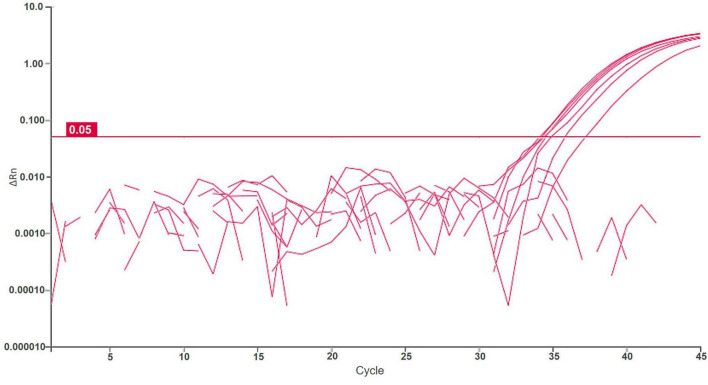
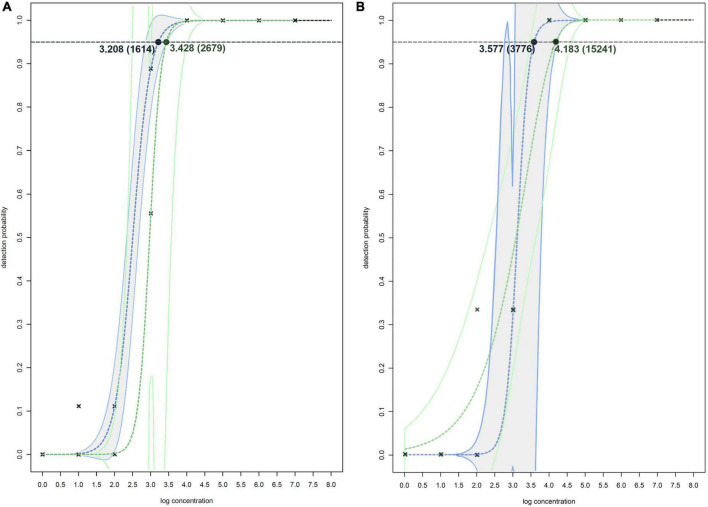
, an aggressive plant pathogen, causes symptoms on a variety of crops and ornamental plants including bleeding canker of Asian pear trees. Historical findings stress the need for a specific detection tool for to prevent overlooking the pathogen or assigning it to general spp. Therefore, a qualitative real-time PCR for specific detection of has been developed and validated. The developed assay shows selectivity of 100%, diagnostic sensitivity of 76% and limit of detection with 95% confidence interval in plant matrices ranging from 311 to 2,275 cells/mL of plant extracts. The assay was successfully used in a retrospective survey of selected host plants of relevance to Europe and environmental niches relevant to . Samples of potato tubers and plants, plants from the subtribe (apple, pear, quince, and Asian pear tree) and fresh surface water from Slovenia were analyzed. was not detected in any plant samples, however, 12% of surface water samples were found to be positive.
[一种具有侵袭性的植物病原体]会在多种农作物和观赏植物上引发症状,包括亚洲梨树的流胶溃疡病。历史研究结果强调,需要一种针对[该病原体]的特定检测工具,以防止忽视该病原体或将其归类于一般的[某类病原体]属。因此,已开发并验证了一种用于特异性检测[该病原体]的定性实时聚合酶链反应。所开发的检测方法显示出100%的选择性、76%的诊断灵敏度以及在植物提取物浓度范围为311至2275个细胞/毫升的植物基质中95%置信区间下的检测限。该检测方法已成功用于对与欧洲相关的选定寄主植物以及与[该病原体]相关的环境生态位的回顾性调查。分析了马铃薯块茎和植株样本、[某亚族](苹果、梨、榅桲和亚洲梨树)的植株样本以及来自斯洛文尼亚的新鲜地表水样本。在任何植物样本中均未检测到[该病原体],然而,12%的地表水样本被发现呈阳性。