Discipline of Psychiatry, Adelaide Medical School, University of Adelaide, Adelaide, SA, Australia.
Adelaide Health Technology Assessment, School of Public Health, University of Adelaide, Adelaide, SA, Australia.
PLoS One. 2024 Mar 21;19(3):e0284660. doi: 10.1371/journal.pone.0284660. eCollection 2024.
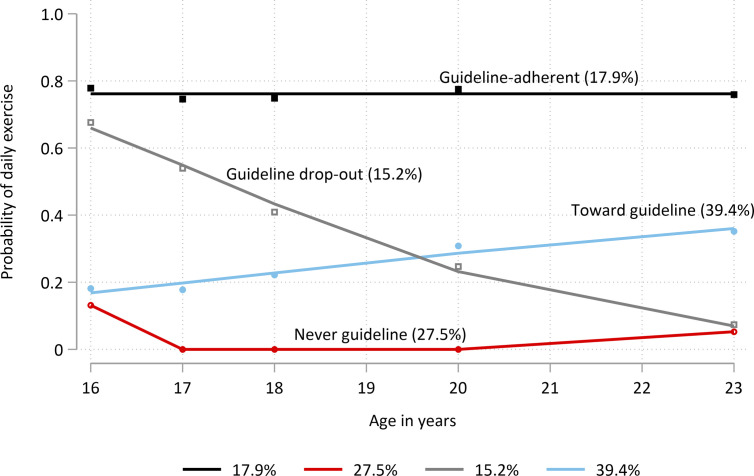
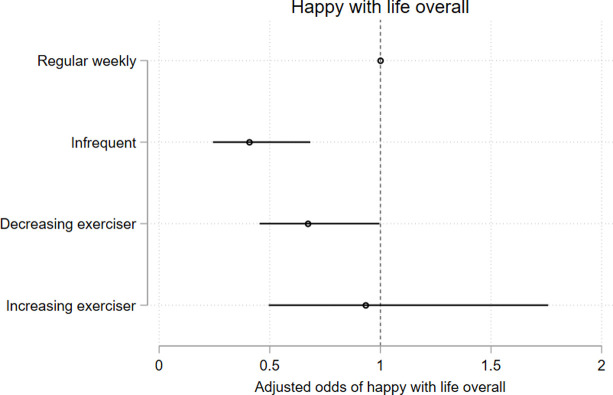
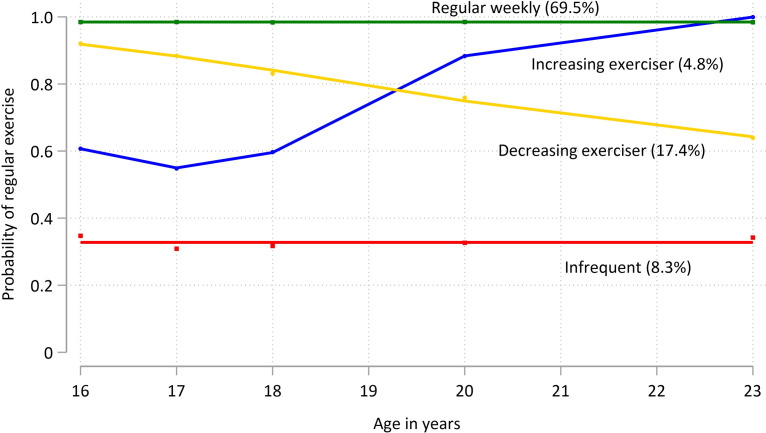
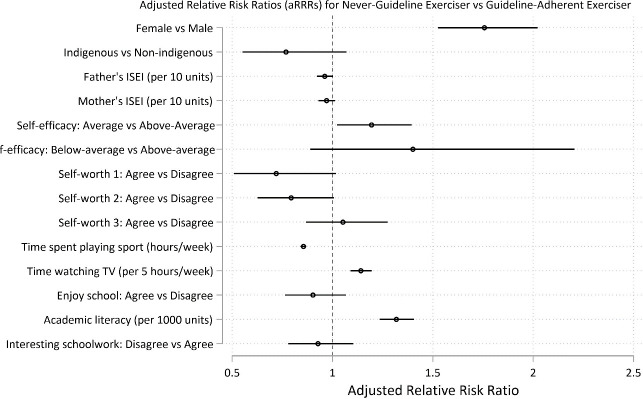
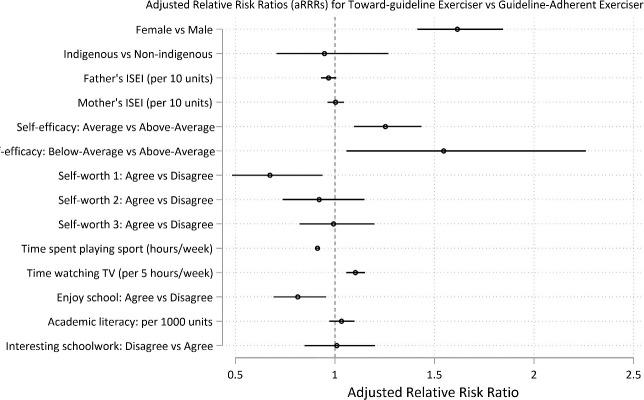
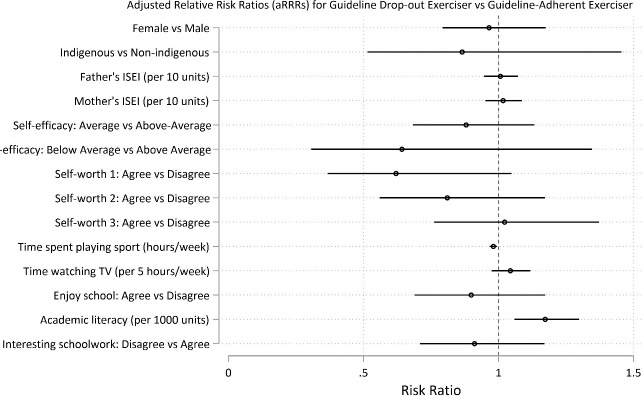
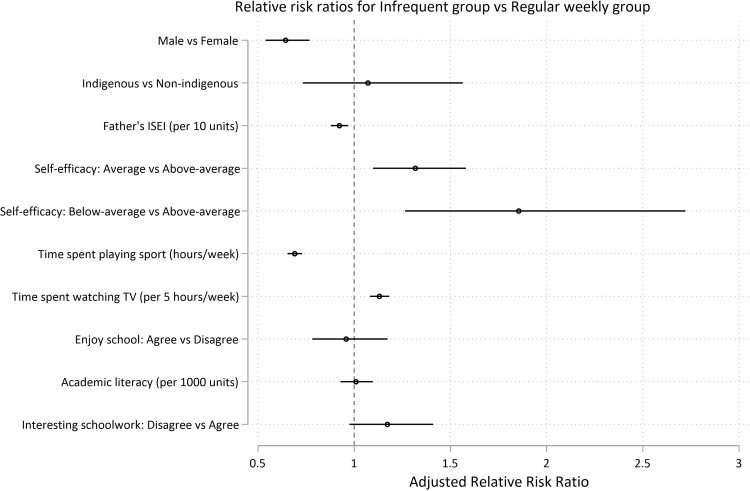
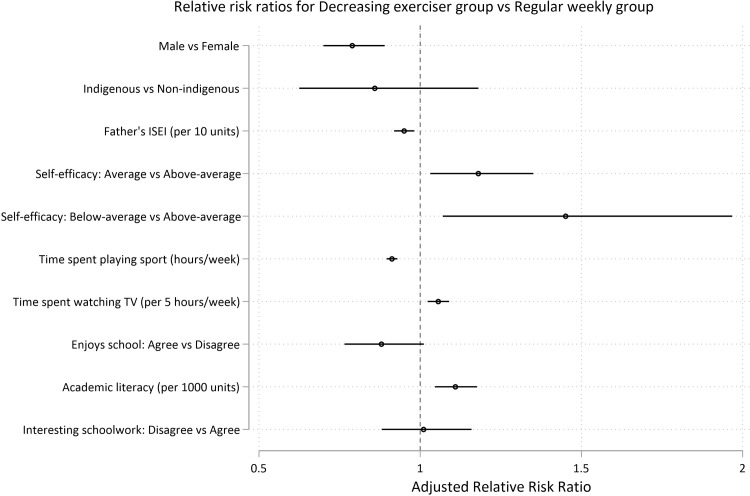
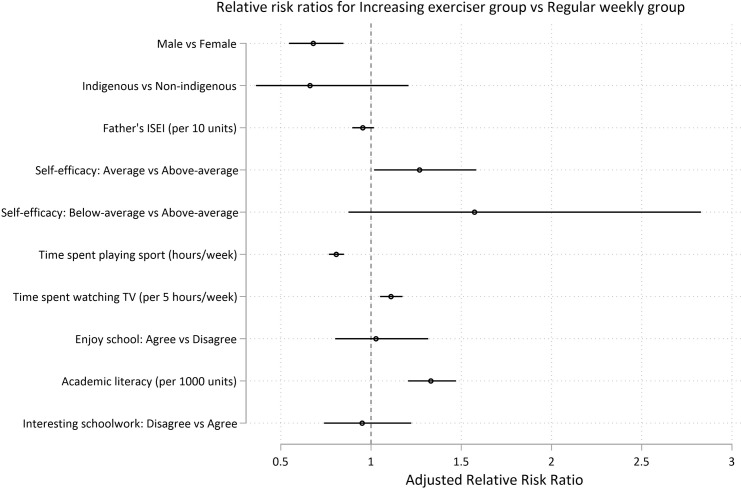
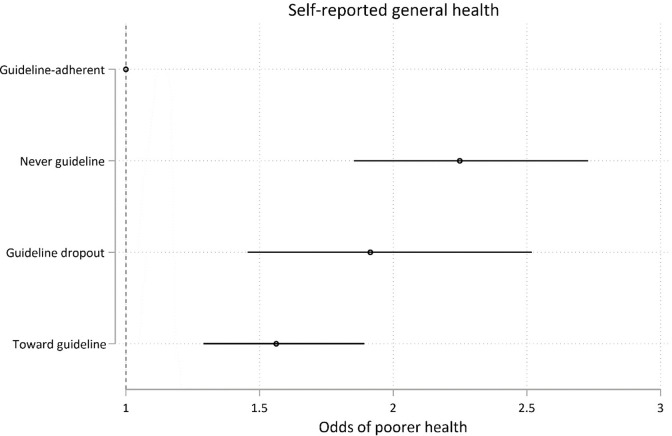
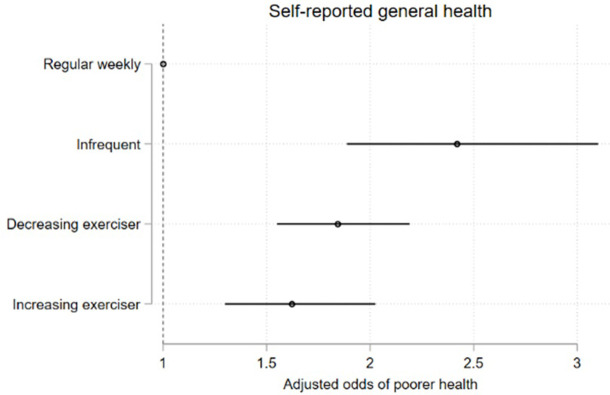
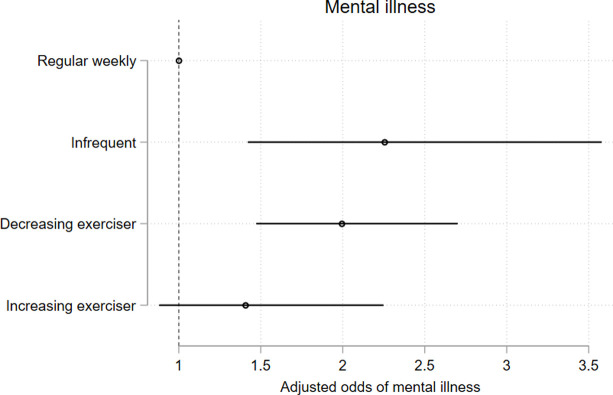
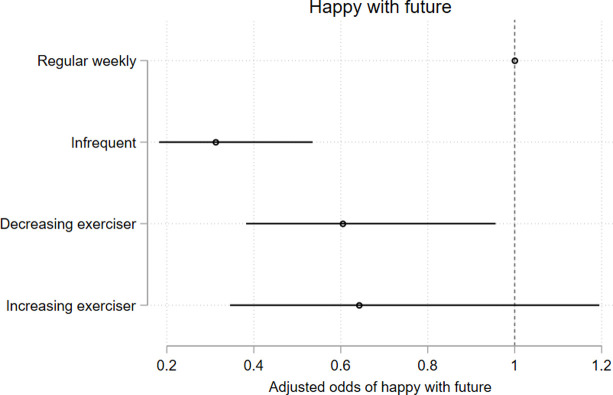
Individual and societal factors influencing the formation of long-term recreational exercise habits during the transition from adolescence to young adulthood are not well explored. Using data from the Longitudinal Survey of Australian Youth (LSAY), a population-representative cohort study of Young People followed from age 15 to 25, we aimed to (1) model longitudinal recreational exercise trajectories from age 16 to 24, (2) examine predictors at age 15 of entering these trajectories, and (3) explore the association between the trajectories and health, mental health and educational achievement outcomes measured at the final study wave (age 25). Self-reported recreational exercise frequency data from 9353 LSAY participants were analysed using group-based trajectory modelling. We modelled the evolution of two patterns of recreational exercise behaviour: daily exercise, as per public health guidelines (Model 1); and at least once weekly exercise (Model 2). Model 1 trajectories were guideline-adherent exercisers (17.9% of the sample), never guideline exercisers (27.5%), guideline drop-outs (15.2%) and towards guideline (39.4%); Model 2 trajectories were weekly exercise (69.5% of the sample), decreasing (17.4%), increasing (4.8%), and infrequent (8.3%). For both models, at age 15, trajectory membership was predicted by gender, self-efficacy, time spent participating in sport, time spent watching TV, parental socioeconomic status, and academic literacy. At age 25, people in the guideline-adherent exerciser trajectory (model 1) reported better general health relative to other trajectories, Those in the weekly exerciser trajectory (model 2) had better general health and reduced rates of psychological distress, were happier with life and were more optimistic for the future relative to participants in less than weekly trajectory groups. Exercise-promoting interventions for Young People should specifically address the needs of females, people with low self-efficacy, reluctant exercisers, higher academic achievers, and those experiencing socioeconomic disadvantage.
个体和社会因素对青少年向成年早期过渡期间形成长期娱乐性锻炼习惯的影响尚未得到充分探索。本研究使用澳大利亚青年纵向研究(LSAY)的数据,该研究对年龄在 15 至 25 岁的年轻人进行了代表性的队列研究,旨在:(1)从 16 岁到 24 岁建模娱乐性锻炼的纵向轨迹;(2)检验 15 岁时进入这些轨迹的预测因素;(3)探讨最后一次研究波(25 岁)测量的轨迹与健康、心理健康和教育成就结果之间的关联。对来自 9353 名 LSAY 参与者的自我报告娱乐性锻炼频率数据进行了基于群组的轨迹建模分析。我们对两种娱乐性锻炼行为模式的演变进行建模:每天锻炼,符合公共卫生指南(模型 1);以及每周至少一次锻炼(模型 2)。模型 1 轨迹为遵守指南的锻炼者(样本的 17.9%)、从不遵守指南的锻炼者(27.5%)、遵守指南后放弃者(15.2%)和逐渐遵守指南者(39.4%);模型 2 轨迹为每周锻炼(样本的 69.5%)、减少(17.4%)、增加(4.8%)和不频繁(8.3%)。对于两个模型,在 15 岁时,轨迹成员身份由性别、自我效能、参与运动的时间、看电视的时间、父母的社会经济地位和学术读写能力预测。在 25 岁时,遵守指南的锻炼者轨迹(模型 1)的人报告的总体健康状况优于其他轨迹,每周锻炼者轨迹(模型 2)的人报告的总体健康状况更好,心理困扰率更低,对生活更满意,对未来更乐观,与每周锻炼次数较少的参与者相比。针对年轻人的锻炼促进干预措施应特别针对女性、自我效能低、不愿意锻炼者、学业成绩较高者以及社会经济劣势者的需求。