• 文献检索
  • 文档翻译
  • 深度研究
  • 学术资讯
  • Suppr Zotero 插件Zotero 插件
  • 邀请有礼
  • 套餐&价格
  • 历史记录
应用&插件
Suppr Zotero 插件Zotero 插件浏览器插件Mac 客户端Windows 客户端微信小程序
定价
高级版会员购买积分包购买API积分包
服务
文献检索文档翻译深度研究API 文档MCP 服务
关于我们
关于 Suppr公司介绍联系我们用户协议隐私条款
关注我们

Suppr 超能文献

核心技术专利:CN118964589B侵权必究
粤ICP备2023148730 号-1Suppr @ 2026

文献检索

告别复杂PubMed语法,用中文像聊天一样搜索,搜遍4000万医学文献。AI智能推荐,让科研检索更轻松。

立即免费搜索

文件翻译

保留排版,准确专业,支持PDF/Word/PPT等文件格式,支持 12+语言互译。

免费翻译文档

深度研究

AI帮你快速写综述,25分钟生成高质量综述,智能提取关键信息,辅助科研写作。

立即免费体验

探索氯胺酮作为产后抑郁症麻醉剂和抗抑郁药的疗效:一项案例研究分析。

Exploring the Efficacy of Ketamine as an Anesthetic and Antidepressant in Postpartum Depression: A Case Study Analysis.

作者信息

Benjamin Clara, Atalay Rediet Tefera, Kolawole Oluwapelumi, Ramallo Miguel, McAllister Valerie, Akinyemi Oluwasegun A, Siraga Mahlet, Michael Miriam B

机构信息

Internal Medicine, Howard University College of Medicine, Washington, D.C., USA.

Internal Medicine, Howard University Hospital, Washington, D.C., USA.

出版信息

Cureus. 2024 Feb 29;16(2):e55208. doi: 10.7759/cureus.55208. eCollection 2024 Feb.

DOI:10.7759/cureus.55208
PMID:38558697
原文链接:https://pmc.ncbi.nlm.nih.gov/articles/PMC10981165/
Abstract

Postpartum depression is a common mental health disorder that affects women within six months after giving birth. It is characterized by sadness, anxiety, and extreme fatigue, which can significantly impact a woman's daily functioning and ability to care for her newborn. While traditional treatments for postpartum depression include therapy and medication, recent studies have shown promising results using ketamine. We present a case of a woman with a history of depression who delivered four children by cesarean section with debilitating postpartum depression in two births and no symptoms of depression in the births where she received ketamine during delivery.

摘要

产后抑郁症是一种常见的心理健康障碍,会影响产后六个月内的女性。其特征为悲伤、焦虑和极度疲劳,这会严重影响女性的日常功能以及照顾新生儿的能力。虽然产后抑郁症的传统治疗方法包括心理治疗和药物治疗,但最近的研究表明,使用氯胺酮取得了令人鼓舞的结果。我们报告了一例有抑郁症病史的女性病例,她剖宫产分娩了四个孩子,其中两次分娩后患有严重的产后抑郁症,而在分娩期间接受氯胺酮治疗的两次分娩中没有抑郁症症状。
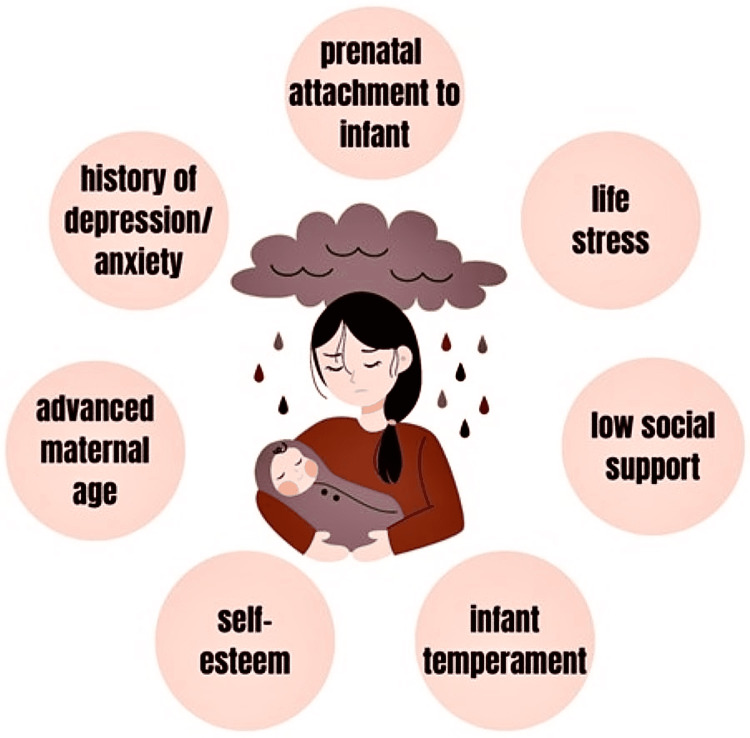
https://cdn.ncbi.nlm.nih.gov/pmc/blobs/3fd4/10981165/af06cd02f22a/cureus-0016-00000055208-i01.jpg

相似文献

1
Exploring the Efficacy of Ketamine as an Anesthetic and Antidepressant in Postpartum Depression: A Case Study Analysis.探索氯胺酮作为产后抑郁症麻醉剂和抗抑郁药的疗效:一项案例研究分析。
Cureus. 2024 Feb 29;16(2):e55208. doi: 10.7759/cureus.55208. eCollection 2024 Feb.
2
Prescription of Controlled Substances: Benefits and Risks管制药品的处方:益处与风险
3
Debriefing interventions for the prevention of psychological trauma in women following childbirth.产后女性心理创伤预防的汇报干预措施。
Cochrane Database Syst Rev. 2015 Apr 10;2015(4):CD007194. doi: 10.1002/14651858.CD007194.pub2.
4
The Black Book of Psychotropic Dosing and Monitoring.《精神药物剂量与监测黑皮书》
Psychopharmacol Bull. 2024 Jul 8;54(3):8-59.
5
Antidepressant treatment for postnatal depression.产后抑郁症的抗抑郁治疗。
Cochrane Database Syst Rev. 2014 Sep 11;2014(9):CD002018. doi: 10.1002/14651858.CD002018.pub2.
6
Telephone support for women during pregnancy and the first six weeks postpartum.为孕期及产后六周内的女性提供电话支持服务。
Cochrane Database Syst Rev. 2013 Jul 18;2013(7):CD009338. doi: 10.1002/14651858.CD009338.pub2.
7
Brexanolone, zuranolone and related neurosteroid GABA receptor positive allosteric modulators for postnatal depression.用于产后抑郁症的布雷沙诺龙、祖拉诺龙及相关神经甾体GABA受体正变构调节剂。
Cochrane Database Syst Rev. 2025 Jun 26;6(6):CD014624. doi: 10.1002/14651858.CD014624.pub2.
8
Antidepressants for preventing postnatal depression.用于预防产后抑郁症的抗抑郁药。
Cochrane Database Syst Rev. 2018 Apr 18;4(4):CD004363. doi: 10.1002/14651858.CD004363.pub3.
9
Breastfeeding interventions for preventing postpartum depression.预防产后抑郁症的母乳喂养干预措施。
Cochrane Database Syst Rev. 2025 Feb 18;2(2):CD014833. doi: 10.1002/14651858.CD014833.pub2.
10
Dietary supplements for preventing postnatal depression.预防产后抑郁症的膳食补充剂。
Cochrane Database Syst Rev. 2013 Oct 24;2013(10):CD009104. doi: 10.1002/14651858.CD009104.pub2.

本文引用的文献

1
Prevalence and Risk Factors of Postpartum Depression in Women: A Systematic Review and Meta-analysis.产后抑郁症在女性中的流行情况及危险因素:系统评价和荟萃分析。
J Clin Nurs. 2022 Oct;31(19-20):2665-2677. doi: 10.1111/jocn.16121. Epub 2021 Nov 8.
2
Homicide During Pregnancy and the Postpartum Period in the United States, 2018-2019.美国 2018-2019 年妊娠期和产后期间的杀人事件。
Obstet Gynecol. 2021 Nov 1;138(5):762-769. doi: 10.1097/AOG.0000000000004567.
3
Intraoperative ketamine for reduction in postpartum depressive symptoms after cesarean delivery: A double-blind, randomized clinical trial.
剖宫产术后术中氯胺酮减轻产后抑郁症状的效果:一项双盲、随机临床试验。
Brain Behav. 2020 Sep;10(9):e01715. doi: 10.1002/brb3.1715. Epub 2020 Aug 18.
4
A Comprehensive Analysis of Post-partum Depression Risk Factors: The Role of Socio-Demographic, Individual, Relational, and Delivery Characteristics.产后抑郁风险因素的综合分析:社会人口学、个体、人际关系及分娩特征的作用
Front Public Health. 2019 Oct 24;7:295. doi: 10.3389/fpubh.2019.00295. eCollection 2019.
5
Prophylactic use of ketamine reduces postpartum depression in Chinese women undergoing cesarean section.预防性使用氯胺酮可降低中国剖宫产产妇产后抑郁的发生率。
Psychiatry Res. 2019 Sep;279:252-258. doi: 10.1016/j.psychres.2019.03.026. Epub 2019 Mar 16.
6
Consequences of maternal postpartum depression: A systematic review of maternal and infant outcomes.产后抑郁症的后果:对母婴结局的系统评价
Womens Health (Lond). 2019 Jan-Dec;15:1745506519844044. doi: 10.1177/1745506519844044.
7
Effects of Perinatal Exposure to Ketamine on the Developing Brain.围产期接触氯胺酮对发育中大脑的影响。
Front Neurosci. 2019 Feb 22;13:138. doi: 10.3389/fnins.2019.00138. eCollection 2019.
8
The role of reproductive hormones in postpartum depression.生殖激素在产后抑郁症中的作用。
CNS Spectr. 2015 Feb;20(1):48-59. doi: 10.1017/S1092852914000480. Epub 2014 Sep 29.
9
Epidural labor analgesia is associated with a decreased risk of postpartum depression: a prospective cohort study.硬膜外分娩镇痛与产后抑郁症风险降低相关:一项前瞻性队列研究。
Anesth Analg. 2014 Aug;119(2):383-392. doi: 10.1213/ANE.0000000000000107.
10
Postpartum depression: current status and future directions.产后抑郁症:现状与未来方向。
Annu Rev Clin Psychol. 2013;9:379-407. doi: 10.1146/annurev-clinpsy-050212-185612. Epub 2013 Feb 1.