
解析肿瘤周围组织的恶性表型:早期乳腺癌的转录组学研究。
Unraveling malignant phenotype of peritumoral tissue: transcriptomic insights into early-stage breast cancer.
机构信息
Grupo Multidisciplinar de Oncología Traslacional, Institut Universitari d'Investigació en Ciéncies de la Salut (IUNICS), Universitat de les Illes Balears, Palma, Illes Balears, Spain.
Instituto de Investigación Sanitaria de las Islas Baleares (IdISBa), Hospital Universitario Son Espases, Edificio S, Palma, Illes Balears, Spain.
出版信息
Breast Cancer Res. 2024 Jun 3;26(1):89. doi: 10.1186/s13058-024-01837-2.
BACKGROUND
Early-stage invasive ductal carcinoma displays high survival rates due to early detection and treatments. However, there is still a chance of relapse of 3-15% after treatment. The aim of this study was to uncover the distinctive transcriptomic characteristics and monitoring prognosis potential of peritumoral tissue in early-stage cases.
METHODS
RNA was isolated from tumoral, peritumoral, and non-tumoral breast tissue from surgical resection of 10 luminal early-stage invasive ductal carcinoma patients. Transcriptome expression profiling for differentially expressed genes (DEGs) identification was carried out through microarray analysis. Gene Ontology and KEGG pathways enrichment analysis were explored for functional characterization of identified DEGs. Protein-Protein Interactions (PPI) networks analysis was performed to identify hub nodes of peritumoral tissue alterations and correlated with Overall Survival and Relapse Free Survival.
RESULTS
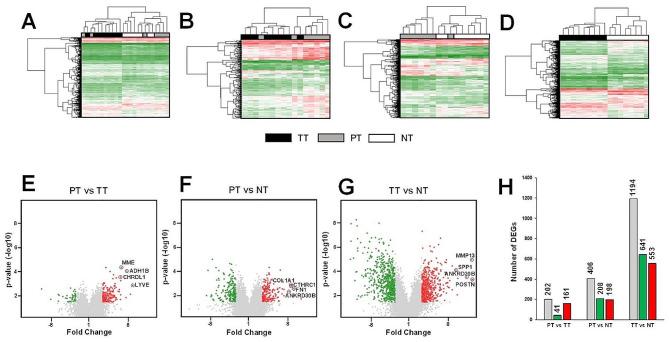
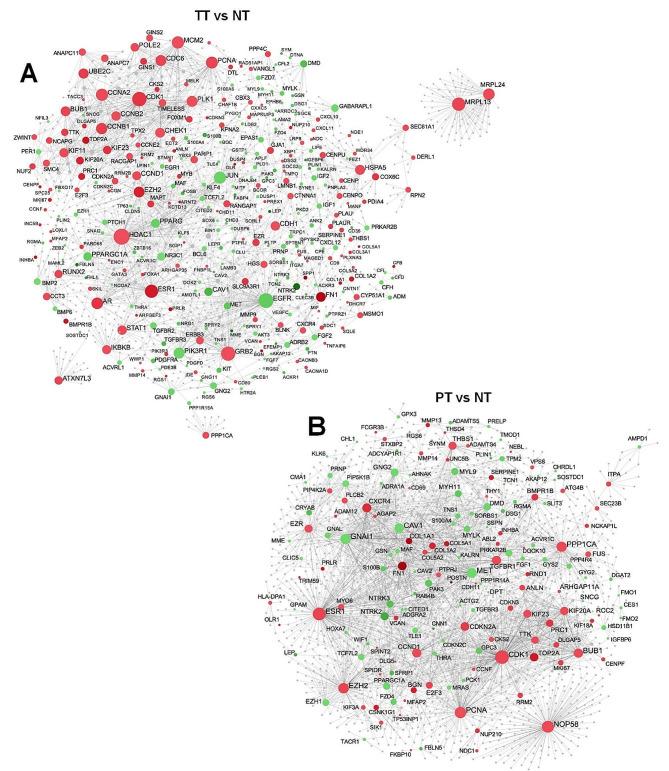
DEGs closely related with cell migration, extracellular matrix organization, and cell cycle were upregulated in peritumoral tissue compared to non-tumoral. Analyzing PPI networks, we observed that the proximity to tumor leads to the alteration of gene modules involved in cell proliferation and differentiation signaling pathways. In fact, in the peritumoral area were identified the top ten upregulated hub nodes including CDK1, ESR1, NOP58, PCNA, EZH2, PPP1CA, BUB1, TGFBR1, CXCR4, and CCND1. A signature performed by four of these hub nodes (CDK1, PCNA, EZH2, and BUB1) was associated with relapse events in untreated luminal breast cancer patients.
CONCLUSIONS
In conclusion, our study characterizes in depth breast peritumoral tissue providing clues on the changes that tumor signaling could cause in patients with early-stage breast cancer. We propose that the use of a four gene signature could help to predict local relapse. Overall, our results highlight the value of peritumoral tissue as a potential source of new biomarkers for early detection of relapse and improvement in invasive ductal carcinoma patient's prognosis.
背景
早期浸润性导管癌由于早期发现和治疗,生存率很高。然而,治疗后仍有 3-15%的复发机会。本研究旨在揭示早期病例肿瘤周围组织独特的转录组特征和监测预后的潜力。
方法
从 10 例腔型早期浸润性导管癌患者手术切除的肿瘤、肿瘤周围和非肿瘤乳腺组织中分离 RNA。通过微阵列分析进行差异表达基因(DEG)鉴定的转录组表达谱分析。进行基因本体论和 KEGG 通路富集分析,以对鉴定的 DEG 进行功能表征。进行蛋白质-蛋白质相互作用(PPI)网络分析,以鉴定肿瘤周围组织改变的枢纽节点,并与总生存和无复发生存相关。
结果
与非肿瘤组织相比,肿瘤周围组织中与细胞迁移、细胞外基质组织和细胞周期密切相关的 DEG 上调。分析 PPI 网络,我们观察到肿瘤的临近导致参与细胞增殖和分化信号通路的基因模块发生改变。事实上,在肿瘤周围区域鉴定到前 10 个上调的枢纽节点,包括 CDK1、ESR1、NOP58、PCNA、EZH2、PPP1CA、BUB1、TGFBR1、CXCR4 和 CCND1。这四个枢纽节点(CDK1、PCNA、EZH2 和 BUB1)中的四个节点组成的特征与未经治疗的腔型乳腺癌患者的复发事件相关。
结论
总之,我们的研究深入描绘了乳腺肿瘤周围组织,为早期乳腺癌患者肿瘤信号可能引起的变化提供了线索。我们提出,使用四个基因特征可以帮助预测局部复发。总体而言,我们的研究结果强调了肿瘤周围组织作为早期检测复发和改善浸润性导管癌患者预后的新生物标志物的潜在来源的价值。




 Zotero 插件