• 文献检索
  • 文档翻译
  • 深度研究
  • 学术资讯
  • Suppr Zotero 插件Zotero 插件
  • 邀请有礼
  • 套餐&价格
  • 历史记录
应用&插件
Suppr Zotero 插件Zotero 插件浏览器插件Mac 客户端Windows 客户端微信小程序
定价
高级版会员购买积分包购买API积分包
服务
文献检索文档翻译深度研究API 文档MCP 服务
关于我们
关于 Suppr公司介绍联系我们用户协议隐私条款
关注我们

Suppr 超能文献

核心技术专利:CN118964589B侵权必究
粤ICP备2023148730 号-1Suppr @ 2026

文献检索

告别复杂PubMed语法,用中文像聊天一样搜索,搜遍4000万医学文献。AI智能推荐,让科研检索更轻松。

立即免费搜索

文件翻译

保留排版,准确专业,支持PDF/Word/PPT等文件格式,支持 12+语言互译。

免费翻译文档

深度研究

AI帮你快速写综述,25分钟生成高质量综述,智能提取关键信息,辅助科研写作。

立即免费体验

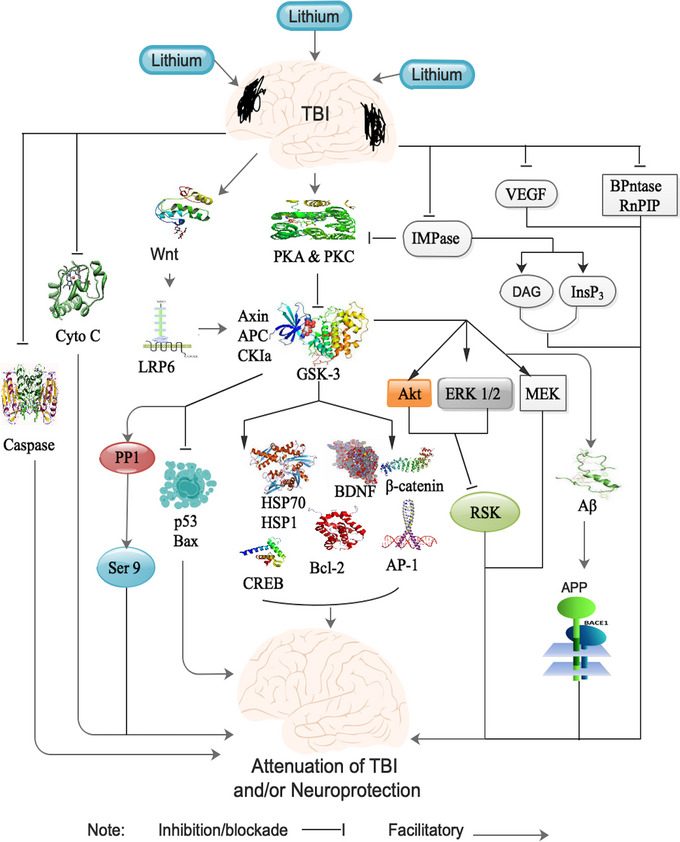
阐明锂在创伤性脑损伤中的关键分子机制、治疗和神经保护作用。

Elucidating the pivotal molecular mechanisms, therapeutic and neuroprotective effects of lithium in traumatic brain injury.

机构信息

Department of Medicine, Princefield University, Ho, Ghana.

Institute of Neuroscience, Third Affiliated Hospital, Zhengzhou University, Zhengzhou, China.

出版信息

Brain Behav. 2024 Jun;14(6):e3595. doi: 10.1002/brb3.3595.

DOI:10.1002/brb3.3595
PMID:38874089
原文链接:https://pmc.ncbi.nlm.nih.gov/articles/PMC11177180/
Abstract

INTRODUCTION

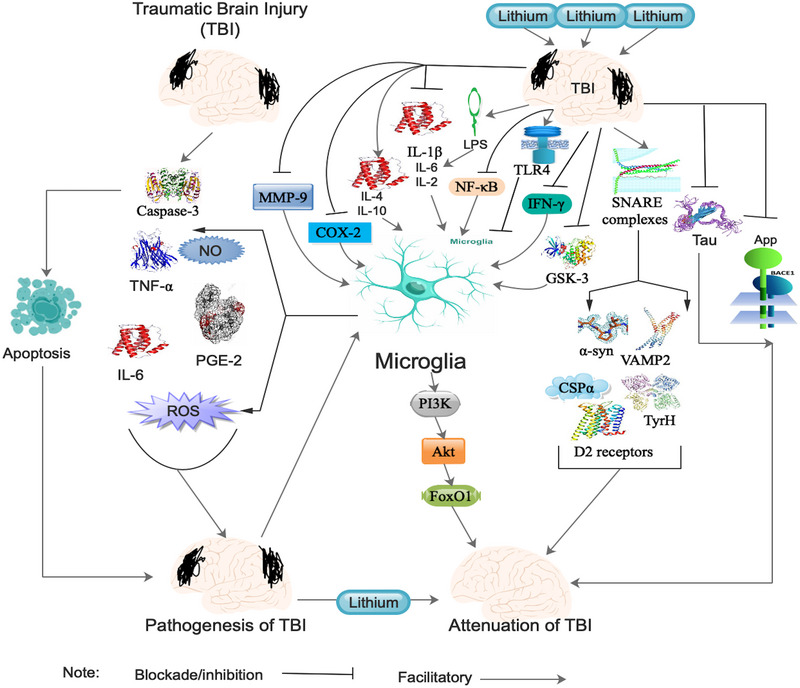
Traumatic brain injury (TBI) refers to damage to brain tissue by mechanical or blunt force via trauma. TBI is often associated with impaired cognitive abilities, like difficulties in memory, learning, attention, and other higher brain functions, that typically remain for years after the injury. Lithium is an elementary light metal that is only utilized in salt form due to its high intrinsic reactivity. This current review discusses the molecular mechanisms and therapeutic and neuroprotective effects of lithium in TBI.

METHOD

The "Boolean logic" was used to search for articles on the subject matter in PubMed and PubMed Central, as well as Google Scholar.

RESULTS

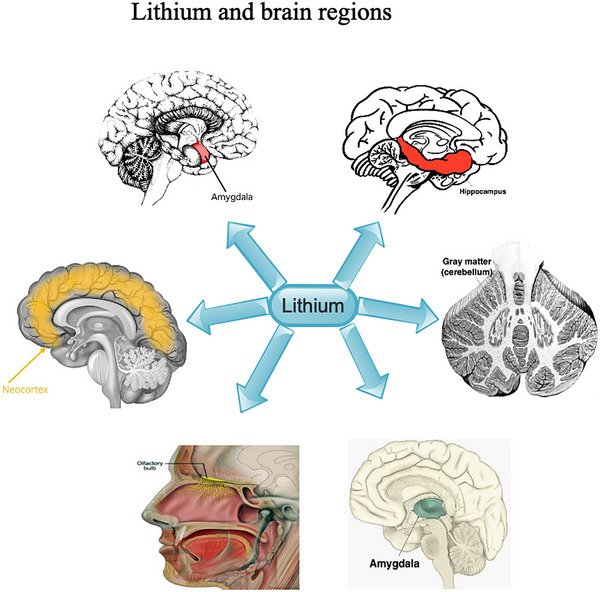
Lithium's therapeutic action is extremely complex, involving multiple effects on gene secretion, neurotransmitter or receptor-mediated signaling, signal transduction processes, circadian modulation, as well as ion transport. Lithium is able to normalize multiple short- as well as long-term modifications in neuronal circuits that ultimately result in disparity in cortical excitation and inhibition activated by TBI. Also, lithium levels are more distinct in the hippocampus, thalamus, neo-cortex, olfactory bulb, amygdala as well as the gray matter of the cerebellum following treatment of TBI.

CONCLUSION

Lithium attenuates neuroinflammation and neuronal toxicity as well as protects the brain from edema, hippocampal neurodegeneration, loss of hemispheric tissues, and enhanced memory as well as spatial learning after TBI.

摘要

简介

脑外伤(TBI)是指因创伤导致脑组织受到机械或钝性力量的损伤。TBI 常伴有认知能力受损,如记忆、学习、注意力等高级脑功能障碍,这些障碍通常在受伤后多年仍存在。锂是一种轻元素金属,由于其高固有反应性,仅以盐的形式被利用。本综述讨论了锂在 TBI 中的分子机制以及治疗和神经保护作用。

方法

在 PubMed 和 PubMed Central 以及 Google Scholar 上,采用“布尔逻辑”搜索关于该主题的文章。

结果

锂的治疗作用非常复杂,涉及基因分泌、神经递质或受体介导的信号转导、信号转导过程、昼夜节律调节以及离子转运等多个方面的影响。锂能够使 TBI 激活的皮质兴奋和抑制的多个短期和长期神经元回路的改变正常化。此外,TBI 治疗后,锂水平在海马体、丘脑、新皮层、嗅球、杏仁核以及小脑灰质中的差异更为明显。

结论

锂可减轻神经炎症和神经元毒性,防止脑水肿、海马体神经退行性变、半球组织丢失以及 TBI 后记忆和空间学习能力增强。
https://cdn.ncbi.nlm.nih.gov/pmc/blobs/bd83/11177180/324adf257107/BRB3-14-e3595-g004.jpg
https://cdn.ncbi.nlm.nih.gov/pmc/blobs/bd83/11177180/4aabbba447e7/BRB3-14-e3595-g003.jpg
https://cdn.ncbi.nlm.nih.gov/pmc/blobs/bd83/11177180/2f32737b5855/BRB3-14-e3595-g001.jpg
https://cdn.ncbi.nlm.nih.gov/pmc/blobs/bd83/11177180/324adf257107/BRB3-14-e3595-g004.jpg
https://cdn.ncbi.nlm.nih.gov/pmc/blobs/bd83/11177180/4aabbba447e7/BRB3-14-e3595-g003.jpg
https://cdn.ncbi.nlm.nih.gov/pmc/blobs/bd83/11177180/2f32737b5855/BRB3-14-e3595-g001.jpg
https://cdn.ncbi.nlm.nih.gov/pmc/blobs/bd83/11177180/324adf257107/BRB3-14-e3595-g004.jpg

相似文献

1
Elucidating the pivotal molecular mechanisms, therapeutic and neuroprotective effects of lithium in traumatic brain injury.阐明锂在创伤性脑损伤中的关键分子机制、治疗和神经保护作用。
Brain Behav. 2024 Jun;14(6):e3595. doi: 10.1002/brb3.3595.
2
A new avenue for lithium: intervention in traumatic brain injury.锂的新途径:干预创伤性脑损伤。
ACS Chem Neurosci. 2014 Jun 18;5(6):422-33. doi: 10.1021/cn500040g. Epub 2014 Apr 11.
3
Neuroprotective effect of lithium in cold- induced traumatic brain injury in mice.锂对小鼠冷诱导外伤性脑损伤的神经保护作用。
Behav Brain Res. 2020 Aug 17;392:112719. doi: 10.1016/j.bbr.2020.112719. Epub 2020 May 30.
4
Bazedoxifene protects cerebral autoregulation after traumatic brain injury and attenuates impairments in blood-brain barrier damage: involvement of anti-inflammatory pathways by blocking MAPK signaling.地舒单抗可预防创伤性脑损伤后的脑自动调节功能障碍,并减轻血脑屏障损伤的损害:通过阻断 MAPK 信号通路抑制炎症反应途径。
Inflamm Res. 2019 Apr;68(4):311-323. doi: 10.1007/s00011-019-01217-z. Epub 2019 Jan 31.
5
Lithium Improves Dopamine Neurotransmission and Increases Dopaminergic Protein Abundance in the Striatum after Traumatic Brain Injury.锂可改善创伤性脑损伤后纹状体中的多巴胺神经传递,并增加多巴胺能蛋白的丰度。
J Neurotrauma. 2018 Dec 1;35(23):2827-2836. doi: 10.1089/neu.2017.5509. Epub 2018 Aug 13.
6
Lithium, Stress, and Resilience in Bipolar Disorder: Deciphering this key homeostatic synaptic plasticity regulator.锂、双相情感障碍中的应激与弹性:解读这一关键的稳态突触可塑性调节剂。
J Affect Disord. 2018 Jun;233:92-99. doi: 10.1016/j.jad.2017.12.026. Epub 2017 Dec 22.
7
Lithium ameliorates neurodegeneration, suppresses neuroinflammation, and improves behavioral performance in a mouse model of traumatic brain injury.锂能改善神经退行性变,抑制神经炎症,并改善创伤性脑损伤小鼠模型的行为表现。
J Neurotrauma. 2012 Jan 20;29(2):362-74. doi: 10.1089/neu.2011.1942. Epub 2011 Nov 1.
8
Treatment of traumatic brain injury in rats with N-acetyl-seryl-aspartyl-lysyl-proline.用 N-乙酰丝氨酰天冬氨酰赖氨酰脯氨酸治疗大鼠创伤性脑损伤。
J Neurosurg. 2017 Mar;126(3):782-795. doi: 10.3171/2016.3.JNS152699. Epub 2016 May 20.
9
Delayed dosing of minocycline plus N-acetylcysteine reduces neurodegeneration in distal brain regions and restores spatial memory after experimental traumatic brain injury.米诺环素联合 N-乙酰半胱氨酸延迟给药可减轻实验性创伤性脑损伤后远隔脑区的神经退行性变,并恢复空间记忆。
Exp Neurol. 2021 Nov;345:113816. doi: 10.1016/j.expneurol.2021.113816. Epub 2021 Jul 24.
10
Lithium reduces BACE1 overexpression, β amyloid accumulation, and spatial learning deficits in mice with traumatic brain injury.锂可减少创伤性脑损伤小鼠中 BACE1 的过表达、β 淀粉样蛋白的积累和空间学习障碍。
J Neurotrauma. 2012 Sep;29(13):2342-51. doi: 10.1089/neu.2012.2449. Epub 2012 Jul 2.

引用本文的文献

1
Lithium Ions as Modulators of Complex Biological Processes: The Conundrum of Multiple Targets, Responsiveness and Non-Responsiveness, and the Potential to Prevent or Correct Dysregulation of Systems during Aging and in Disease.锂离子作为复杂生物过程的调节剂:多个靶点、响应性和非响应性的难题,以及在衰老和疾病期间预防或纠正系统失调的潜力。
Biomolecules. 2024 Jul 25;14(8):905. doi: 10.3390/biom14080905.

本文引用的文献

1
Volumes of hippocampal subfields suggest a continuum between schizophrenia, major depressive disorder and bipolar disorder.海马体亚区的体积表明精神分裂症、重度抑郁症和双相情感障碍之间存在连续性。
Front Psychiatry. 2023 Jul 20;14:1191170. doi: 10.3389/fpsyt.2023.1191170. eCollection 2023.
2
Long-Term Lithium Therapy: Side Effects and Interactions.长期锂盐治疗:副作用与相互作用
Pharmaceuticals (Basel). 2023 Jan 3;16(1):74. doi: 10.3390/ph16010074.
3
Lithium Biological Action Mechanisms after Ischemic Stroke.缺血性中风后锂的生物学作用机制
Life (Basel). 2022 Oct 22;12(11):1680. doi: 10.3390/life12111680.
4
Neuroprotective Effects of the Lithium Salt of a Novel JNK Inhibitor in an Animal Model of Cerebral Ischemia-Reperfusion.新型JNK抑制剂锂盐在脑缺血再灌注动物模型中的神经保护作用
Biomedicines. 2022 Aug 29;10(9):2119. doi: 10.3390/biomedicines10092119.
5
Lithium treatment and human hippocampal neurogenesis.锂治疗与人类海马神经发生。
Transl Psychiatry. 2021 Oct 30;11(1):555. doi: 10.1038/s41398-021-01695-y.
6
Lithium beyond psychiatric indications: the reincarnation of a new old drug.锂盐超出精神科适应症范围:一种新的老药的重生。
Neural Regen Res. 2021 Dec;16(12):2383-2387. doi: 10.4103/1673-5374.313015.
7
A structural basis for lithium and substrate binding of an inositide phosphatase.结构基础的肌醇磷酸酶的锂和基质结合。
J Biol Chem. 2021 Jan-Jun;296:100059. doi: 10.1074/jbc.RA120.014057. Epub 2020 Nov 24.
8
Neuroprotective effect of lithium in cold- induced traumatic brain injury in mice.锂对小鼠冷诱导外伤性脑损伤的神经保护作用。
Behav Brain Res. 2020 Aug 17;392:112719. doi: 10.1016/j.bbr.2020.112719. Epub 2020 May 30.
9
Traumatic Brain Injuries: Pathophysiology and Potential Therapeutic Targets.创伤性脑损伤:病理生理学与潜在治疗靶点
Front Cell Neurosci. 2019 Nov 27;13:528. doi: 10.3389/fncel.2019.00528. eCollection 2019.
10
A Review for Lithium: Pharmacokinetics, Drug Design, and Toxicity.锂:药代动力学、药物设计和毒性综述。
CNS Neurol Disord Drug Targets. 2019;18(10):769-778. doi: 10.2174/1871527318666191114095249.