
促性腺激素释放激素激动剂早卵泡期挑战试验预测拮抗剂周期生育保存中卵巢反应的价值。
GnRH agonist early follicular challenge test as a predictor of ovarian response in antagonist cycles for fertility preservation.
机构信息
IVF Unit, Department of Obstetrics and Gynecology, Shamir Medical Centre, Tzrifin, affiliated with the Faculty of Medical and Health Science, Tel Aviv University, Tel Aviv, Israel.
Alan and Ada Selwyn Chair for Clinical Infertility Research and Molecular Medicine, Faculty of Medical and Health Science, Tel Aviv University, Tel Aviv, Israel.
出版信息
Sci Rep. 2024 Jun 21;14(1):14308. doi: 10.1038/s41598-024-65059-4.
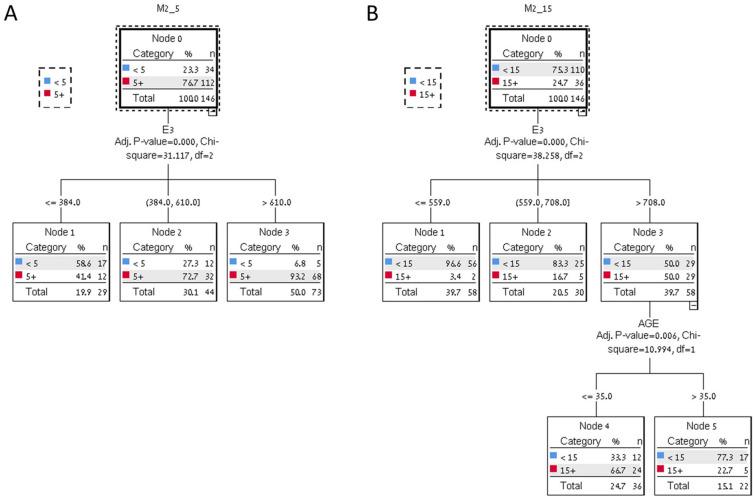
The aim of our study was to evaluate if the response to follicular GnRH agonist (GnRHa) trigger be used to predict intracycle ovarian response in GnRH antagonist cycles among women undergoing fertility preservation IVF. We conducted a prospective study of 146 GnRH antagonist oocyte pickup (OPU) cycles to evaluate GnRHa stimulation test (GAST). On day 2 of the cycle, basal E2 were measured, followed by injection of 0.2 mg GnRHa as part of the initial ovarian stimulation. 12 h later blood sampling was repeated (GAST E3). E2 response was used as test parameter. The major outcome was the number of mature cryopreserved oocytes. We found a linear correlation between both GAST E3 level and GAST E3/E2 ratio and number of M2 oocytes. ROC curve analysis of GAST E3, GAST E3/E2 ratio, AFC and day 3 FSH for > 15 M2 and < 5 M2 oocytes was calculated. For GAST E3 levels obtaining < 5 M2 oocytes, an AUC value of 0.79 was found. For GAST E3 levels obtaining > 15 M2 oocytes, AUC value of 0.8. Patients with GAST E3 ≤ 384 pmol/l has 58.6% risk to obtain < 5 oocytes. Patients younger than 35 with GAST E3 > 708 pmol/l have 66% chance for freezing > 15 oocytes. The response to single GnRHa administration during GnRH antagonist cycle can be used as biomarker of ovarian reserve. This simple, widely available marker, which reflect the estradiol response of small follicles, might predict the response of the specific cycle, and can potentially be used to adjust the treatment dose.Trial registration number: 0304-20-ASF.
我们的研究目的是评估卵泡刺激素释放激素激动剂(GnRHa)触发的反应是否可用于预测接受生育力保存 IVF 的女性中 GnRH 拮抗剂周期中的周期内卵巢反应。我们进行了一项前瞻性研究,纳入了 146 个 GnRH 拮抗剂卵母细胞抽吸(OPU)周期,以评估 GnRHa 刺激试验(GAST)。在周期的第 2 天,测量基础 E2,随后注射 0.2mg GnRHa 作为初始卵巢刺激的一部分。12 小时后重复采血(GAST E3)。E2 反应用作测试参数。主要结局是成熟冷冻保存卵母细胞的数量。我们发现 GAST E3 水平和 GAST E3/E2 比值与 M2 卵母细胞数量之间存在线性相关性。计算 GAST E3、GAST E3/E2 比值、AFC 和第 3 天 FSH 对>15 M2 和<5 M2 卵母细胞的 ROC 曲线分析。对于 GAST E3 水平获得<5 M2 卵母细胞,发现 AUC 值为 0.79。对于 GAST E3 水平获得>15 M2 卵母细胞,AUC 值为 0.8。GAST E3 值≤384pmol/l 的患者获得<5 个卵母细胞的风险为 58.6%。GAST E3 值>708pmol/l 且年龄小于 35 岁的患者冷冻获得>15 个卵母细胞的几率为 66%。在 GnRH 拮抗剂周期中单次给予 GnRHa 后的反应可作为卵巢储备的生物标志物。这种简单、广泛可用的标志物反映了小卵泡的雌二醇反应,可能预测特定周期的反应,并可能用于调整治疗剂量。试验注册号:0304-20-ASF。

 Zotero 插件