
数字时代的中国医疗保险:文献计量研究
Chinese Health Insurance in the Digital Era: Bibliometric Study.
作者信息
Hu Zhiyuan, Qin Xiaoping, Chen Kaiyan, Huang Yu-Ni, Wang Richard Szewei, Tung Tao-Hsin, Chuang Yen-Ching, Wang Bing-Long
机构信息
School of Health Policy and Management, Chinese Academy of Medical Sciences & Peking Union Medical College, Beijing, China.
Department of Education, Peking Union Medical College Hospital, Chinese Academy of Medical Sciences & Peking Union Medical College, Beijing, China.
出版信息
Interact J Med Res. 2024 Jul 23;13:e52020. doi: 10.2196/52020.
BACKGROUND
China has entered the era of digital health care after years of reforms in the health care system. The use of digital technologies in healthcare services is rapidly increasing, indicating the onset of a new period. The reform of health insurance has also entered a new phase.
OBJECTIVE
This study aims to investigate the evolution of health care insurance within the context of telemedicine and Internet Plus Healthcare (IPHC) during the digital health care era by using scientometric methods to analyze publication patterns, influential keywords, and research hot spots. It seeks to understand how health care insurance has adapted to the growing integration of IPHC and telemedicine in health care services and the implications for policy and practice.
METHODS
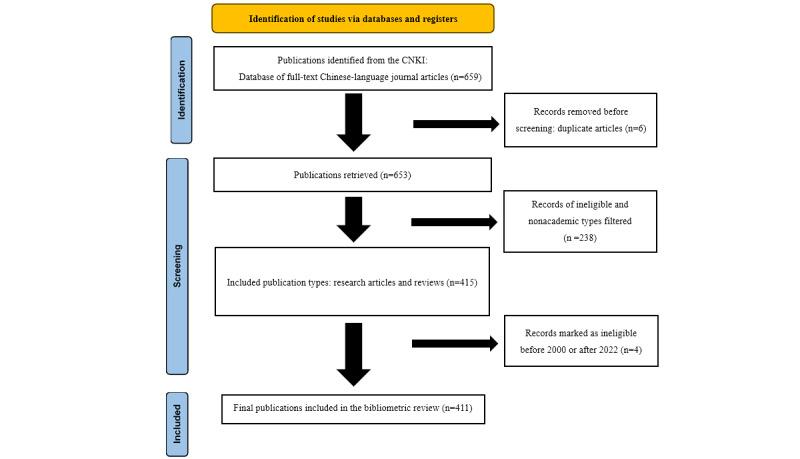
A total of 411 high-quality studies were curated from the China National Knowledge Infrastructure (CNKI) database in the Chinese language, scientometric analysis was conducted, and VOSviewer software was used to conduct a visualized analysis of keywords and hot spots in the literature.
RESULTS
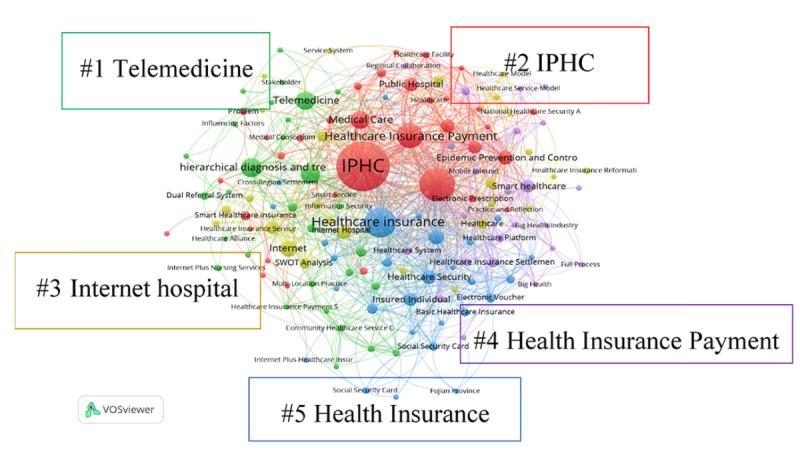
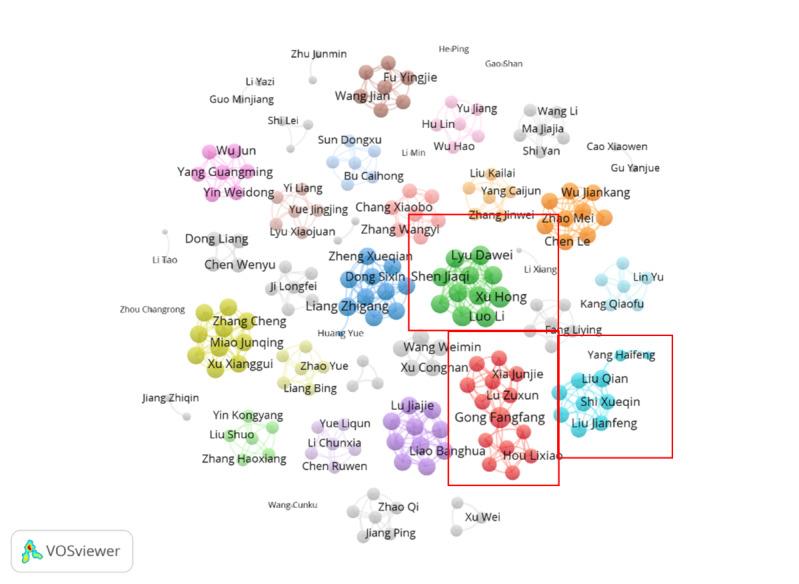
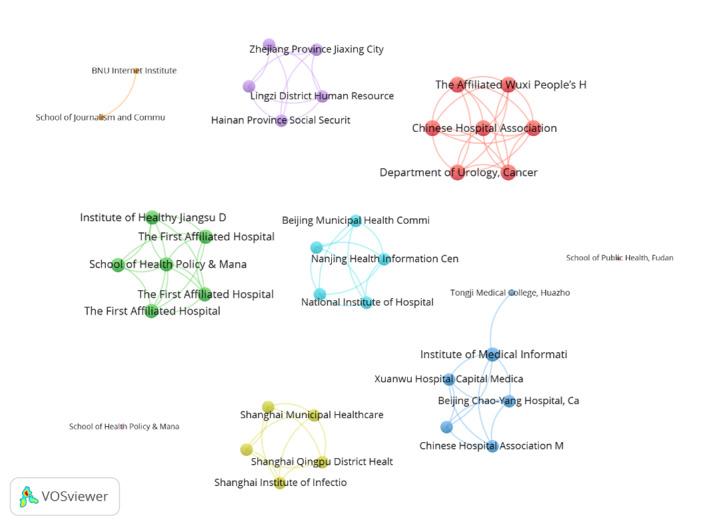
The number of articles in this field has increased notably from 2000 to 2022 and has increased annually based on a curve of y=0.332exp (0.4002x) with R=0.6788. In total, 62 institutions and 811 authors have published research articles in the Chinese language in this field. This study included 290 keywords and formulated a total of 5 hot-topic clusters of "telemedicine," "IPHC," "internet hospital," "health insurance payments," and "health insurance system."
CONCLUSIONS
Studies on the application of digital technologies in health care insurance has evolved from foundational studies to a broader scope. The emergence of internet hospitals has showcased the potential for integrating IPHC services into insurance payment systems. However, this development also highlights the necessity for enhanced interregional coordination mechanisms. The reform of health insurance payment is contingent upon ongoing advancements in digital technology and increased investment in electronic medical records and primary health care services. Future efforts should focus on integrating technology with administrative systems, advancing mobile health care solutions, and ensuring interoperability among various payment systems to improve efficiency and standardize health care services.
背景
经过多年医疗体系改革,中国已进入数字医疗时代。数字技术在医疗服务中的应用迅速增加,标志着一个新时期的到来。医疗保险改革也进入了新阶段。
目的
本研究旨在通过科学计量方法分析发表模式、有影响力的关键词和研究热点,探讨数字医疗时代远程医疗和互联网 + 医疗健康(IPHC)背景下医疗保险的演变。旨在了解医疗保险如何适应IPHC和远程医疗在医疗服务中日益增长的融合,以及对政策和实践的影响。
方法
从中国知网(CNKI)数据库中筛选出411篇高质量中文研究,进行科学计量分析,并使用VOSviewer软件对文献中的关键词和热点进行可视化分析。
结果
该领域的文章数量从2000年到2022年显著增加,并且基于y = 0.332exp(0.4002x)曲线(R = 0.6788)逐年增长。共有62个机构和811位作者在该领域发表了中文研究文章。本研究纳入290个关键词,共形成了“远程医疗”“IPHC”“互联网医院”“医疗保险支付”和“医疗保险制度”5个热点集群。
结论
数字技术在医疗保险中的应用研究已从基础研究发展到更广泛的范围。互联网医院的出现展示了将IPHC服务整合到保险支付系统中的潜力。然而,这一发展也凸显了加强区域间协调机制的必要性。医疗保险支付改革取决于数字技术的持续进步以及对电子病历和基层医疗服务的更多投入。未来的努力应集中在将技术与管理系统整合、推进移动医疗解决方案以及确保各种支付系统之间的互操作性,以提高效率并规范医疗服务。
 Zotero 插件