• 文献检索
  • 文档翻译
  • 深度研究
  • 学术资讯
  • Suppr Zotero 插件Zotero 插件
  • 邀请有礼
  • 套餐&价格
  • 历史记录
应用&插件
Suppr Zotero 插件Zotero 插件浏览器插件Mac 客户端Windows 客户端微信小程序
定价
高级版会员购买积分包购买API积分包
服务
文献检索文档翻译深度研究API 文档MCP 服务
关于我们
关于 Suppr公司介绍联系我们用户协议隐私条款
关注我们

Suppr 超能文献

核心技术专利:CN118964589B侵权必究
粤ICP备2023148730 号-1Suppr @ 2026

文献检索

告别复杂PubMed语法,用中文像聊天一样搜索,搜遍4000万医学文献。AI智能推荐,让科研检索更轻松。

立即免费搜索

文件翻译

保留排版,准确专业,支持PDF/Word/PPT等文件格式,支持 12+语言互译。

免费翻译文档

深度研究

AI帮你快速写综述,25分钟生成高质量综述,智能提取关键信息,辅助科研写作。

立即免费体验

剖析小儿低级别胶质瘤进展和衰老的自然规律:从细胞机制到临床意义。

Dissecting the Natural Patterns of Progression and Senescence in Pediatric Low-Grade Glioma: From Cellular Mechanisms to Clinical Implications.

机构信息

Department of Hematology and Oncology, University Children's Hospital Tübingen, 72076 Tübingen, Germany.

Section of Pediatric Neurosurgery, Department of Neurosurgery, University Hospital Tübingen, 72076 Tübingen, Germany.

出版信息

Cells. 2024 Jul 19;13(14):1215. doi: 10.3390/cells13141215.

DOI:10.3390/cells13141215
PMID:39056798
原文链接:https://pmc.ncbi.nlm.nih.gov/articles/PMC11274692/
Abstract

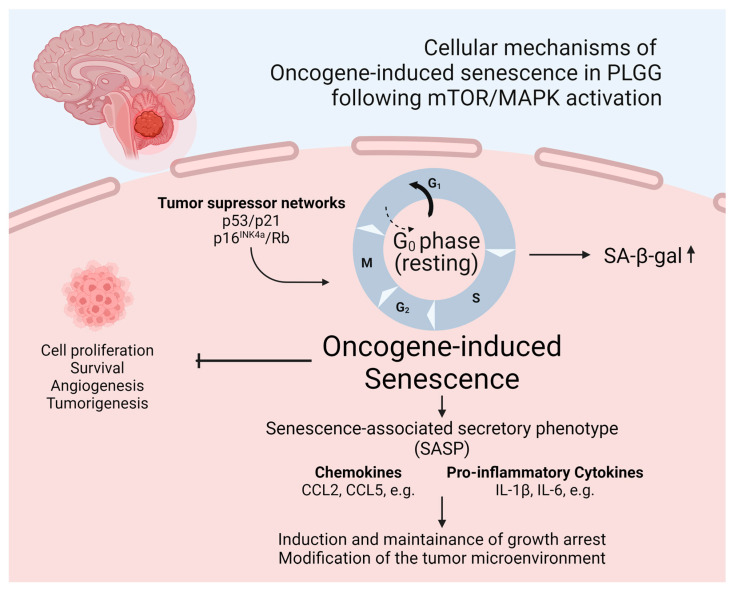
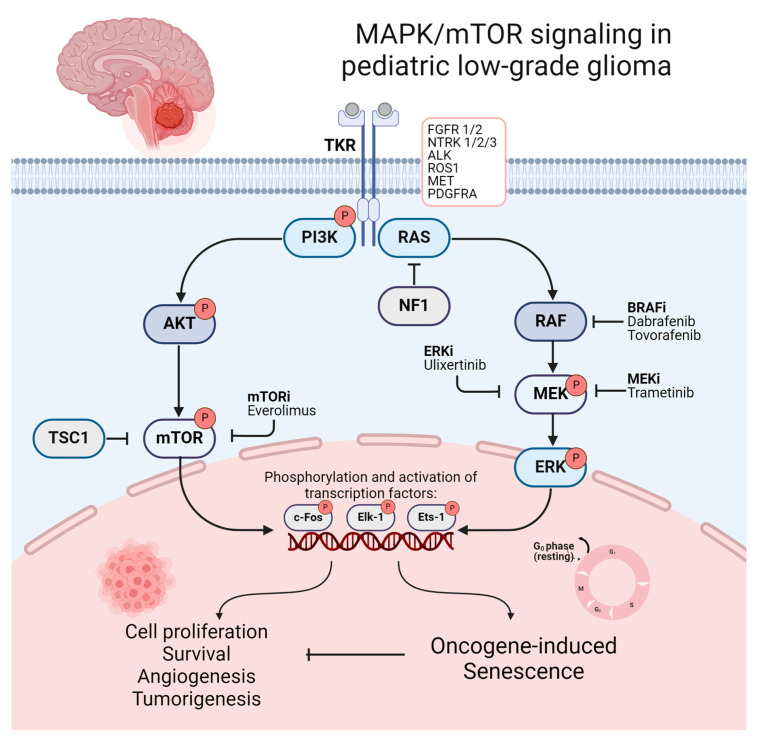
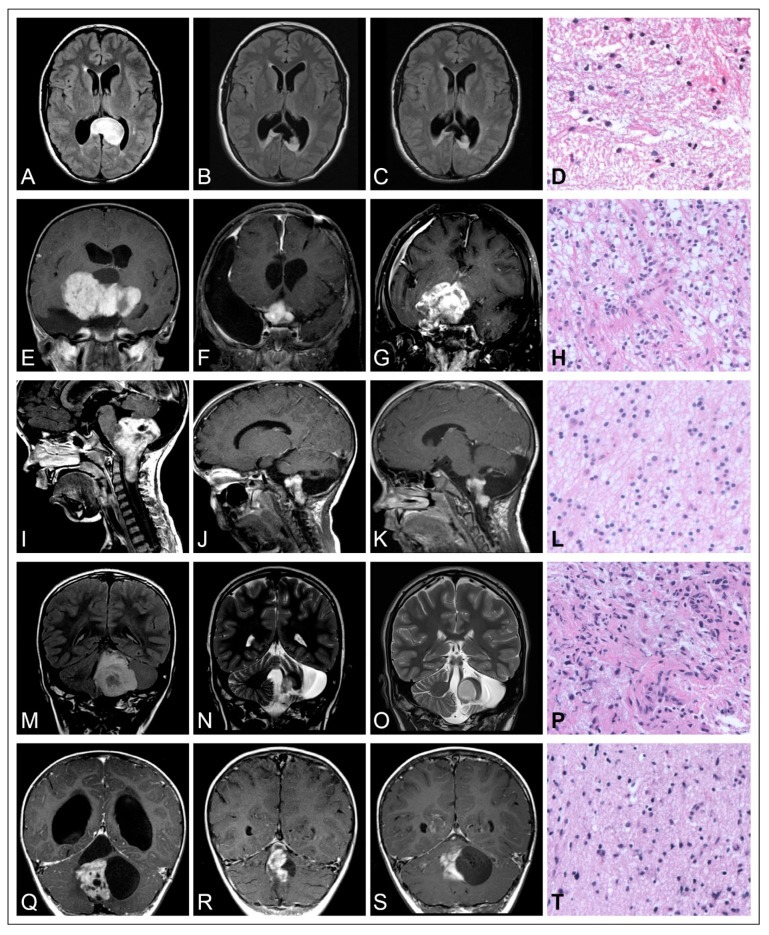
Pediatric low-grade gliomas (PLGGs) comprise a heterogeneous set of low-grade glial and glioneuronal tumors, collectively representing the most frequent CNS tumors of childhood and adolescence. Despite excellent overall survival rates, the chronic nature of the disease bears a high risk of long-term disease- and therapy-related morbidity in affected patients. Recent in-depth molecular profiling and studies of the genetic landscape of PLGGs led to the discovery of the paramount role of frequent upregulation of RAS/MAPK and mTOR signaling in tumorigenesis and progression of these tumors. Beyond, the subsequent unveiling of RAS/MAPK-driven oncogene-induced senescence in these tumors may shape the understanding of the molecular mechanisms determining the versatile progression patterns of PLGGs, potentially providing a promising target for novel therapies. Recent in vitro and in vivo studies moreover indicate a strong dependence of PLGG formation and growth on the tumor microenvironment. In this work, we provide an overview of the current understanding of the multilayered cellular mechanisms and clinical factors determining the natural progression patterns and the characteristic biological behavior of these tumors, aiming to provide a foundation for advanced stratification for the management of these tumors within a multimodal treatment approach.

摘要

儿童低级别胶质瘤(PLGGs)包括一组异质性的低级神经胶质瘤和神经胶质神经元肿瘤,它们共同构成了儿童和青少年中枢神经系统肿瘤中最常见的肿瘤。尽管整体存活率很高,但疾病的慢性性质使受影响患者存在长期疾病和治疗相关发病率的高风险。最近对 PLGGs 的深入分子分析和遗传景观研究发现,RAS/MAPK 和 mTOR 信号的频繁上调在这些肿瘤的发生和进展中起着至关重要的作用。此外,随后揭示了这些肿瘤中 RAS/MAPK 驱动的癌基因诱导衰老,可能会加深对决定 PLGGs 多样进展模式的分子机制的理解,并为新的治疗方法提供有希望的靶点。最近的体外和体内研究还表明,PLGG 的形成和生长强烈依赖于肿瘤微环境。在这项工作中,我们概述了目前对决定这些肿瘤自然进展模式和特征性生物学行为的多层次细胞机制和临床因素的理解,旨在为多模式治疗方法中这些肿瘤的综合管理提供基础。
https://cdn.ncbi.nlm.nih.gov/pmc/blobs/edec/11274692/cc2f5e9c6aba/cells-13-01215-g003.jpg
https://cdn.ncbi.nlm.nih.gov/pmc/blobs/edec/11274692/699e3865c82f/cells-13-01215-g001.jpg
https://cdn.ncbi.nlm.nih.gov/pmc/blobs/edec/11274692/57ce168abc9d/cells-13-01215-g002.jpg
https://cdn.ncbi.nlm.nih.gov/pmc/blobs/edec/11274692/cc2f5e9c6aba/cells-13-01215-g003.jpg
https://cdn.ncbi.nlm.nih.gov/pmc/blobs/edec/11274692/699e3865c82f/cells-13-01215-g001.jpg
https://cdn.ncbi.nlm.nih.gov/pmc/blobs/edec/11274692/57ce168abc9d/cells-13-01215-g002.jpg
https://cdn.ncbi.nlm.nih.gov/pmc/blobs/edec/11274692/cc2f5e9c6aba/cells-13-01215-g003.jpg

相似文献

1
Dissecting the Natural Patterns of Progression and Senescence in Pediatric Low-Grade Glioma: From Cellular Mechanisms to Clinical Implications.剖析小儿低级别胶质瘤进展和衰老的自然规律:从细胞机制到临床意义。
Cells. 2024 Jul 19;13(14):1215. doi: 10.3390/cells13141215.
2
Reimagining pilocytic astrocytomas in the context of pediatric low-grade gliomas.在小儿低级别胶质瘤的背景下重新构想毛细胞星形细胞瘤。
Neuro Oncol. 2021 Oct 1;23(10):1634-1646. doi: 10.1093/neuonc/noab138.
3
Molecular genetics and therapeutic targets of pediatric low-grade gliomas.小儿低级别胶质瘤的分子遗传学和治疗靶点。
Brain Tumor Pathol. 2019 Apr;36(2):74-83. doi: 10.1007/s10014-019-00340-3. Epub 2019 Mar 30.
4
Expression profiles of 151 pediatric low-grade gliomas reveal molecular differences associated with location and histological subtype.151例儿童低级别胶质瘤的表达谱揭示了与位置和组织学亚型相关的分子差异。
Neuro Oncol. 2015 Nov;17(11):1486-96. doi: 10.1093/neuonc/nov045. Epub 2015 Mar 29.
5
Activation of mTORC1/mTORC2 signaling in pediatric low-grade glioma and pilocytic astrocytoma reveals mTOR as a therapeutic target.mTORC1/mTORC2 信号在儿童低级别胶质瘤和毛细胞星形细胞瘤中的激活表明 mTOR 可作为治疗靶点。
Neuro Oncol. 2013 Dec;15(12):1604-14. doi: 10.1093/neuonc/not132. Epub 2013 Nov 6.
6
Resistance, rebound, and recurrence regrowth patterns in pediatric low-grade glioma treated by MAPK inhibition: A modified Delphi approach to build international consensus-based definitions-International Pediatric Low-Grade Glioma Coalition.MAPK 抑制治疗小儿低级别胶质瘤的耐药、反弹和复发模式:一种建立国际共识定义的改良 Delphi 方法——国际小儿低级别胶质瘤联盟。
Neuro Oncol. 2024 Aug 5;26(8):1357-1366. doi: 10.1093/neuonc/noae074.
7
A Molecular Update and Review of Current Trials in Paediatric Low-Grade Gliomas.儿童低级别胶质瘤的分子研究进展及当前临床试验的综述
Pediatr Neurosurg. 2023;58(5):290-298. doi: 10.1159/000533703. Epub 2023 Aug 21.
8
Molecular Alterations in Pediatric Low-Grade Gliomas That Led to Death.导致小儿低级别胶质瘤患者死亡的分子改变。
J Neuropathol Exp Neurol. 2021 Nov 19;80(11):1052–1059. doi: 10.1093/jnen/nlab097. Epub 2021 Sep 27.
9
Pediatric low-grade glioma in the era of molecular diagnostics.儿童低级别胶质瘤的分子诊断时代。
Acta Neuropathol Commun. 2020 Mar 12;8(1):30. doi: 10.1186/s40478-020-00902-z.
10
Emerging and Biological Concepts in Pediatric High-Grade Gliomas.儿童高级别胶质瘤的新兴和生物学概念。
Cells. 2024 Sep 5;13(17):1492. doi: 10.3390/cells13171492.

引用本文的文献

1
Cellular senescence in cancer: from mechanism paradoxes to precision therapeutics.癌症中的细胞衰老:从机制悖论到精准治疗
Mol Cancer. 2025 Aug 8;24(1):213. doi: 10.1186/s12943-025-02419-2.
2
The Molecular Basis of Pediatric Brain Tumors: A Review with Clinical Implications.小儿脑肿瘤的分子基础:一项具有临床意义的综述
Cancers (Basel). 2025 May 4;17(9):1566. doi: 10.3390/cancers17091566.

本文引用的文献

1
MOST wanted: navigating the MAPK-OIS-SASP-tumor microenvironment axis in primary pediatric low-grade glioma and preclinical models.最需要解决的问题:在原发性儿科低级别脑胶质瘤和临床前模型中,探索 MAPK-OIS-SASP-肿瘤微环境轴。
Childs Nerv Syst. 2024 Oct;40(10):3209-3221. doi: 10.1007/s00381-024-06463-z. Epub 2024 May 25.
2
Unravelling immune microenvironment features underlying tumor progression in the single-cell era.解析单细胞时代肿瘤进展背后的免疫微环境特征。
Cancer Cell Int. 2024 Apr 22;24(1):143. doi: 10.1186/s12935-024-03335-z.
3
Rebound growth of BRAF mutant pediatric glioma cells after MAPKi withdrawal is associated with MAPK reactivation and secretion of microglia-recruiting cytokines.
MAPKi 停药后 BRAF 突变型小儿神经胶质瘤细胞的反弹生长与 MAPK 的重新激活和募集小胶质细胞的细胞因子的分泌有关。
J Neurooncol. 2024 Jun;168(2):317-332. doi: 10.1007/s11060-024-04672-9. Epub 2024 Apr 17.
4
Comparative Study of the Immune Microenvironment in Heterotopic Tumor Models.异位肿瘤模型中免疫微环境的比较研究
Cancers (Basel). 2024 Jan 10;16(2):295. doi: 10.3390/cancers16020295.
5
Rare Pediatric Cerebellar High-Grade Gliomas Mimic Medulloblastomas Histologically and Transcriptomically and Show p53 Mutations.罕见的小儿小脑高级别胶质瘤在组织学和转录组学上类似于髓母细胞瘤,并显示p53突变。
Cancers (Basel). 2024 Jan 4;16(1):232. doi: 10.3390/cancers16010232.
6
Cellular Senescence in Non-Small Cell Lung Cancer.非小细胞肺癌中的细胞衰老。
Front Biosci (Landmark Ed). 2023 Dec 28;28(12):357. doi: 10.31083/j.fbl2812357.
7
Generation of patient-derived pediatric pilocytic astrocytoma in-vitro models using SV40 large T: evaluation of a modeling workflow.使用 SV40 大 T 基因在体外生成患者来源的小儿毛细胞星形细胞瘤模型:模型构建工作流程的评估。
J Neurooncol. 2023 Dec;165(3):467-478. doi: 10.1007/s11060-023-04500-6. Epub 2023 Nov 24.
8
The type II RAF inhibitor tovorafenib in relapsed/refractory pediatric low-grade glioma: the phase 2 FIREFLY-1 trial.在复发/难治性儿科低级别胶质瘤中,II 型 RAF 抑制剂 tovorafenib:FIREFLY-1 试验的 2 期研究。
Nat Med. 2024 Jan;30(1):207-217. doi: 10.1038/s41591-023-02668-y. Epub 2023 Nov 17.
9
Pediatric low-grade glioma: State-of-the-art and ongoing challenges.小儿低级别胶质瘤:现状与挑战
Neuro Oncol. 2024 Jan 5;26(1):25-37. doi: 10.1093/neuonc/noad195.
10
The tumor micro-environment in pediatric glioma: friend or foe?小儿脑胶质瘤的肿瘤微环境:是敌是友?
Front Immunol. 2023 Oct 13;14:1227126. doi: 10.3389/fimmu.2023.1227126. eCollection 2023.