Pfordt Annette, Steffens Lara Änne, Raz Tom, Naumann Marcel
Institut of Plant Pathology and Crop Protection, Department of Crop Sciences, University of Goettingen, Goettingen, Germany.
Institut of Plant Nutrition and Plant Physiology, Department of Crop Sciences, University of Goettingen, Goettingen, Germany.
Front Plant Sci. 2024 Jul 23;15:1436201. doi: 10.3389/fpls.2024.1436201. eCollection 2024.
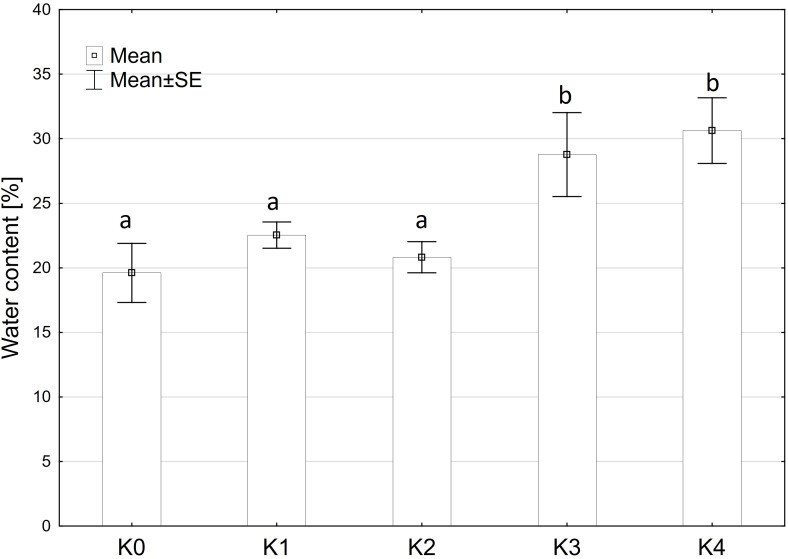
, a ubiquitous soil-borne fungus found on plant roots and decaying residues, displays competitive traits and mycoparasitic behavior against diverse microorganisms. Selected strains of this fungus are known in agriculture for their beneficial effects on plant growth and as bio-fungicides. However, recent findings have pinpointed as the causal agent behind maize ear rot disease in Europe since 2018, notably impacting maize cobs in Germany, France, and Italy. This study aims to evaluate the severity of ear rot disease on maize fresh matter content and specific quality parameters under semi-field conditions. Two distinct maize varieties were artificially inoculated with a pathogenic Trichoderma isolate at the flowering stage using needle pin or silk channel methods. Disease severity was assessed visually at the time of harvest based on the percentage of infected kernels according to EPPO Guidelines (PP 1/285). Fresh matter content and quality parameters such as alpha-amylase activity, C/N ratio, water, and sugar content were analyzed. Results showed that needle pin inoculation led to higher disease severity (60%) compared to silk channel inoculation (39%). Cob weight decreased significantly at the highest disease severity level by up to 50% compared to control plants. In both varieties, alpha-amylase activity increased significantly with higher disease severity, resulting in starch degradation and increased glucose release. The germination rate was severely affected by the infection, with only 22% of grains germinating, and the seedlings showed shortened and deformed growth. This is the first report on ear rot infection and its effect on fresh matter content and quality parameters in maize after artificial inoculation under field conditions. The results address an important knowledge gap and provide valuable insights into the infection pathway and impact on maize quality.
一种在植物根部和腐烂残体上发现的普遍存在的土传真菌,对多种微生物表现出竞争特性和菌寄生行为。该真菌的选定菌株在农业中因其对植物生长的有益作用以及作为生物杀菌剂而闻名。然而,最近的研究结果指出,自2018年以来,该真菌是欧洲玉米穗腐病的病原体,尤其对德国、法国和意大利的玉米穗产生影响。本研究旨在评估在半田间条件下,该真菌引起的玉米穗腐病对玉米新鲜物质含量和特定品质参数的严重程度。在开花期,使用针刺法或花丝通道法将两种不同的玉米品种人工接种致病木霉菌株。根据欧洲和地中海植物保护组织(EPPO)指南(PP 1/285),在收获时根据感染籽粒的百分比直观评估病害严重程度。分析了新鲜物质含量和品质参数,如α-淀粉酶活性、碳氮比、水分和糖分含量。结果表明,与花丝通道接种(39%)相比,针刺接种导致更高的病害严重程度(60%)。与对照植株相比,在最高病害严重程度水平下,玉米穗重量显著下降高达50%。在两个品种中,α-淀粉酶活性均随着病害严重程度的增加而显著增加,导致淀粉降解和葡萄糖释放增加。发芽率受到感染的严重影响,只有22%的籽粒发芽,幼苗表现出生长缩短和畸形。这是关于在田间条件下人工接种后该真菌引起的玉米穗腐病感染及其对玉米新鲜物质含量和品质参数影响的首次报告。研究结果填补了重要的知识空白,并为感染途径及对玉米品质的影响提供了有价值的见解。