
基于主从博弈的园区光伏储能协同多场景优化策略
Coordinated Multi-Scenario Optimization Strategy for Park Photovoltaic Storage Based on Master-Slave Game.
作者信息
Wang Jiang, Lan Jinchen, Wang Lianhui, Lin Yan, Hao Meimei, Zhang Yan, Xiang Yang, Qin Liang
机构信息
Hubei Key Laboratory of Power Equipment & System Security for Integrated Energy, Wuhan 430072, China.
School of Electrical Engineering and Automation, Wuhan University, Wuhan 430072, China.
出版信息
Sensors (Basel). 2024 Aug 4;24(15):5042. doi: 10.3390/s24155042.
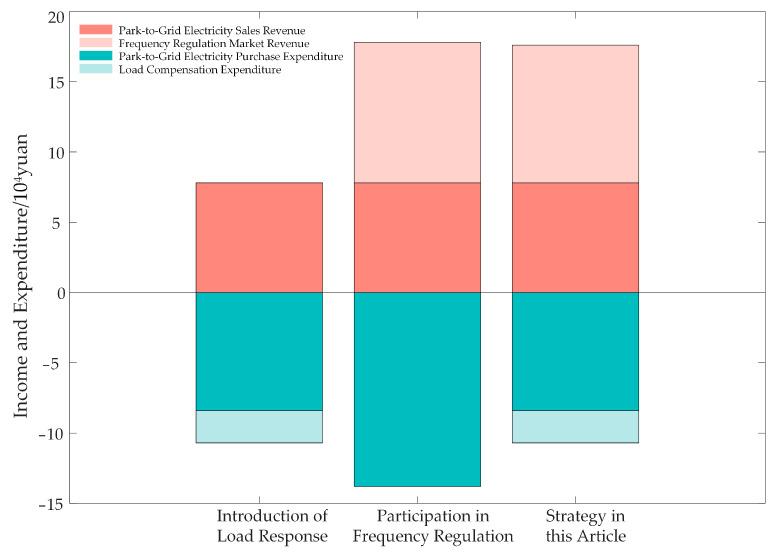
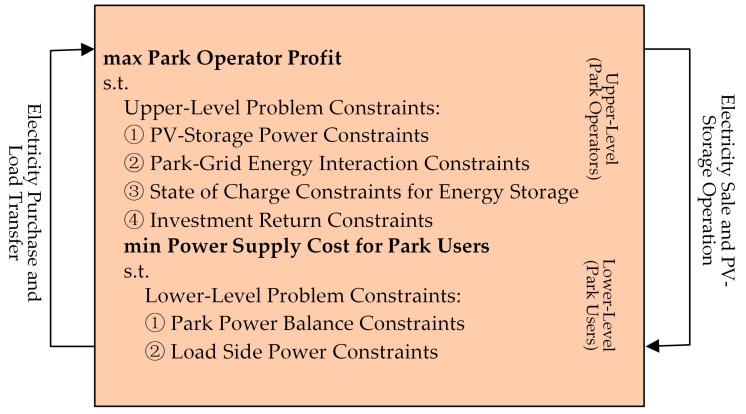
Optimizing the operation of photovoltaic (PV) storage systems is crucial for meeting the load demands of parks while minimizing curtailment and enhancing economic efficiency. This paper proposes a multi-scenario collaborative optimization strategy for PV storage systems based on a master-slave game model. Three types of energy storage system (ESS) application scenarios are designed to comprehensively stabilize PV fluctuations, compensate for load transfers, and participate in the frequency regulation (FR) market, thereby optimizing the overall operational strategy of PV storage systems in parks. The upper-level objective is to maximize the park operators' profit, while the lower-level objective is to minimize the user's power supply costs. Case studies demonstrate that this strategy can significantly increase the economic benefits for park operators by 25.8%, reduce user electricity expenditures by 5.27%, and lower curtailment through a load response mechanism, thereby promoting the development and construction of PV storage parks.
优化光伏(PV)储能系统的运行对于满足园区的负荷需求至关重要,同时可将弃电降至最低并提高经济效率。本文提出了一种基于主从博弈模型的光伏储能系统多场景协同优化策略。设计了三种类型的储能系统(ESS)应用场景,以全面稳定光伏波动、补偿负荷转移并参与频率调节(FR)市场,从而优化园区光伏储能系统的整体运行策略。上层目标是使园区运营商的利润最大化,而下层目标是使用户的供电成本最小化。案例研究表明,该策略可显著提高园区运营商的经济效益25.8%,降低用户电费支出5.27%,并通过负荷响应机制降低弃电,从而推动光伏储能园区的开发建设。






 Zotero 插件