Shen Shang-Hang, Chen Si-Fang, Guo Jian-Feng, Wang Zhan-Xiang
Department of Neurosurgery, The First Affiliated Hospital of Xiamen University, Xiamen 361003, China; School of Life Sciences, Xiamen University, Xiamen 361005, China.
Department of Neurosurgery, The First Affiliated Hospital of Xiamen University, Xiamen 361003, China.
Transl Oncol. 2024 Nov;49:102083. doi: 10.1016/j.tranon.2024.102083. Epub 2024 Aug 10.
γ-Glutamylcyclotransferase (GGCT), an enzyme crucial in glutathione metabolism, has emerged as a participant in tumorigenesis. The present study is designed to elucidate the biological role and molecular mechanisms underlying GGCT in glioma.
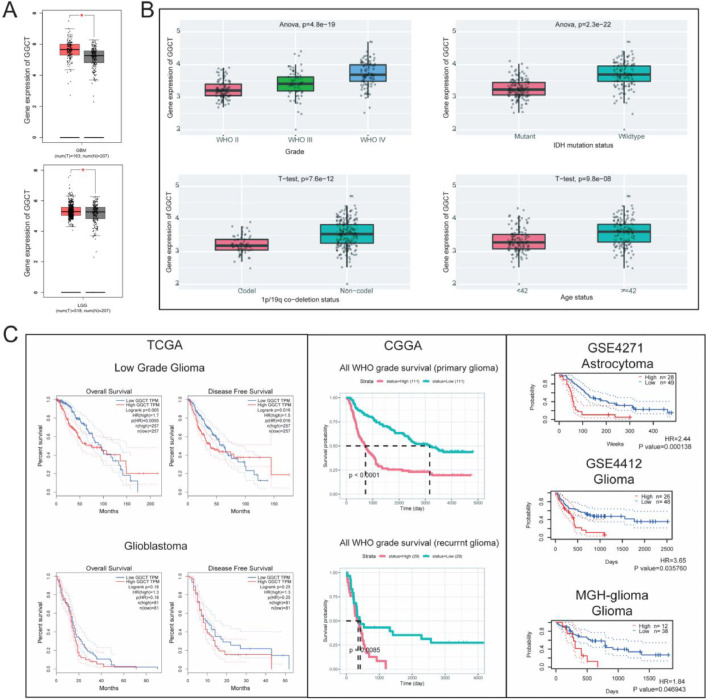
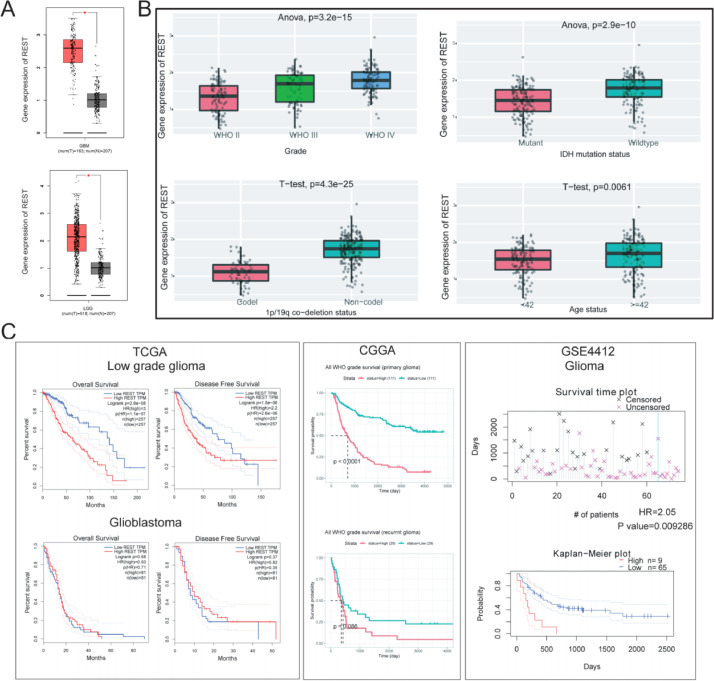
Gene Expression Profiling Interactive Analysis (GEPIA), Chinese Glioma Genome Atlas (CGGA), and PrognoScan online databases were utilized to examine the expressions and clinical prognosis of GGCT and REST in glioma. Cell Counting Kit-8 (CCK-8), Transwell, Wound healing, and Flow cytometric assays, and RNA-sequencing analysis were employed to uncover the molecular role of GGCT and REST. Prediction of Differentially expressed microRNA (DE-miRNAs) and miRNAs targeting GGCT 3' Untranslated Region (UTR) was performed using miRanda online datasets. Finally, Real time-quantitative Polymerase Chain Reaction (RT-qPCR), western blot and dual luciferase reporter gene activity analysis were employed to confirm a positive feedback loop involving GGCT/REST/miR-34a-5p in glioma cells.
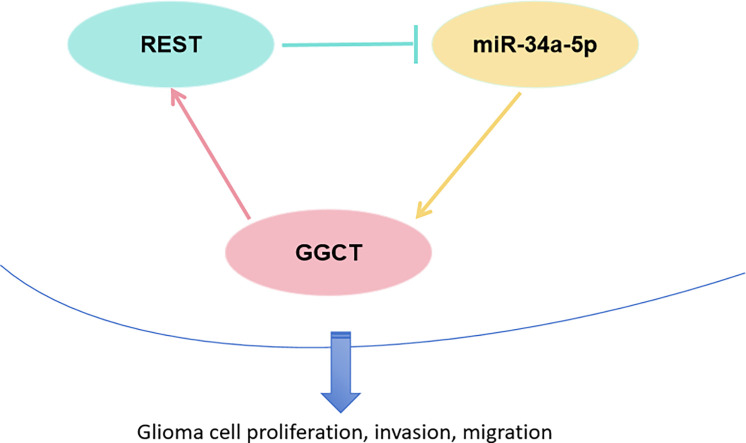
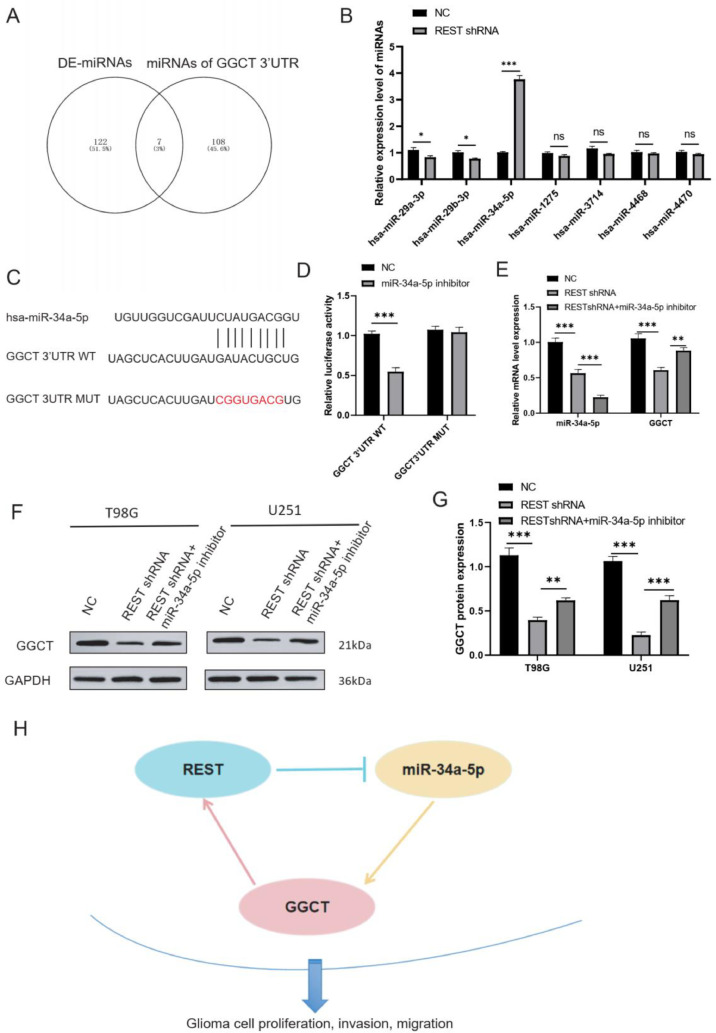
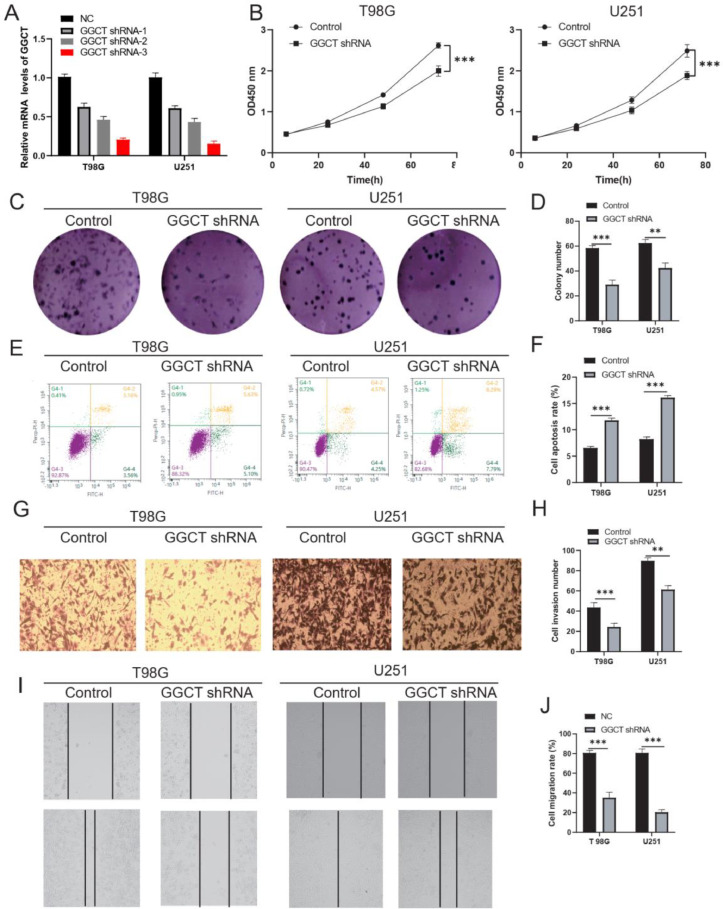
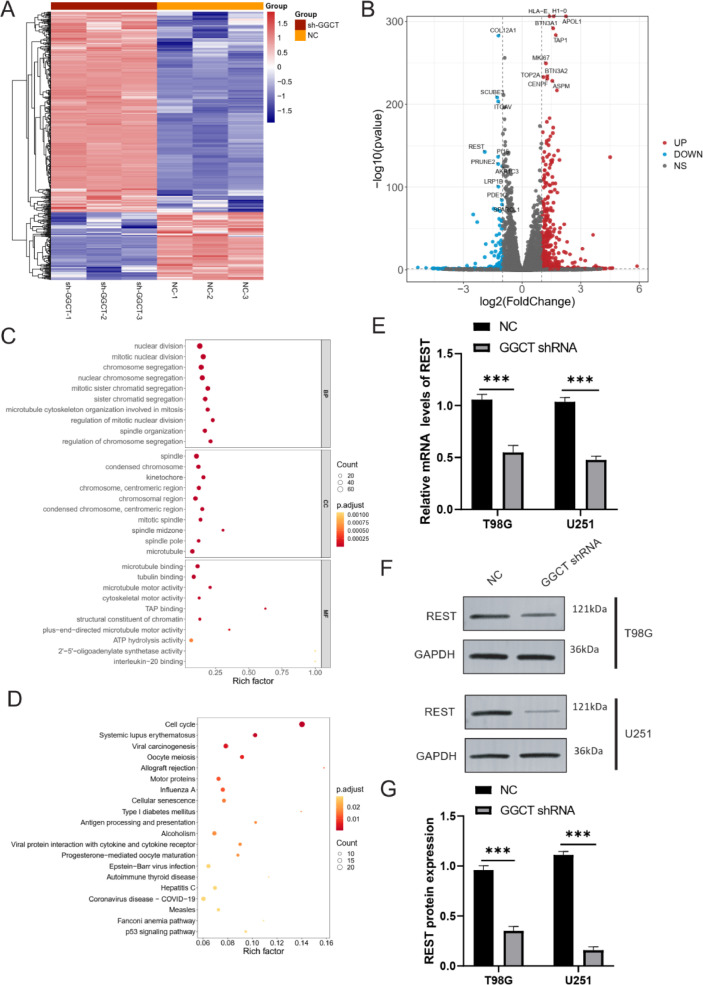
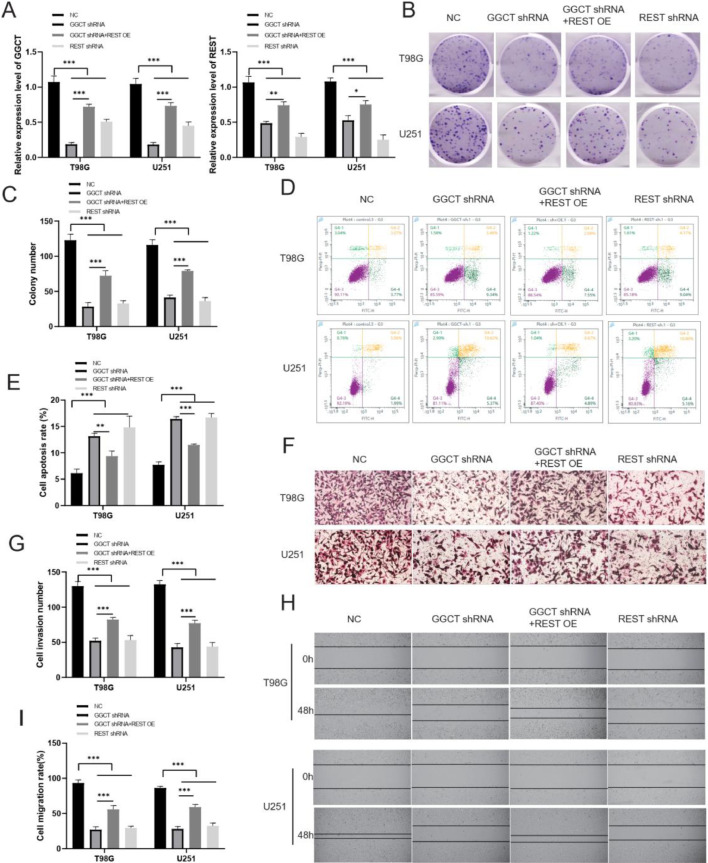
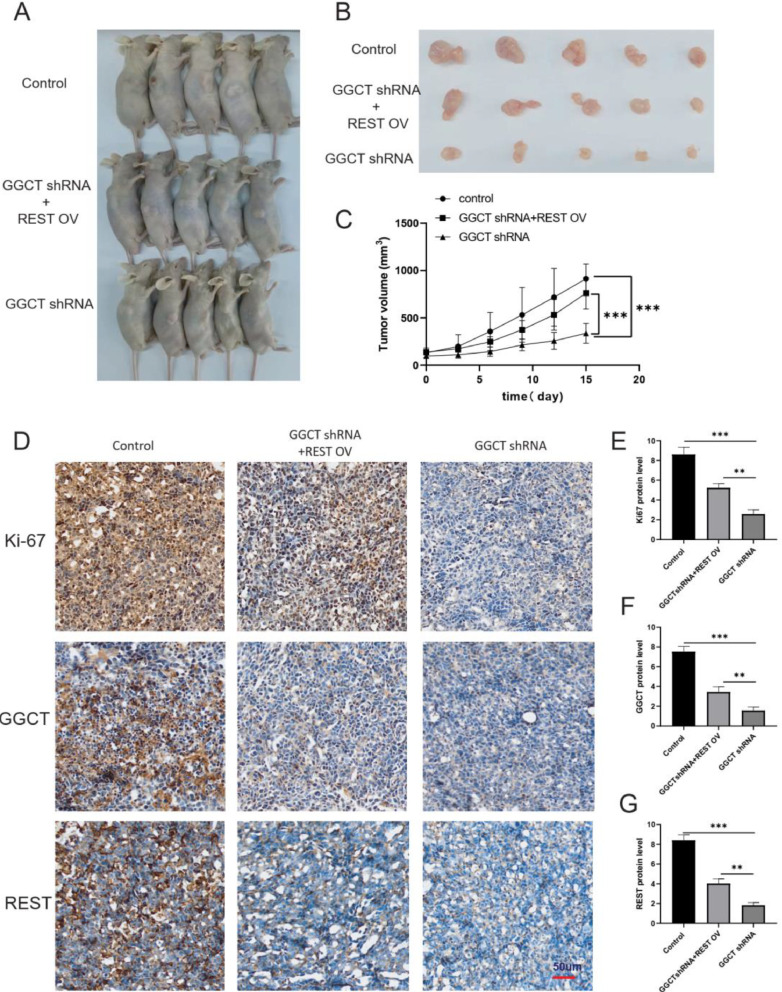
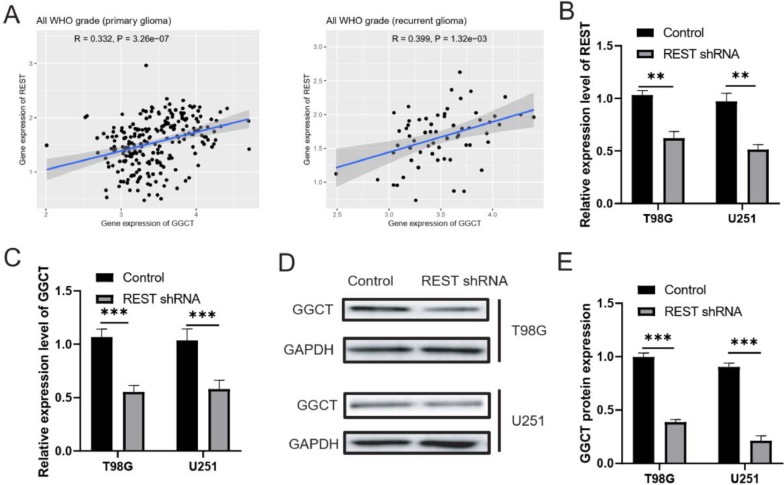
High expression of GGCT was correlated with poor prognosis in glioma. GGCT silencing demonstrated inhibitory effects on the proliferation, migration, and induction of apoptosis in T98G and U251 cells. Mechanistically, GGCT downregulated REST expression and modulated cancer-associated pathways in glioma cells. High expression of REST was associated with poor prognosis in glioma. In vitro and in vivo experiments showed that REST overexpression restored the repression of proliferation, invasion, migration, and xenograft tumor formation induced by GGCT knockdown. Furthermore, the study uncovered that REST inhibited miR-34a-5p mRNA expression, and miR-34a-5p suppressed GGCT expression by targeting its 3'UTR, forming a positive regulatory loop in glioma. Notably, the inhibitor of miR-34a-5p restored the role of REST silencing in decreasing GGCT expression in glioma cells.
GGCT/REST/miR-34a-5p axis holds promising potential as a therapeutic target, offering a potential breakthrough in the treatment of glioma.
γ-谷氨酰环转移酶(GGCT)是谷胱甘肽代谢中的一种关键酶,已成为肿瘤发生过程中的一个参与者。本研究旨在阐明GGCT在胶质瘤中的生物学作用及分子机制。
利用基因表达谱交互分析(GEPIA)、中国胶质瘤基因组图谱(CGGA)和PrognoScan在线数据库检测GGCT和REST在胶质瘤中的表达及临床预后。采用细胞计数试剂盒-8(CCK-8)、Transwell、伤口愈合和流式细胞术检测以及RNA测序分析来揭示GGCT和REST的分子作用。使用miRanda在线数据集预测差异表达的微小RNA(DE-miRNA)和靶向GGCT 3'非翻译区(UTR)的miRNA。最后,采用实时定量聚合酶链反应(RT-qPCR)、蛋白质印迹法和双荧光素酶报告基因活性分析来证实胶质瘤细胞中存在涉及GGCT/REST/miR-34a-5p的正反馈环。
GGCT高表达与胶质瘤预后不良相关。GGCT沉默对T98G和U251细胞的增殖、迁移及凋亡诱导具有抑制作用。机制上,GGCT下调胶质瘤细胞中REST的表达并调节癌症相关通路。REST高表达与胶质瘤预后不良相关。体外和体内实验表明,REST过表达可恢复因GGCT敲低所诱导的增殖、侵袭、迁移抑制及异种移植瘤形成。此外,研究发现REST抑制miR-34a-5p mRNA表达,而miR-34a-5p通过靶向其3'UTR抑制GGCT表达,在胶质瘤中形成正调控环。值得注意的是,miR-34a-5p抑制剂恢复了REST沉默在降低胶质瘤细胞中GGCT表达方面的作用。
GGCT/REST/miR-34a-5p轴作为治疗靶点具有广阔前景,为胶质瘤治疗提供了潜在突破。