Chang Jia, Audétat Andreas, Pettke Thomas
Bavarian Geoinstitute, University of Bayreuth, Bayreuth, 95440, Germany.
Institute of Geological Sciences, University of Bern, Bern, 3012, Switzerland.
Nat Commun. 2024 Aug 14;15(1):6988. doi: 10.1038/s41467-024-51405-7.
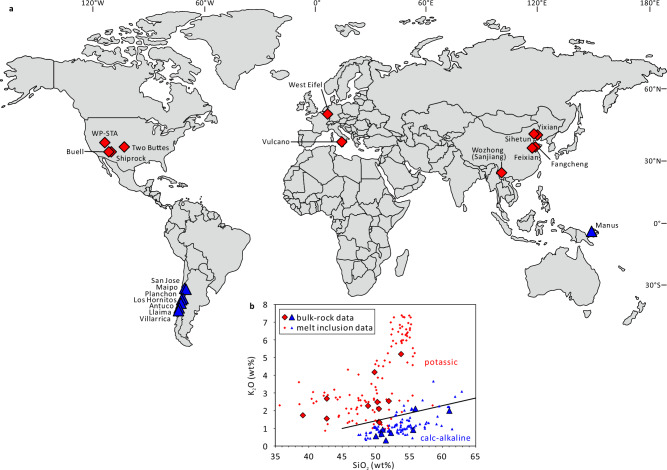
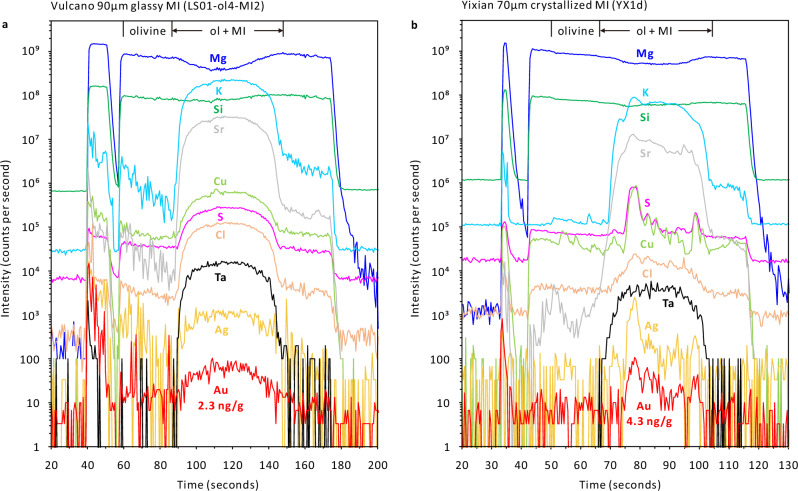
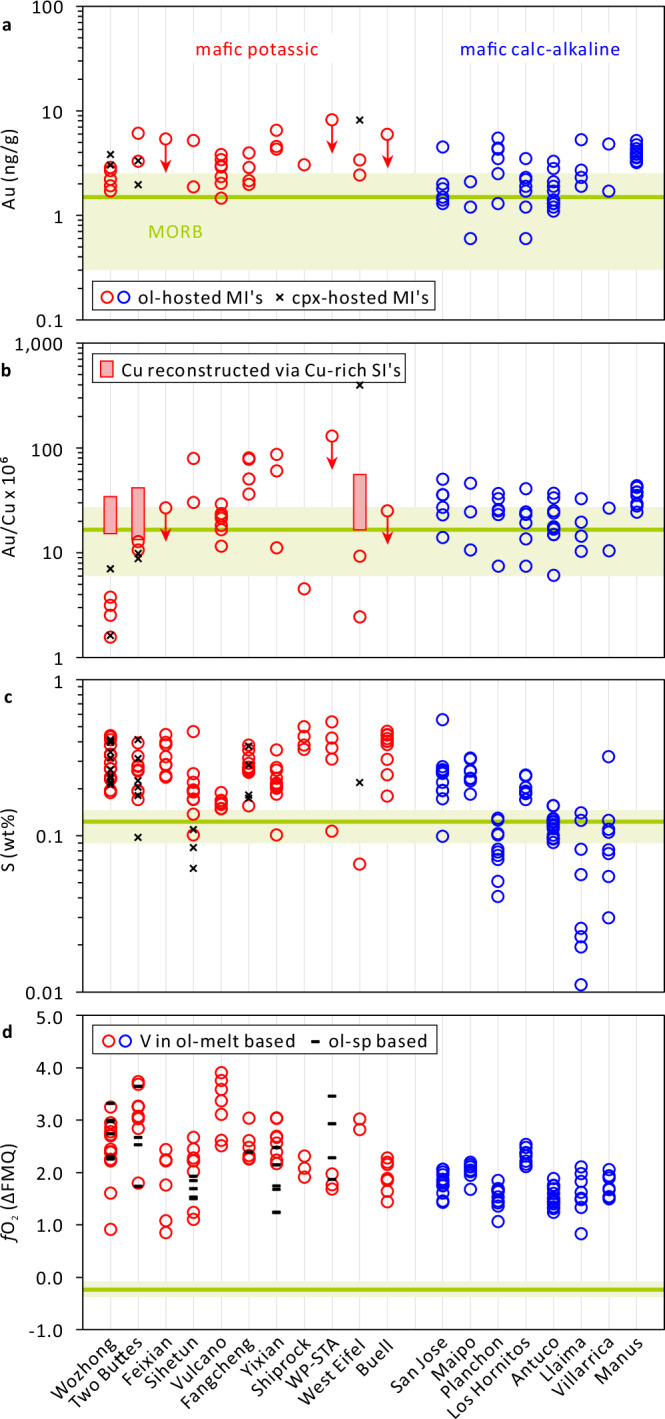
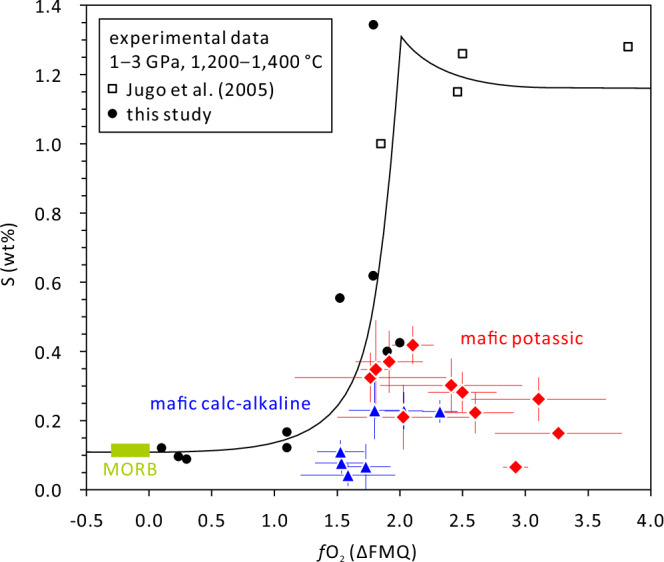
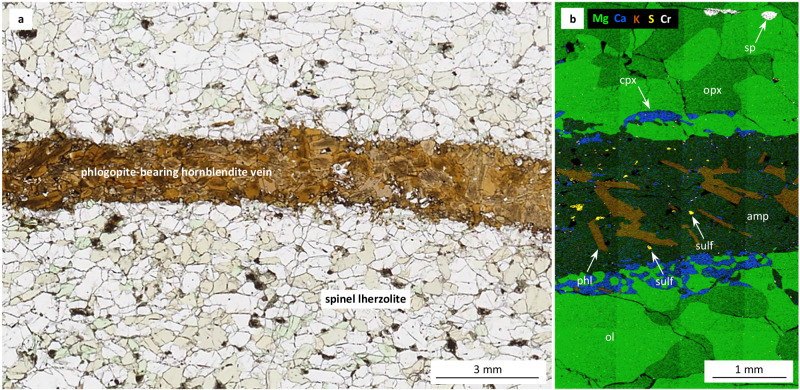
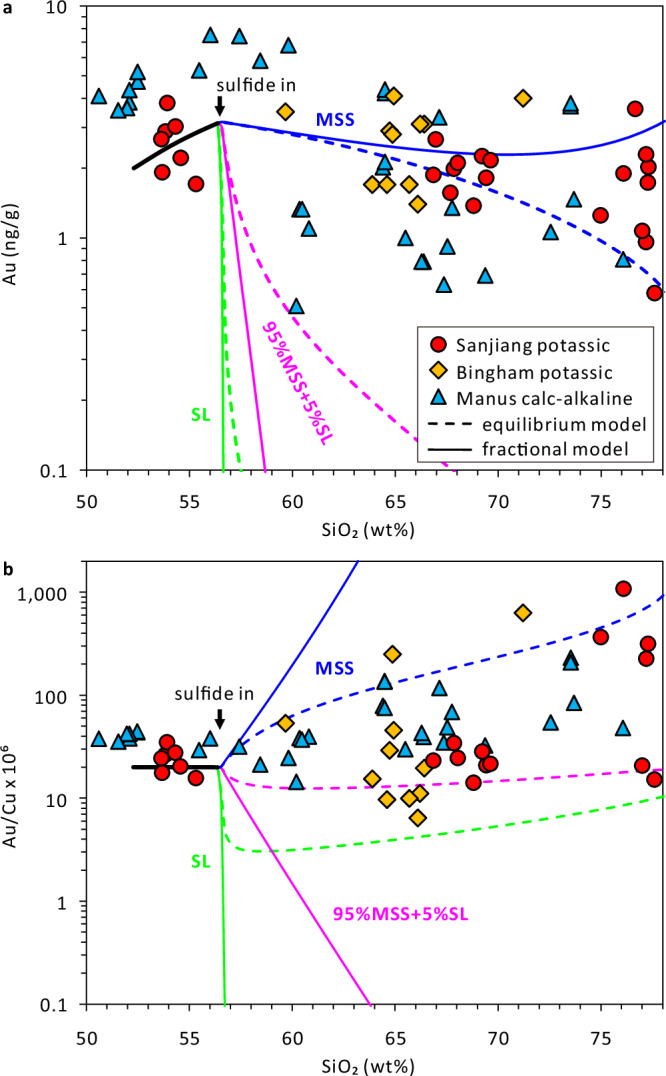
Many epithermal gold and gold-rich porphyry-type ore deposits are associated with potassic magmas. Hence, potassic magmas are commonly assumed to have been unusually Au-rich or to have contained high Au/Cu ratios. However, these hypotheses remain poorly tested. Here, we report Au concentrations and Au/Cu ratios in silicate melt inclusions analyzed in potassic rocks worldwide. The results suggest that mafic potassic magmas generally contain only 2‒7 ng/g Au, despite common sulfide exhaustion during partial mantle melting. Both the absolute Au concentrations and Au/Cu ratios are comparable to those of mafic calc-alkaline magmas, and they vary little during subsequent magma differentiation because magmatic sulfide precipitation is strongly dominated by monosulfide solid solution that is relatively poor in Au and Cu. We thus suggest that the close association of Au-rich deposits with potassic magmas is not due to Au enrichment in the magma, but rather due to selective Au precipitation at the hydrothermal stage.
许多浅成低温热液金矿床和富金斑岩型矿床都与钾质岩浆有关。因此,通常认为钾质岩浆异常富金或具有高金/铜比值。然而,这些假设仍缺乏充分验证。在此,我们报告了对全球钾质岩石中分析的硅酸盐熔体包裹体中的金浓度和金/铜比值。结果表明,尽管在部分地幔熔融过程中常见硫化物耗尽,但镁铁质钾质岩浆通常仅含2-7 ng/g金。金的绝对浓度和金/铜比值均与镁铁质钙碱性岩浆相当,且在随后的岩浆分异过程中变化不大,因为岩浆硫化物沉淀主要由相对贫金和铜的单硫化物固溶体主导。因此,我们认为富金矿床与钾质岩浆的密切关联并非由于岩浆中金的富集,而是由于热液阶段金的选择性沉淀。