Department of Medicine Huddinge, Center for Infectious Medicine, Karolinska Institutet, Stockholm, Sweden.
Department of Infectious Diseases, Karolinska University Hospital, Stockholm, Sweden; Department of Laboratory Medicine, Clinical Immunology, Karolinska Institutet, Stockholm, Sweden; Department of Clinical Immunology and Transfusion Medicine, Karolinska University Hospital, Stockholm, Sweden.
EBioMedicine. 2024 Nov;109:105385. doi: 10.1016/j.ebiom.2024.105385. Epub 2024 Oct 11.
Immunocompromised patients with primary and secondary immunodeficiencies have shown impaired responses to SARS-CoV-2 mRNA vaccines, necessitating recommendations for additional booster doses. However, longitudinal data reflecting the real-world impact of such recommendations remains limited.
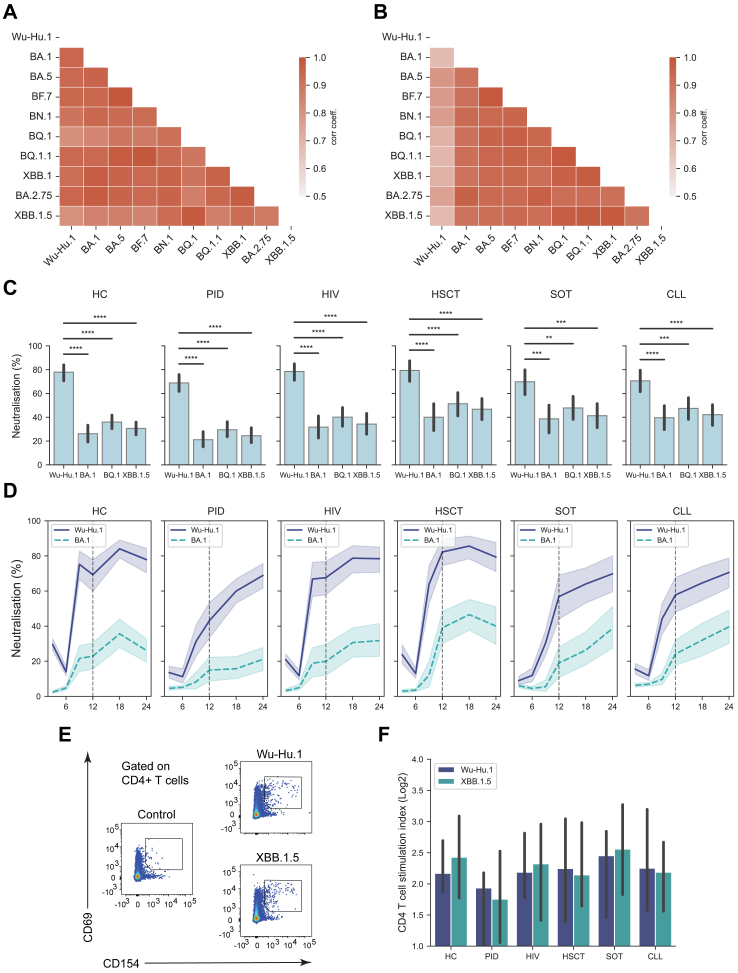
This study represents a two-year follow-up of the COVAXID clinical trial, where 364 of the original 539 subjects consented to participate. 355 individuals provided blood samples for evaluation of binding antibody (Ab) titers and pseudo-neutralisation capacity against both the ancestral SARS-CoV-2 strain and prevalent Omicron variants. T cell responses were assessed in a subset of these individuals. A multivariate analysis determined the correlation between Ab responses and the number of vaccine doses received, documented infection events, immunoglobulin replacement therapy (IGRT), and specific immunosuppressive drugs. The original COVAXID clinical trial was registered in EudraCT (2021-000175-37) and clinicaltrials.gov (NCT04780659).
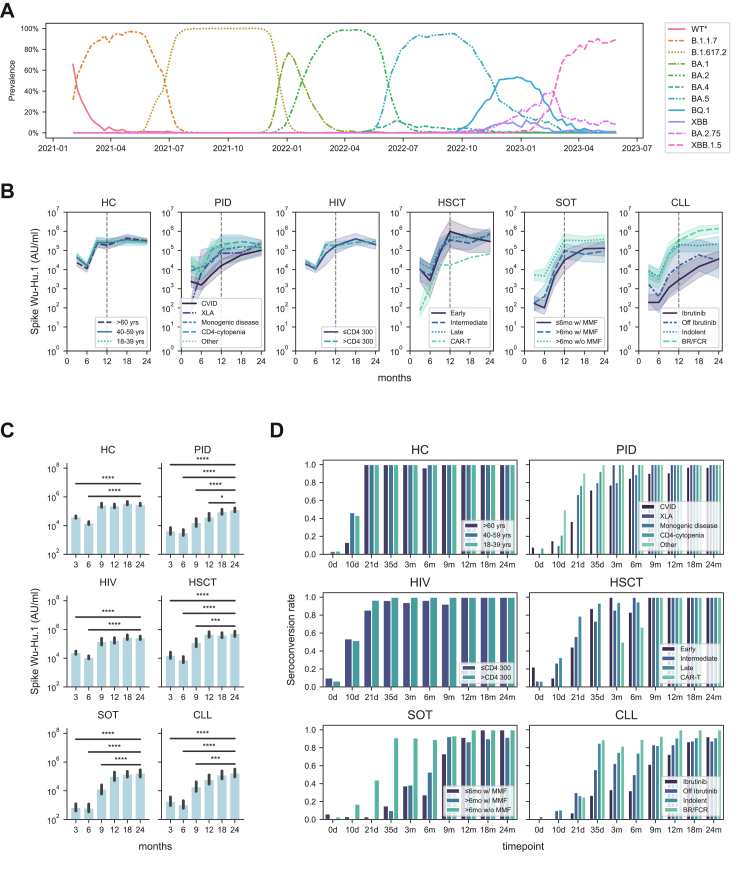
Several of the patient groups that responded poorly to the initial primary vaccine schedule and early booster doses presented with stronger immunogenicity-related responses including binding Ab titres and pseudo-neutralisation at the 18- and 24-month sampling time point. Responses correlated positively with the number of vaccine doses and infection. The vaccine response was blunted by an immunosuppressive state due to the underlying specific disease and/or to specific immunosuppressive treatment.
The study results highlight the importance of continuous SARS-CoV-2 vaccine booster doses in building up and sustaining Ab responses in specific immunocompromised patient populations.
The present studies were supported by the European Research Council, Karolinska Institutet, Knut and Alice Wallenberg Foundation, Nordstjernan AB, Region Stockholm, and the Swedish Research Council.
原发性和继发性免疫缺陷的免疫功能低下患者对 SARS-CoV-2 mRNA 疫苗的反应受损,因此需要额外的加强针剂量建议。然而,反映此类建议的实际影响的纵向数据仍然有限。
本研究代表了 COVAXID 临床试验的两年随访,其中原始 539 名受试者中的 364 名同意参与。355 名个体提供了血液样本,用于评估针对原始 SARS-CoV-2 株和流行的奥密克戎变异株的结合抗体 (Ab) 滴度和假中和能力。在这些个体的一部分中评估了 T 细胞反应。多变量分析确定了 Ab 反应与接种疫苗剂量、记录的感染事件、免疫球蛋白替代治疗 (IGRT) 和特定免疫抑制剂之间的相关性。原始的 COVAXID 临床试验在 EudraCT(2021-000175-37)和 clinicaltrials.gov(NCT04780659)中进行了注册。
对初始初级疫苗接种方案和早期加强剂量反应不佳的一些患者群体在 18 个月和 24 个月的采样时间点表现出更强的免疫原性相关反应,包括结合 Ab 滴度和假中和。反应与疫苗剂量和感染呈正相关。由于潜在的特定疾病和/或特定的免疫抑制治疗,免疫抑制状态削弱了疫苗的反应。
研究结果强调了在特定免疫功能低下的患者群体中持续接种 SARS-CoV-2 加强疫苗以建立和维持 Ab 反应的重要性。
本研究得到了欧洲研究理事会、卡罗林斯卡学院、Knut 和 Alice Wallenberg 基金会、Nordstjernan AB、斯德哥尔摩地区和瑞典研究理事会的支持。