MARE-Centro de Ciências do Mar e do Ambiente/ARNET-Rede de Investigação Aquática, Instituto de Investigação e Formação Avançada, Universidade de Évora, Évora, Portugal.
Departamento de Biologia, Escola de Ciências e Tecnologia, Universidade de Évora, Évora, Portugal.
Sci Rep. 2024 Oct 13;14(1):23910. doi: 10.1038/s41598-024-74959-4.
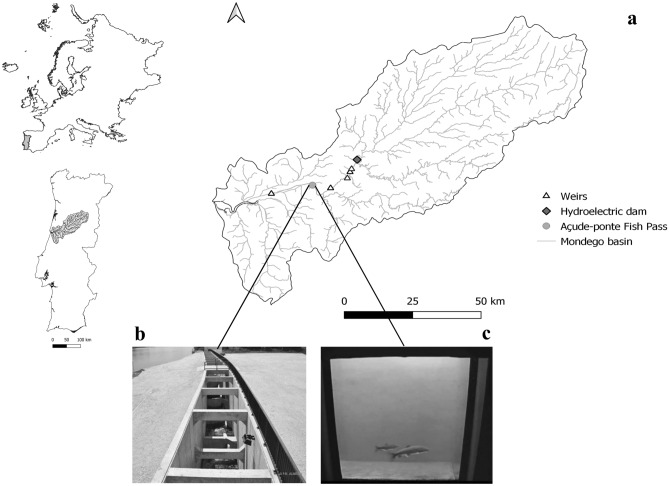
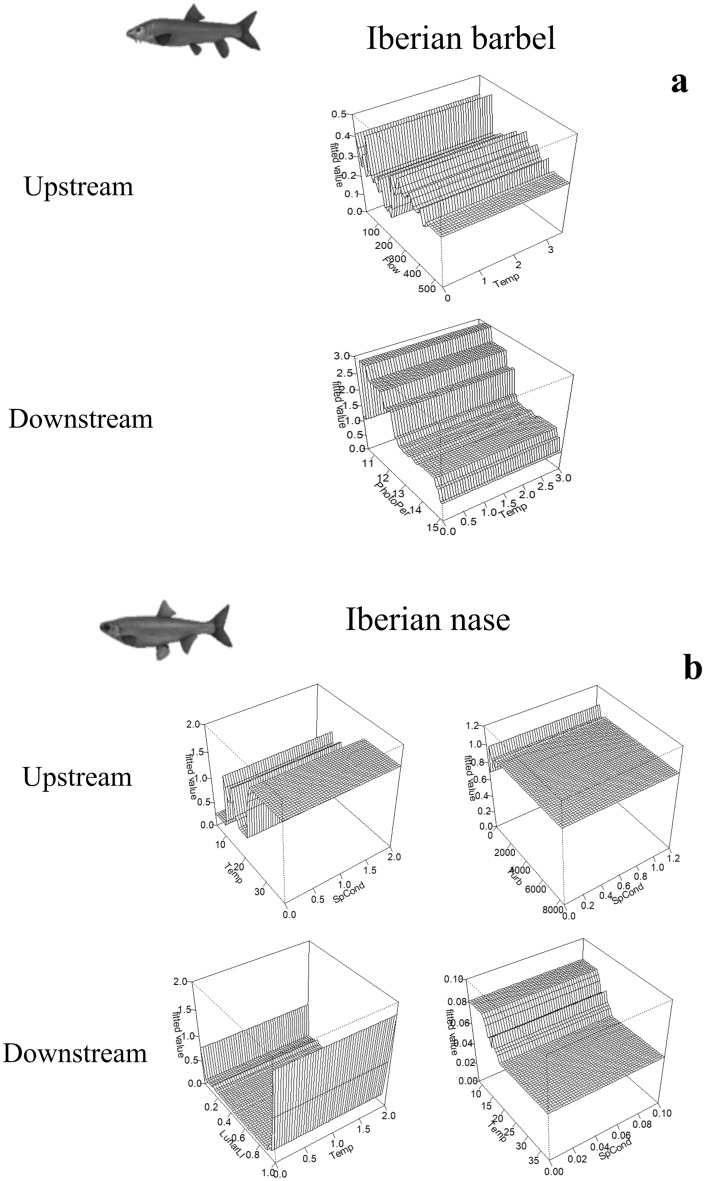
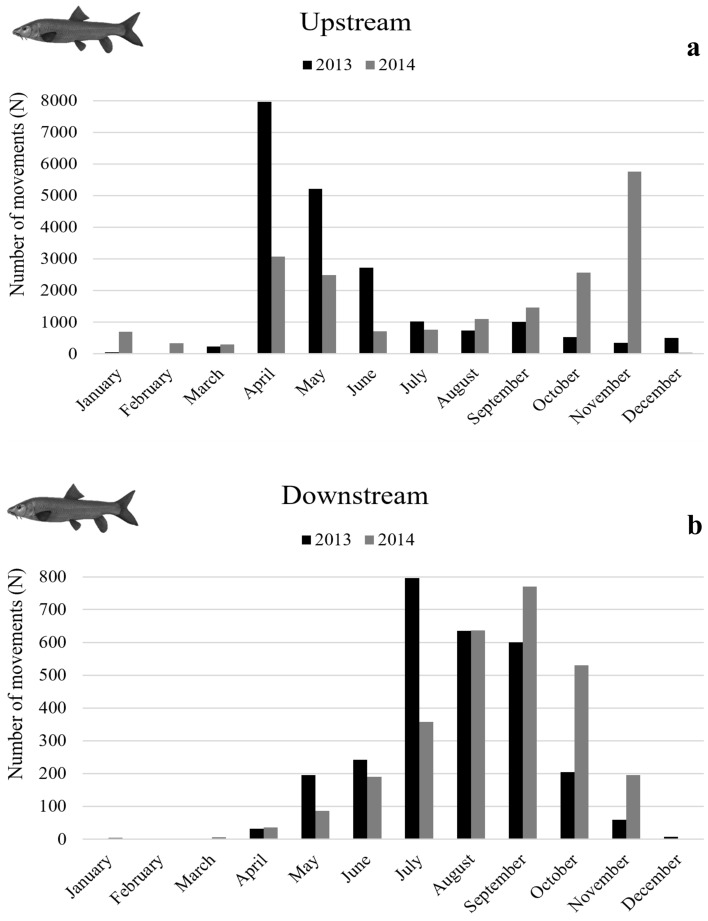
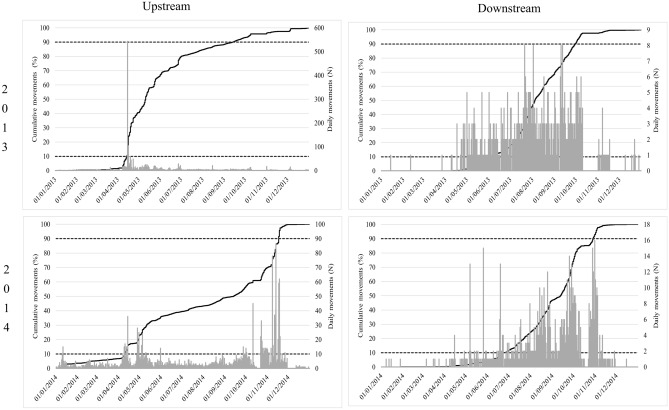
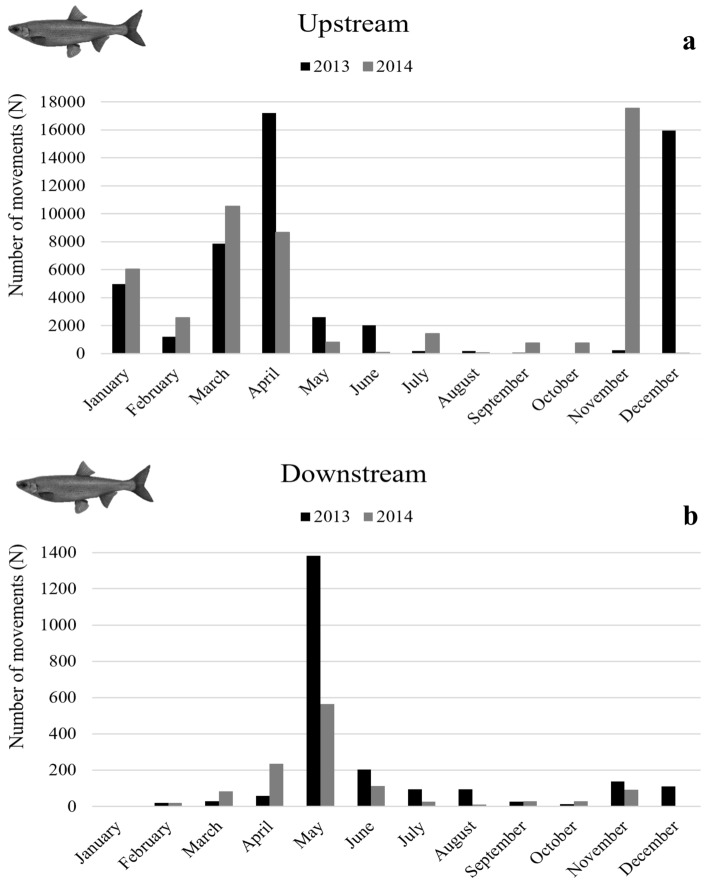
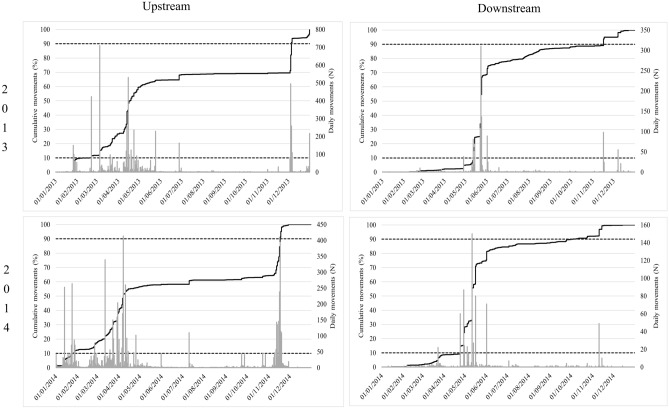
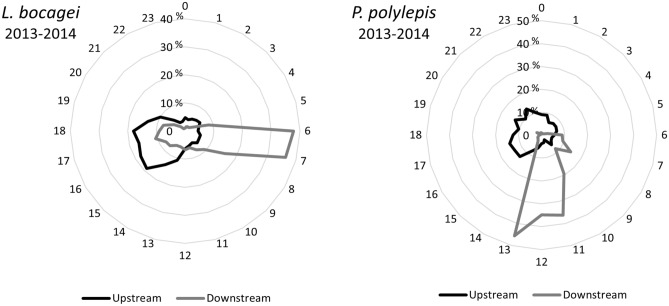
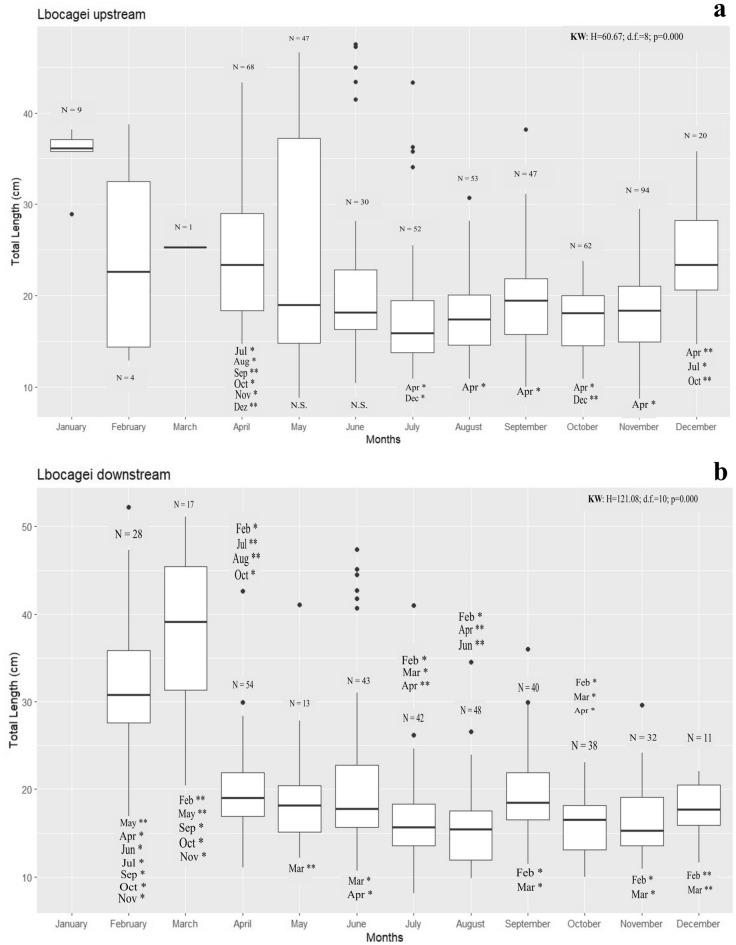
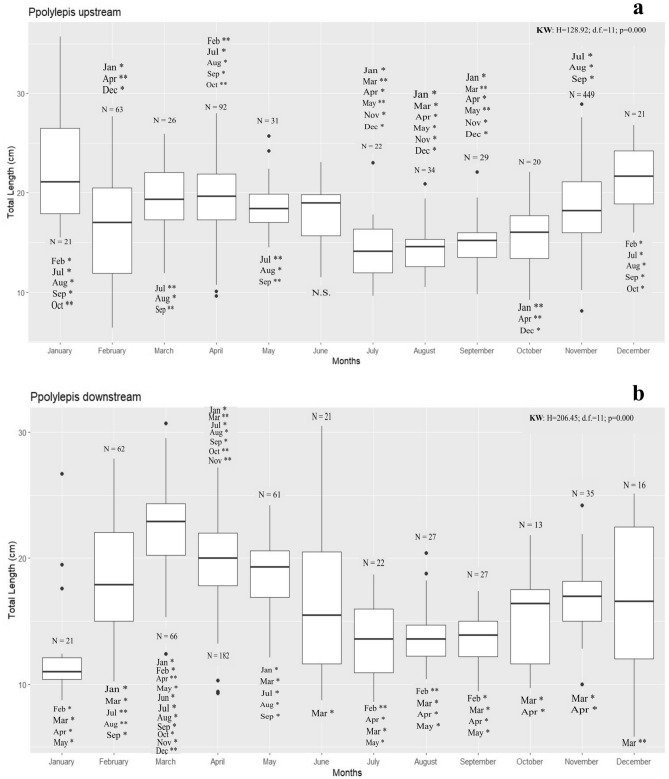
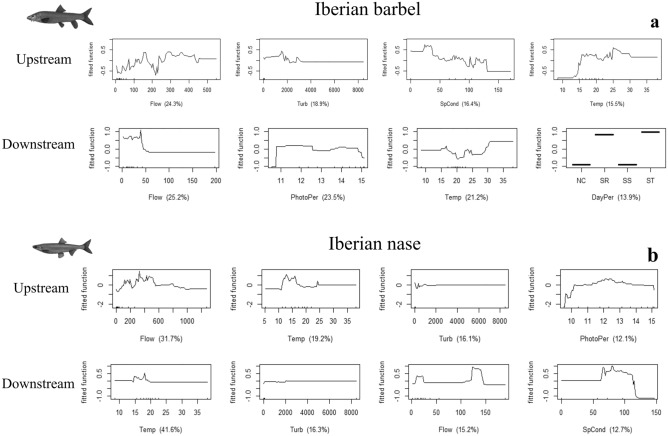
Iberian barbel (Luciobarbus bocagei Steindachner, 1864) and Iberian nase (Pseudochondrostoma polylepis Steindachner, 1864) are two Mediterranean potamodromous fish species known to perform annual upstream migrations to reach spring spawning grounds. In the Mondego River basin, at the Coimbra dam, migratory movement patterns and individual size structure were assessed through a video recording monitoring system installed on an upstream section of a vertical-slot fish pass. Visual census for these target species during two consecutive annual cycles (2013-2014) revealed alternative migratory patterns, with the first peak of upstream movements in autumn, for both barbel (October-November) and nase (November-December). Circadian movements of both species showed a diurnal preference, contrary to what is usually described for these species. Size structure analysis for individuals of both species showed significant intra-annual differences in the size of migrating fish. Boosted regression trees models applied to the 2013-2014 visual count data identified flow and temperature as the most influential environmental predictors, triggering both species' movements in each direction in the study years. These results provide novel information on the timing of the migratory movements of these potamodromous fish, which can be used to adapt current management and conservation measures to the specificities of their migratory behaviour.
伊比利亚欧鲶(Luciobarbus bocagei Steindachner, 1864)和伊比利亚白鲑(Pseudochondrostoma polylepis Steindachner, 1864)是两种地中海洄游性鱼类,已知它们每年都会向上游迁徙到春季产卵场。在蒙德古河盆地的科英布拉大坝,通过安装在垂直槽鱼道上游部分的视频录制监测系统,评估了洄游鱼类的洄游模式和个体大小结构。在两个连续的年度周期(2013-2014 年)中,对这些目标物种进行了目视普查,发现了两种替代的洄游模式,秋、冬季(10 月-11 月)和冬季(11 月-12 月)的第一批巴贝尔(barbel)和白鲑(nase)洄游鱼群的洄游高峰。两种鱼类的昼夜洄游都表现出昼间偏好,这与通常描述的这些物种的行为相反。对这两种鱼类个体大小结构的分析显示,洄游鱼类的大小在年内存在显著差异。对 2013-2014 年视觉计数数据应用的提升回归树模型确定了流量和温度是最具影响力的环境预测因子,触发了这两个物种在研究年份的两个方向的运动。这些结果提供了关于这些洄游性鱼类洄游时间的新信息,可以用来调整当前的管理和保护措施,以适应其洄游行为的特殊性。