Retamal Verónica, San Martín Juan, Ruíz Braulio, Bastías Richard M, Sanfuentes Eugenio, Lisperguer María José, De Gregorio Tommaso, Maspero Matteo, Moya-Elizondo Ernesto
Departamento de Producción Vegetal, Facultad de Agronomía, Universidad de Concepción, Chillán 3812120, Chile.
Laboratorio de Patología Forestal, Facultad de Ciencias Forestales y Centro de Biotecnología, Universidad de Concepción, Concepción 4030000, Chile.
Plants (Basel). 2024 Sep 30;13(19):2753. doi: 10.3390/plants13192753.
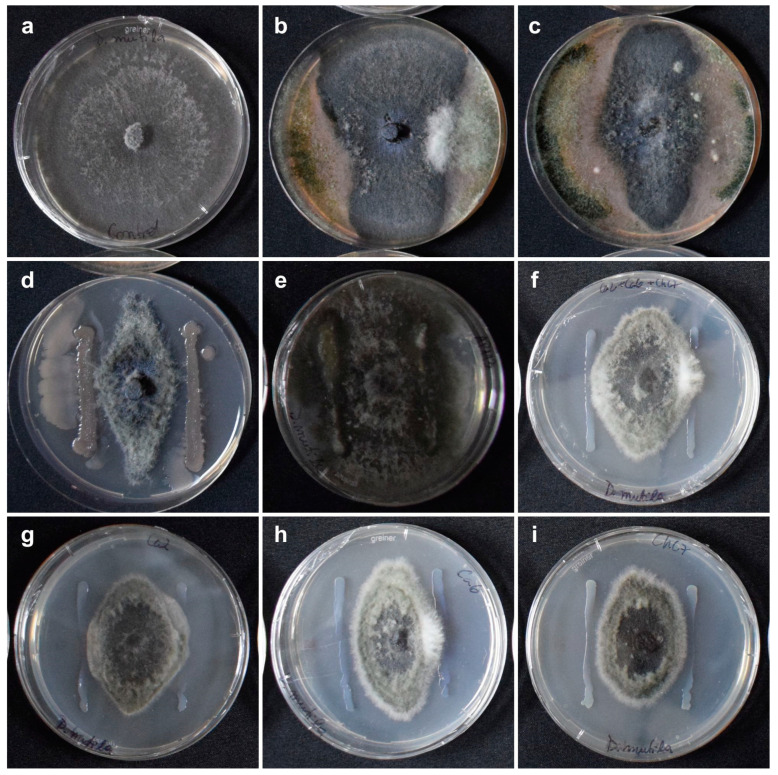
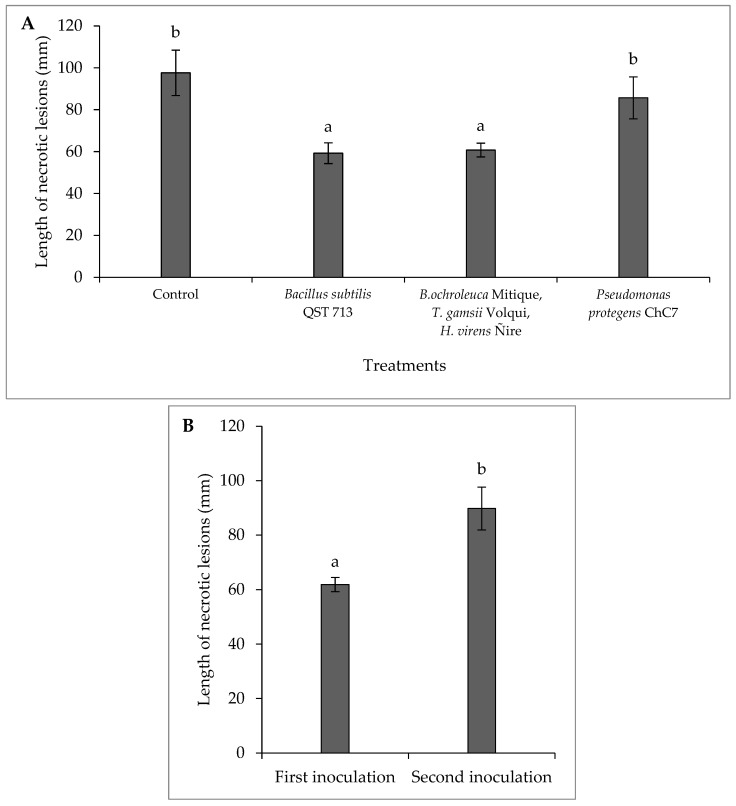
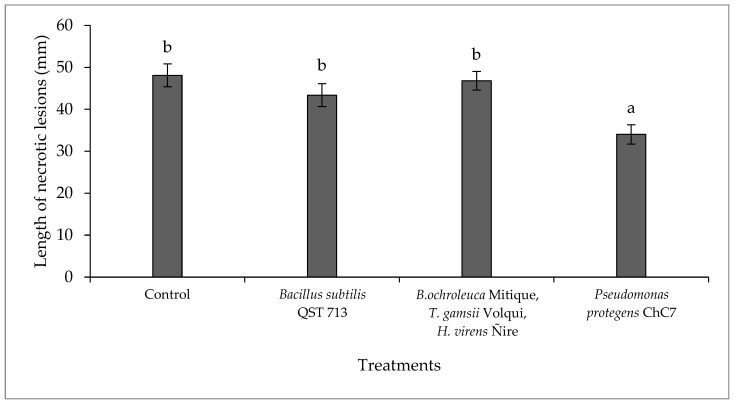
Fungal trunk disease (FTD) poses a significant threat to hazelnut ( L.) production worldwide. In Chile, the fungus , from the Botryosphaeriaceae family, has been frequently identified causing this disease in the Maule and Ñuble Regions. However, control measures for remain limited. This research aimed to evaluate the effectiveness of chemical and biological fungicides against under in vitro, controlled pot experiment, and field conditions. An in vitro screening of 30 fungicides was conducted. The effectiveness was assessed by measuring the length of vascular lesions in hazelnut branches inoculated with mycelium disks under controlled and field conditions. Field trials were conducted in a hazelnut orchard in Ñiquén, Ñuble Region, Chile. The results showed that three biological and five chemical fungicides were selected in vitro with >31% inhibition after 14 days. In pot experiments, all fungicides reduced necrotic lesions on branches by 32% to 61%. In field experiments, the most effective systemic fungicides were fluopyram/tebuconazole, fluxapyroxad/pyraclostrobin, and tebuconazole, while the effectiveness of antagonists ChC7 and QST713 varied with seasonal temperatures. Effective conventional and biological fungicides against could be integrated into disease management programs to protect hazelnut wounds from infections.
真菌性树干病(FTD)对全球榛子(L.)生产构成重大威胁。在智利,来自葡萄座腔菌科的真菌频繁地在马乌莱和纽夫莱地区被鉴定为引发这种疾病的病因。然而,针对该真菌的防治措施仍然有限。本研究旨在评估化学和生物杀菌剂在体外、受控盆栽试验及田间条件下对该真菌的防治效果。进行了30种杀菌剂的体外筛选。通过测量在受控和田间条件下接种该真菌菌丝圆盘的榛子树枝中维管束病变的长度来评估防治效果。田间试验在智利纽夫莱地区尼昆的一个榛子果园进行。结果表明,在体外筛选出了三种生物杀菌剂和五种化学杀菌剂,14天后抑制率>31%。在盆栽试验中,所有杀菌剂使树枝上的坏死病变减少了32%至61%。在田间试验中,最有效的内吸性杀菌剂是氟吡菌酰胺/戊唑醇、氟唑菌酰胺/吡唑醚菌酯和戊唑醇,而拮抗剂ChC7和QST713的防治效果随季节温度而变化。有效的常规和生物杀菌剂可纳入病害管理计划,以保护榛子伤口免受感染。