Van Den Top Michael Blake, Horvath Andrew, Koutsoukos Spyridon, Philippi Frederik, Rauber Daniel, Welton Tom, Shaw Scott K
Department of Chemistry, University of Iowa, Iowa, Iowa 52242, United States.
Department of Chemistry, Imperial College, London SW7 2AZ, U.K.
J Phys Chem B. 2024 Nov 14;128(45):11251-11257. doi: 10.1021/acs.jpcb.4c04413. Epub 2024 Nov 5.
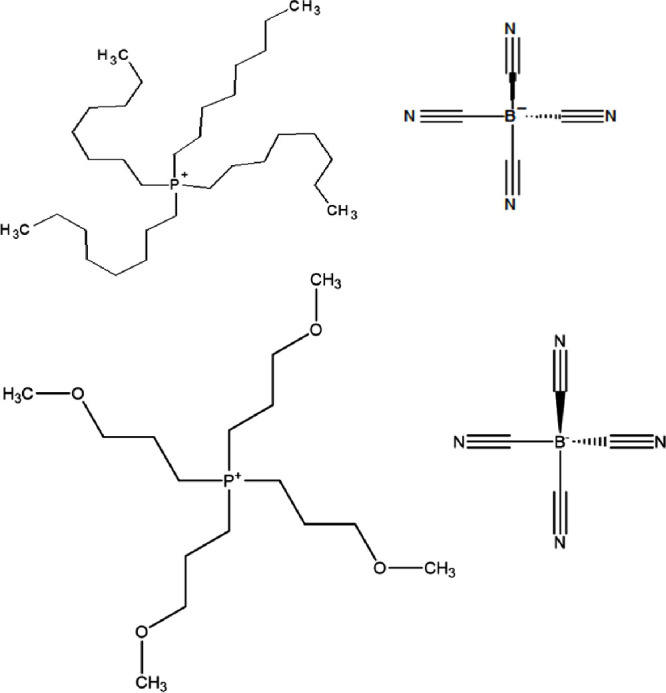
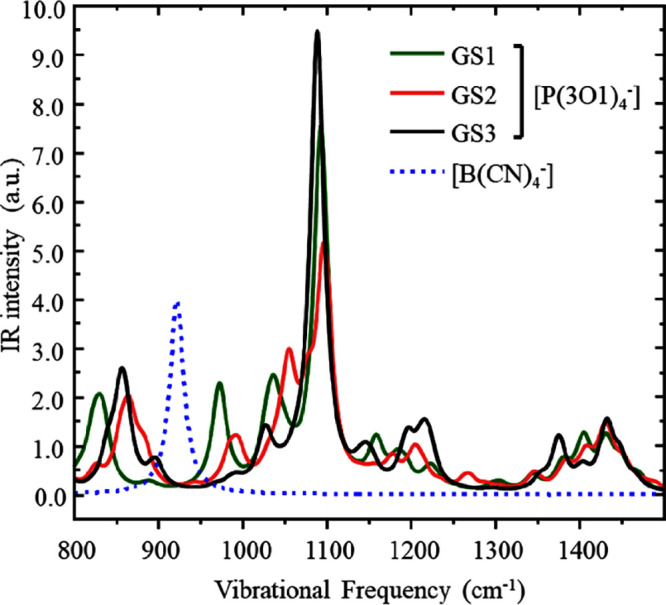
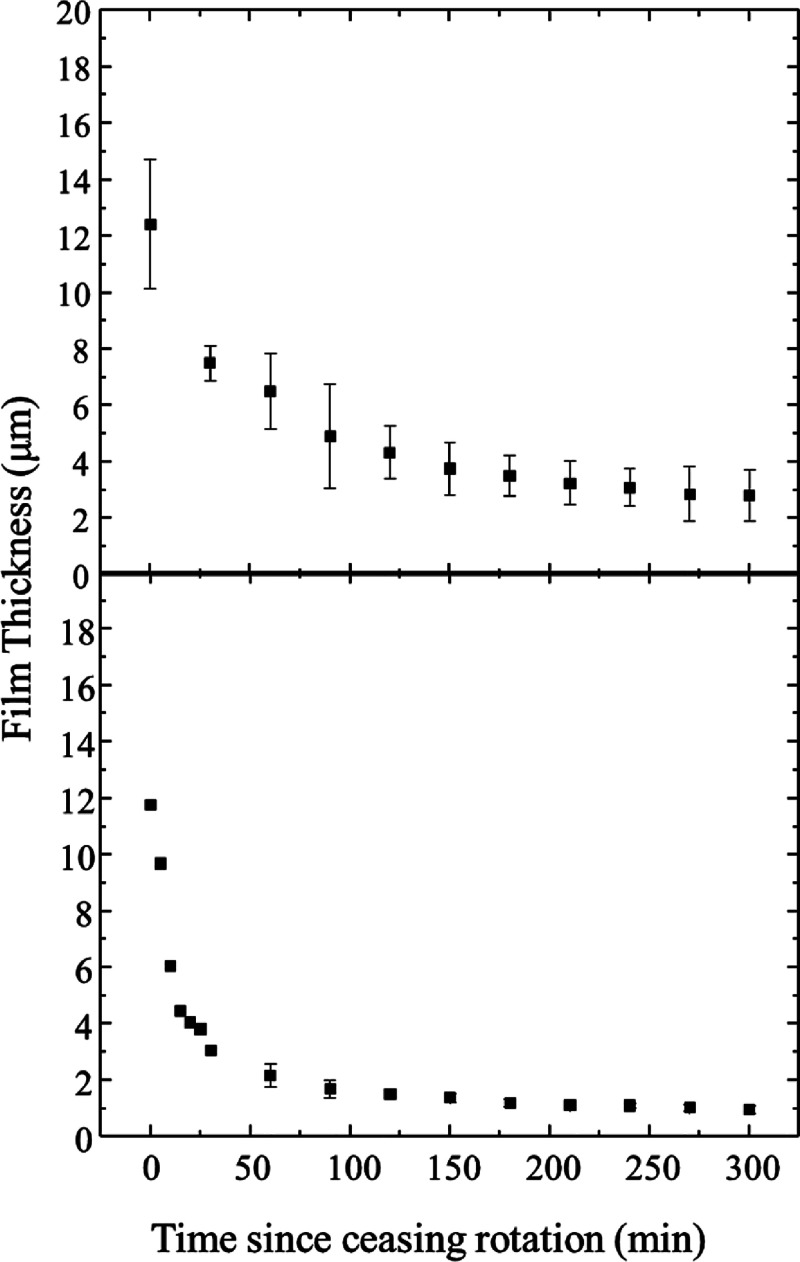
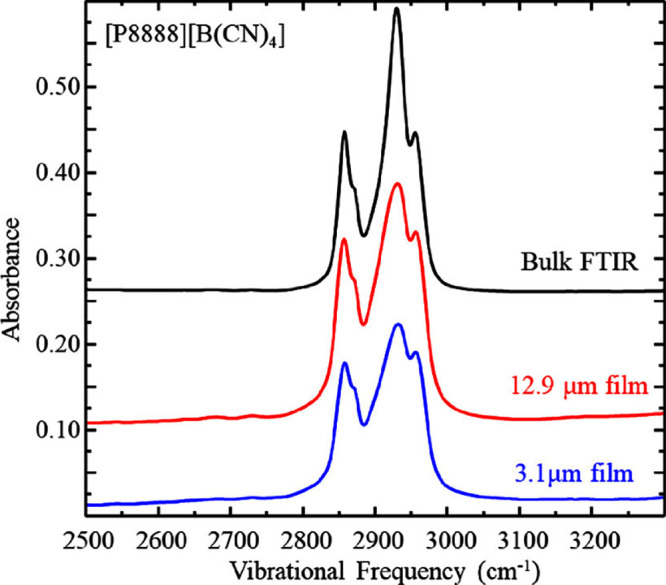
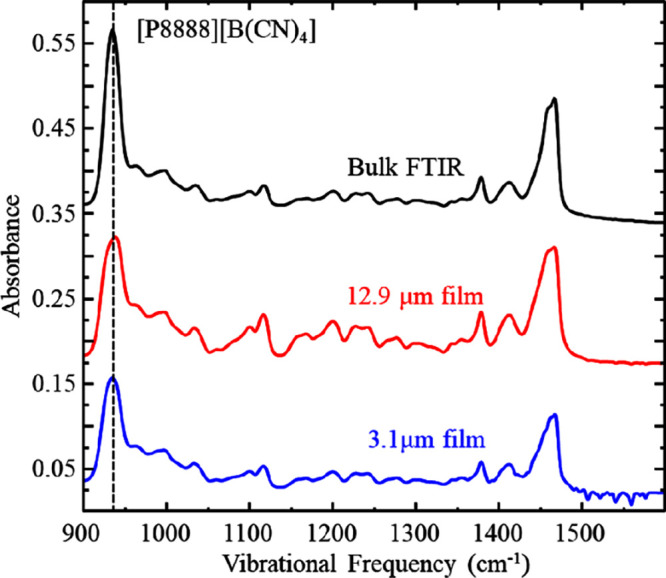
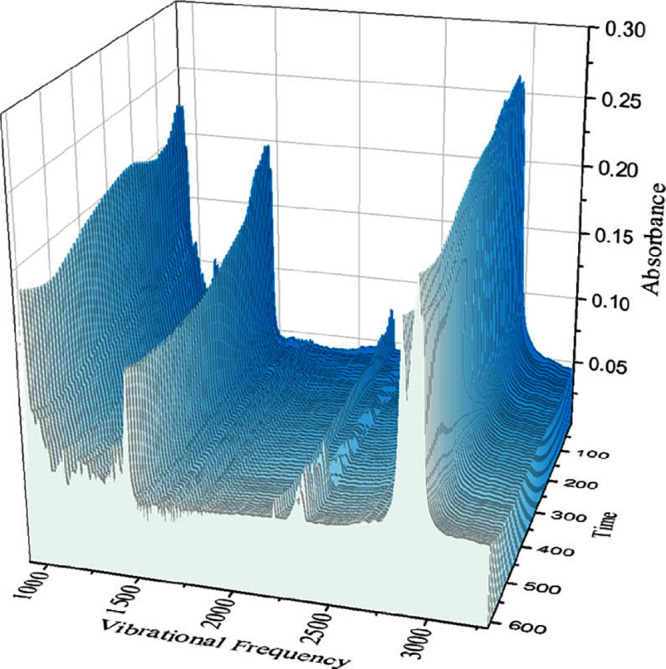
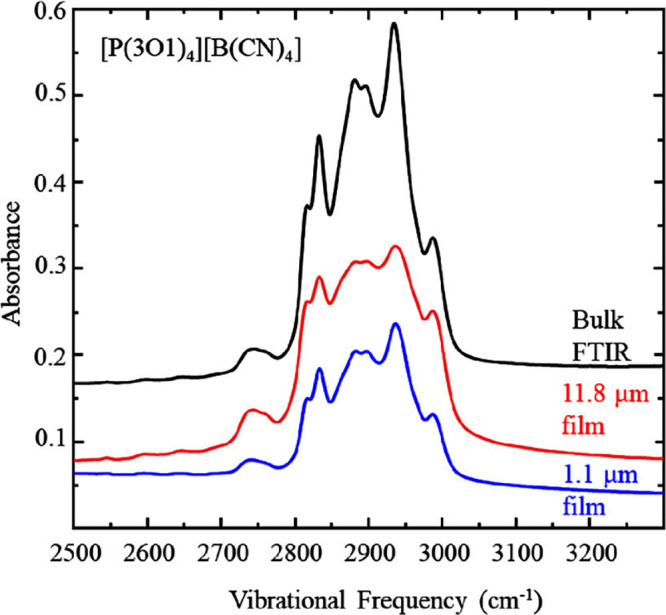
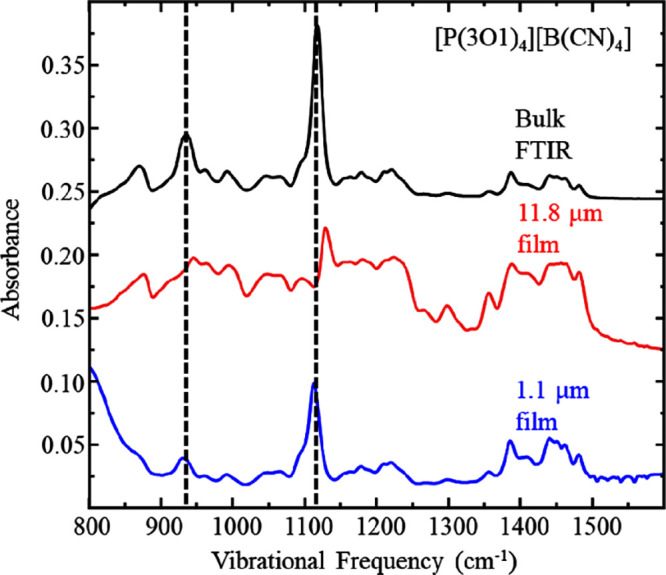
Ionic liquids have been shown to form extended ordered structures near surfaces and in bulk. Identifying fundamental driving force(s) for this organization has been elusive. In this paper, we test a hypothesis that the ionic liquid asymmetry, inherent in many of the IL formulations to frustrate crystallization, is a significant contributor to the observed ordering. We have carried out measurements to track the ordering of ionic liquids composed of "spherical" cations, namely, tetraoctylphosphonium ([P8888]) and tetra(propoxymethyl)phosphonium [P(3O1)4] paired with tetracyanoborate anion [B(CN)4]. Analysis of the infrared signatures for films of these ionic liquids shows very little evidence of ordered structures. These liquids instead remain in a more isotropic environment even when confined to volumes of few micrometer dimensions.
离子液体已被证明在表面附近和本体中会形成扩展的有序结构。确定这种组织的基本驱动力一直难以捉摸。在本文中,我们检验了一个假设,即许多离子液体配方中固有的离子液体不对称性(这会阻碍结晶)是观察到的有序性的一个重要因素。我们进行了测量,以追踪由“球形”阳离子(即四辛基鏻([P8888])和四(丙氧基甲基)鏻[P(3O1)4])与四氰基硼酸根阴离子[B(CN)4]组成的离子液体的有序化过程。对这些离子液体薄膜的红外特征分析表明,几乎没有有序结构的证据。相反,即使被限制在几微米尺寸的体积内,这些液体仍处于更各向同性的环境中。