Vizitiu Cristian, Stara Vera, Antognoli Luca, Dinculescu Adrian, Mosoi Adrian, Kristaly Dominic M, Nistorescu Alexandru, Rampioni Margherita, Dominey Kevin, Marin Mihaela, Rossi Lorena, Moraru Sorin-Aurel, Vasile Costin-Emanuel, Dugan Cosmin
The Space Applications and Technologies Laboratory, Institute of Space Science-Subsidiary of INFLPR (National Institute for Laser, Plasma and Radiation Physics), Magurele, Romania.
Department of Automatics and Information Technology, Faculty of Electrical Engineering and Computer Science, Transilvania University of Brasov, Brasov, Romania.
Digit Health. 2024 Nov 3;10:20552076241293597. doi: 10.1177/20552076241293597. eCollection 2024 Jan-Dec.
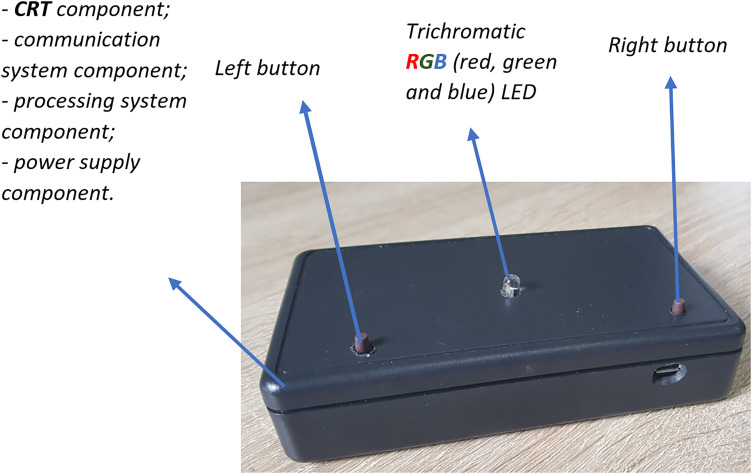
Research shows that older adults' performance on choice reaction time (CRT) tests can predict cognitive decline. A simple CRT tool could help detect mild cognitive impairment (MCI) and preclinical dementia, allowing for further stratification of cognitive disorders on-site or via telemedicine.
The primary objective was to develop a CRT testing device and protocol to differentiate between two cognitive impairment categories: (a) subjective cognitive decline (SCD) and non-amnestic mild cognitive impairment (na-MCI), and (b) amnestic mild cognitive impairment (a-MCI) and multiple-domain a-MCI (a-MCI-MD).
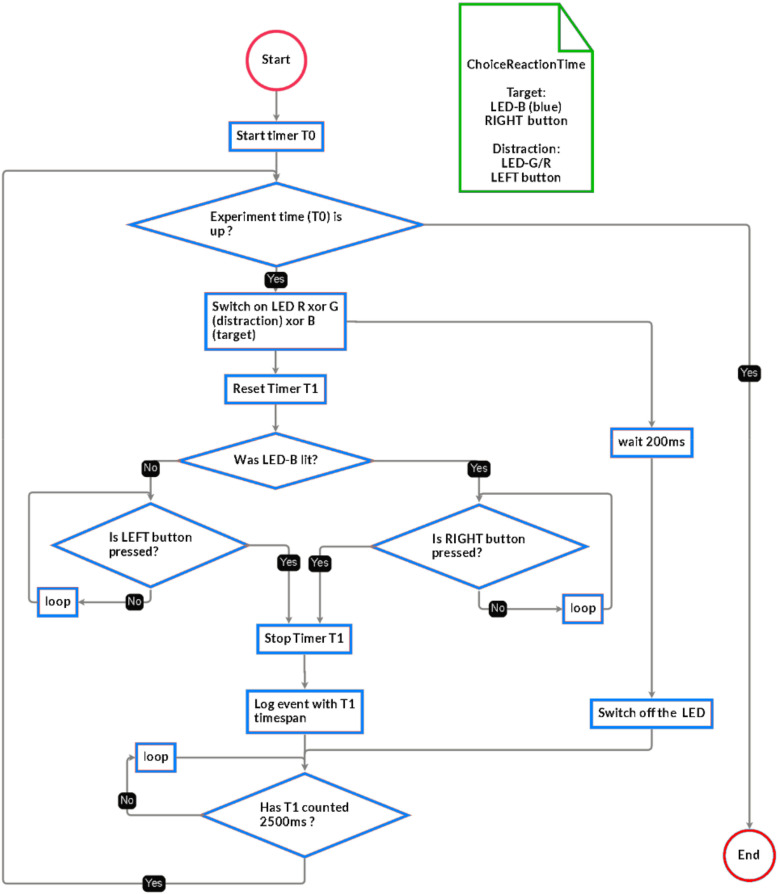
A pilot study in Italy and Romania with 35 older adults (ages 61-85) assessed cognitive function using the Mini-Mental State Examination (MMSE) and a CRT color response task. Reaction time, accuracy, and demographics were recorded, and machine learning classifiers analyzed performance differences to predict preclinical dementia and screen for mild cognitive deficits.
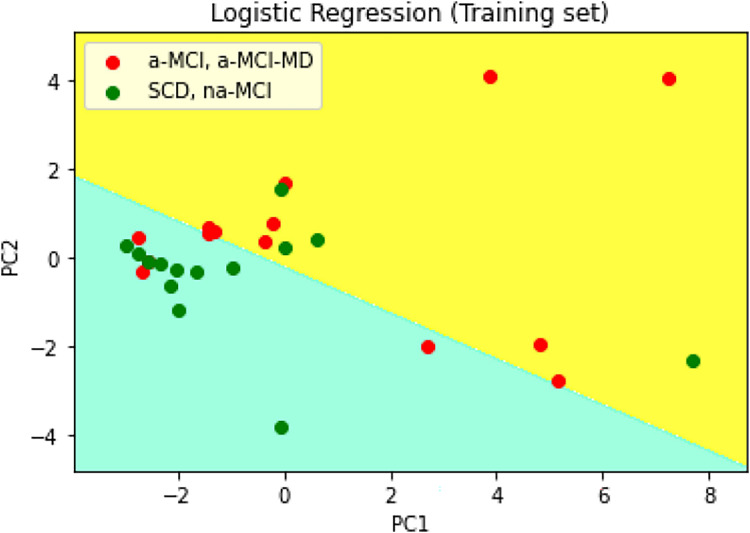
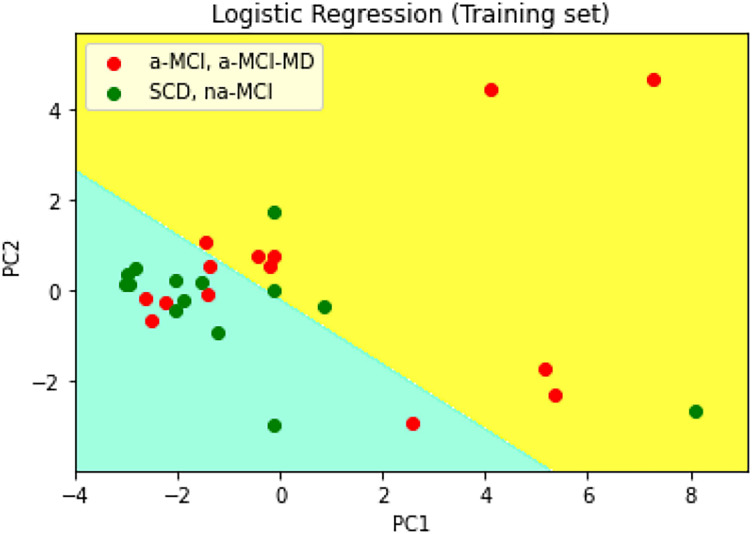
Moderate correlations were found between the MMSE score and both mean reaction time and mean accuracy rate. There was a significant difference between the two groups' reaction time for blue light, but not for any other colors or for mean accuracy rate. SVM and RUSBoosted trees were found to have the best preclinical dementia prediction capabilities among the tested classifier algorithms, both presenting an accuracy rate of 77.1%.
CRT testing with machine learning effectively differentiates cognitive capacities in older adults, facilitating early diagnosis and stratification of neurocognitive diseases and can also identify impairments from stressors like dehydration and sleep deprivation. This study highlights the potential of portable CRT devices for monitoring cognitive function, including SCD and MCI.
研究表明,老年人在选择反应时(CRT)测试中的表现可以预测认知能力下降。一种简单的CRT工具可以帮助检测轻度认知障碍(MCI)和临床前痴呆,从而在现场或通过远程医疗对认知障碍进行进一步分层。
主要目的是开发一种CRT测试设备和方案,以区分两种认知障碍类别:(a)主观认知下降(SCD)和非遗忘型轻度认知障碍(na-MCI),以及(b)遗忘型轻度认知障碍(a-MCI)和多领域a-MCI(a-MCI-MD)。
在意大利和罗马尼亚对35名老年人(61-85岁)进行的一项试点研究,使用简易精神状态检查表(MMSE)和CRT颜色反应任务评估认知功能。记录反应时间、准确性和人口统计学数据,并使用机器学习分类器分析性能差异,以预测临床前痴呆并筛查轻度认知缺陷。
MMSE评分与平均反应时间和平均准确率之间存在中度相关性。两组对蓝光的反应时间存在显著差异,但对其他任何颜色或平均准确率均无显著差异。在测试的分类器算法中,支持向量机(SVM)和随机欠采样提升树(RUSBoosted trees)具有最佳的临床前痴呆预测能力,准确率均为77.1%。
结合机器学习的CRT测试能有效区分老年人的认知能力,有助于神经认知疾病的早期诊断和分层,还能识别脱水和睡眠剥夺等应激源导致的损伤。本研究突出了便携式CRT设备在监测认知功能(包括SCD和MCI)方面的潜力。