Chustecki Margaret
Department of Internal Medicine, Yale School of Medicine, New Haven, CT, United States.
Interact J Med Res. 2024 Nov 18;13:e53616. doi: 10.2196/53616.
The integration of artificial intelligence (AI) into health care has the potential to transform the industry, but it also raises ethical, regulatory, and safety concerns. This review paper provides an in-depth examination of the benefits and risks associated with AI in health care, with a focus on issues like biases, transparency, data privacy, and safety.
This study aims to evaluate the advantages and drawbacks of incorporating AI in health care. This assessment centers on the potential biases in AI algorithms, transparency challenges, data privacy issues, and safety risks in health care settings.
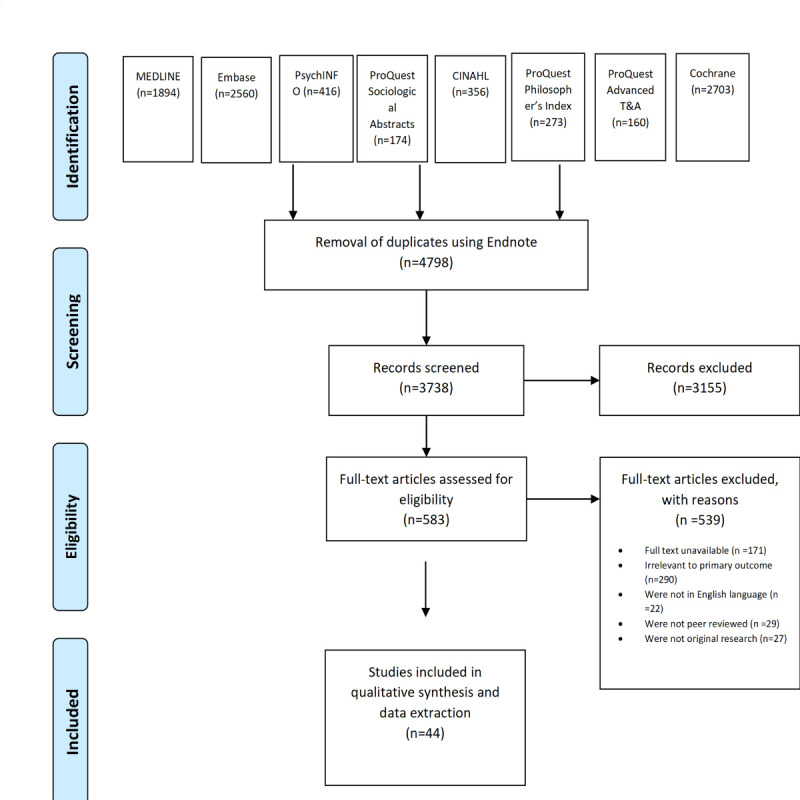
Studies included in this review were selected based on their relevance to AI applications in health care, focusing on ethical, regulatory, and safety considerations. Inclusion criteria encompassed peer-reviewed articles, reviews, and relevant research papers published in English. Exclusion criteria included non-peer-reviewed articles, editorials, and studies not directly related to AI in health care. A comprehensive literature search was conducted across 8 databases: OVID MEDLINE, OVID Embase, OVID PsycINFO, EBSCO CINAHL Plus with Full Text, ProQuest Sociological Abstracts, ProQuest Philosopher's Index, ProQuest Advanced Technologies & Aerospace, and Wiley Cochrane Library. The search was last updated on June 23, 2023. Results were synthesized using qualitative methods to identify key themes and findings related to the benefits and risks of AI in health care.
The literature search yielded 8796 articles. After removing duplicates and applying the inclusion and exclusion criteria, 44 studies were included in the qualitative synthesis. This review highlights the significant promise that AI holds in health care, such as enhancing health care delivery by providing more accurate diagnoses, personalized treatment plans, and efficient resource allocation. However, persistent concerns remain, including biases ingrained in AI algorithms, a lack of transparency in decision-making, potential compromises of patient data privacy, and safety risks associated with AI implementation in clinical settings.
In conclusion, while AI presents the opportunity for a health care revolution, it is imperative to address the ethical, regulatory, and safety challenges linked to its integration. Proactive measures are required to ensure that AI technologies are developed and deployed responsibly, striking a balance between innovation and the safeguarding of patient well-being.
将人工智能(AI)整合到医疗保健领域有可能变革该行业,但同时也引发了伦理、监管和安全方面的担忧。这篇综述文章深入探讨了医疗保健领域中与人工智能相关的益处和风险,重点关注偏见、透明度、数据隐私和安全等问题。
本研究旨在评估在医疗保健中纳入人工智能的优点和缺点。该评估集中于人工智能算法中的潜在偏见、透明度挑战、数据隐私问题以及医疗保健环境中的安全风险。
本综述纳入的研究是基于其与医疗保健中人工智能应用的相关性来选择的,重点关注伦理、监管和安全方面的考量。纳入标准包括同行评审的文章、综述以及以英文发表的相关研究论文。排除标准包括非同行评审的文章、社论以及与医疗保健中人工智能无直接关联的研究。在8个数据库中进行了全面的文献检索:OVID MEDLINE、OVID Embase、OVID PsycINFO、EBSCO CINAHL Plus with Full Text、ProQuest Sociological Abstracts、ProQuest Philosopher's Index、ProQuest Advanced Technologies & Aerospace以及Wiley Cochrane Library。检索于2023年6月23日最后更新。使用定性方法对结果进行综合分析,以确定与医疗保健中人工智能的益处和风险相关的关键主题和发现。
文献检索共得到8796篇文章。在去除重复项并应用纳入和排除标准后,44项研究被纳入定性综合分析。本综述强调了人工智能在医疗保健领域所具有的重大前景,例如通过提供更准确的诊断、个性化的治疗方案和高效的资源分配来改善医疗服务。然而,仍然存在一些持续的担忧,包括人工智能算法中根深蒂固的偏见、决策缺乏透明度、患者数据隐私可能受到侵犯以及临床环境中与人工智能实施相关的安全风险。
总之,虽然人工智能为医疗保健革命带来了机遇,但必须应对与其整合相关的伦理、监管和安全挑战。需要采取积极措施,以确保负责任地开发和部署人工智能技术,在创新与保障患者福祉之间取得平衡。