Sahoo Sthitaprajna, Gosu Vijayakumar, Lee Hak-Kyo, Shin Donghyun
Department of Agricultural Convergence Technology, Jeonbuk National University, Jeonju, 54896, Republic of Korea.
Department of Animal Biotechnology, Jeonbuk National University, Jeonju, 54896, Republic of Korea.
Heliyon. 2024 Nov 1;10(21):e40040. doi: 10.1016/j.heliyon.2024.e40040. eCollection 2024 Nov 15.
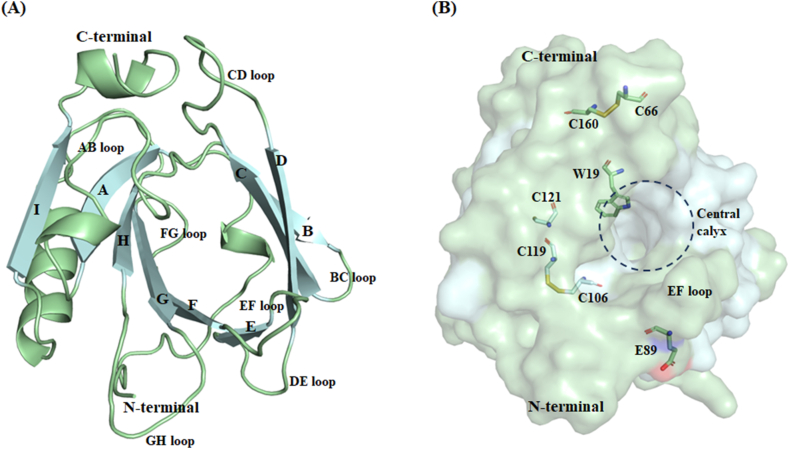
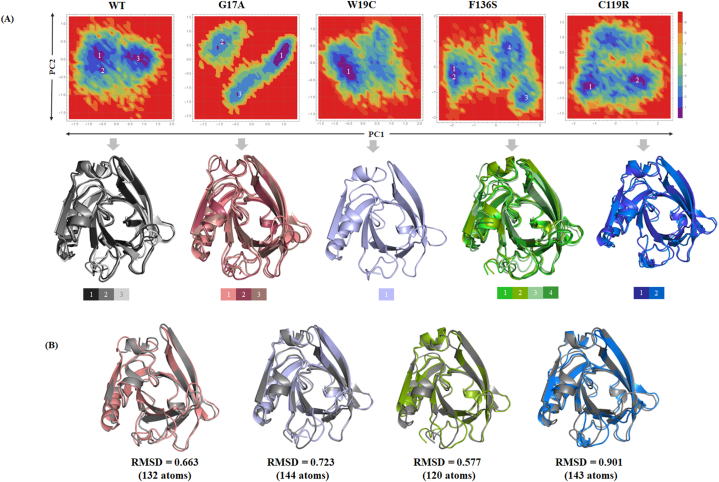
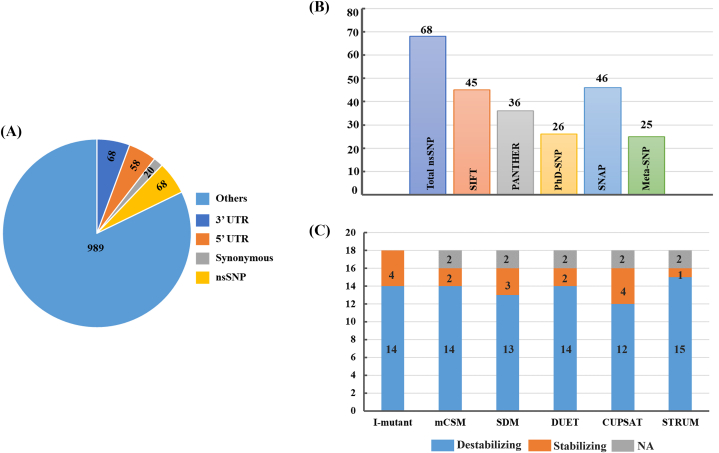
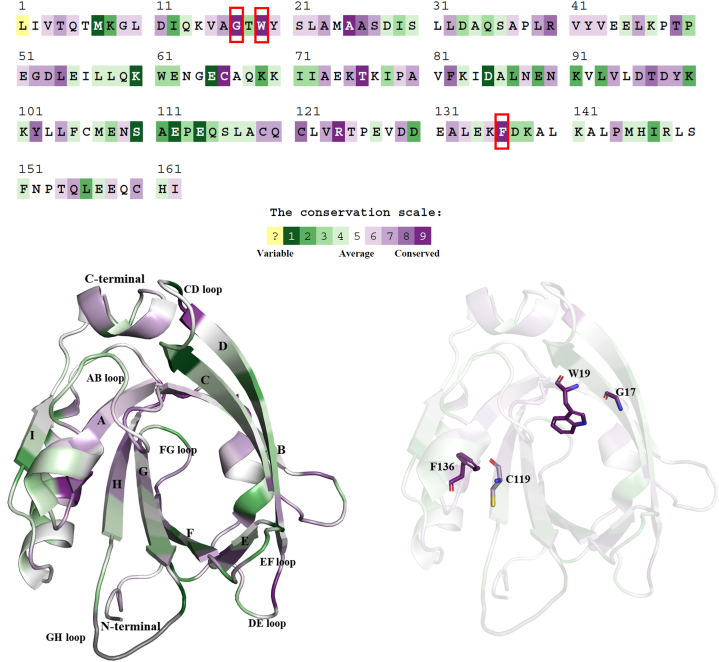
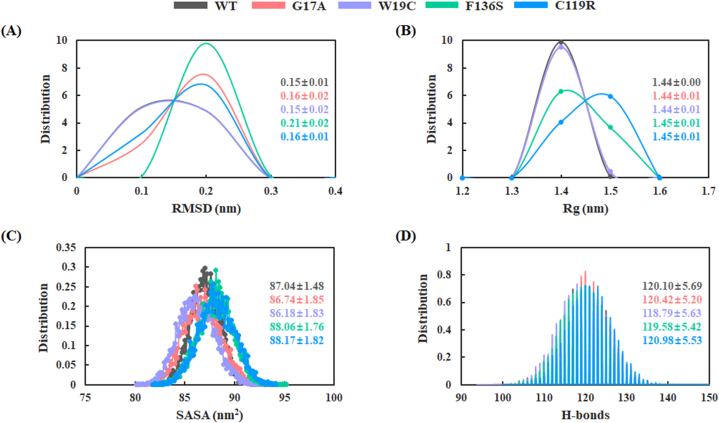
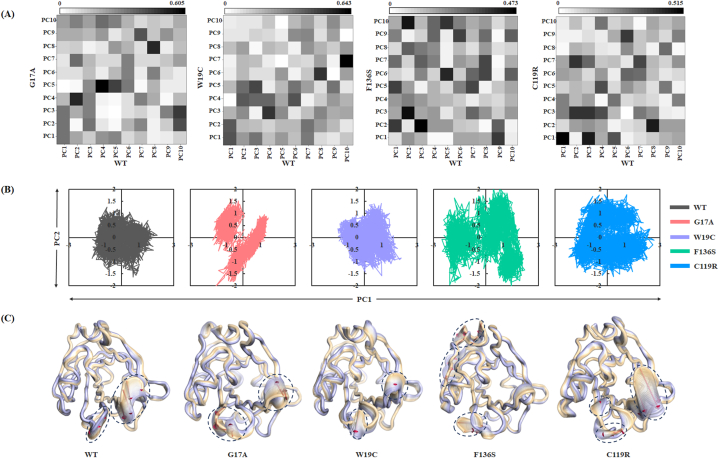
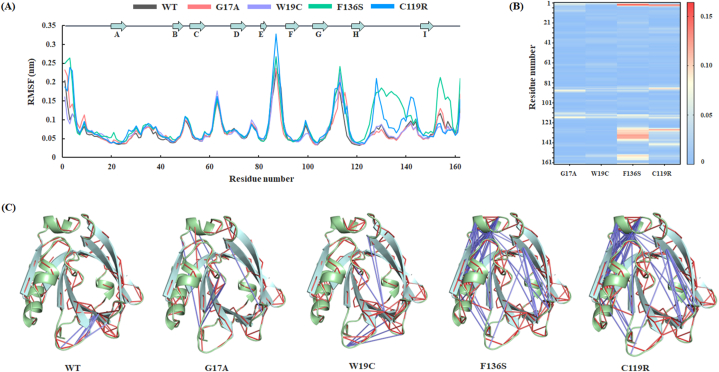
Whey protein from bovine milk is highly valued in the food and pharmaceutical industries because of its high protein content and abundance of essential amino acids. The relationship between whey protein and the β-lactoglobulin (BLG) gene has been extensively discussed because BLG is the most abundant whey protein, making up approximately 50 % of the total whey protein in bovine milk. In recent years, researchers have been interested in this gene because of its critical role in healthy milk production, and any genetic polymorphism in this gene may deteriorate the milk quality. In the current study, we identified several deleterious and damaging non-synonymous single nucleotide polymorphisms (nsSNPs) in BLG and analyzed their destabilizing effects using different computational algorithms. Cumulative results from all tools and evolutionary conservation profiles of BLG suggested that four nsSNPs, G17A, W19C, F136S, and C119R, were the most deleterious and could affect the structural integrity of the protein. Detailed molecular dynamics simulation analysis revealed that all variants induced major structural alterations, that affected the ability of the protein to interact with natural and synthetic ligands. Particularly, the G17A, F136S, and C119R variants induced large conformational changes in the EF loop and main α-helix of BLG, which may affect the access of natural and synthetic ligands to the central calyx of BLG. We hope that the suggested nsSNPs will guide future studies and assist researchers in improving the quality of bovine milk.
牛乳中的乳清蛋白因其高蛋白含量和丰富的必需氨基酸而在食品和制药行业中备受重视。乳清蛋白与β-乳球蛋白(BLG)基因之间的关系已得到广泛讨论,因为BLG是最丰富的乳清蛋白,约占牛乳中总乳清蛋白的50%。近年来,研究人员对该基因很感兴趣,因为它在健康产奶中起着关键作用,而且该基因的任何遗传多态性都可能降低牛奶质量。在本研究中,我们在BLG中鉴定了几个有害和破坏性的非同义单核苷酸多态性(nsSNPs),并使用不同的计算算法分析了它们的去稳定作用。所有工具的累积结果以及BLG的进化保守图谱表明,四个nsSNPs,即G17A、W19C、F136S和C119R,是最有害的,可能会影响蛋白质的结构完整性。详细的分子动力学模拟分析表明,所有变体都引起了主要的结构改变,这影响了蛋白质与天然和合成配体相互作用的能力。特别是,G17A、F136S和C119R变体在BLG的EF环和主要α-螺旋中引起了大的构象变化,这可能会影响天然和合成配体进入BLG的中央花萼。我们希望所建议的nsSNPs将指导未来的研究,并帮助研究人员提高牛乳的质量。