Kaji Kosuke, Takeda Soichi, Iwai Satoshi, Nishimura Norihisa, Sato Shinya, Namisaki Tadashi, Akahane Takemi, Yoshiji Hitoshi
Department of Gastroenterology, Nara Medical University, 840 Shijo-cho, Kashihara 634-8521, Nara, Japan.
Antioxidants (Basel). 2024 Nov 18;13(11):1415. doi: 10.3390/antiox13111415.
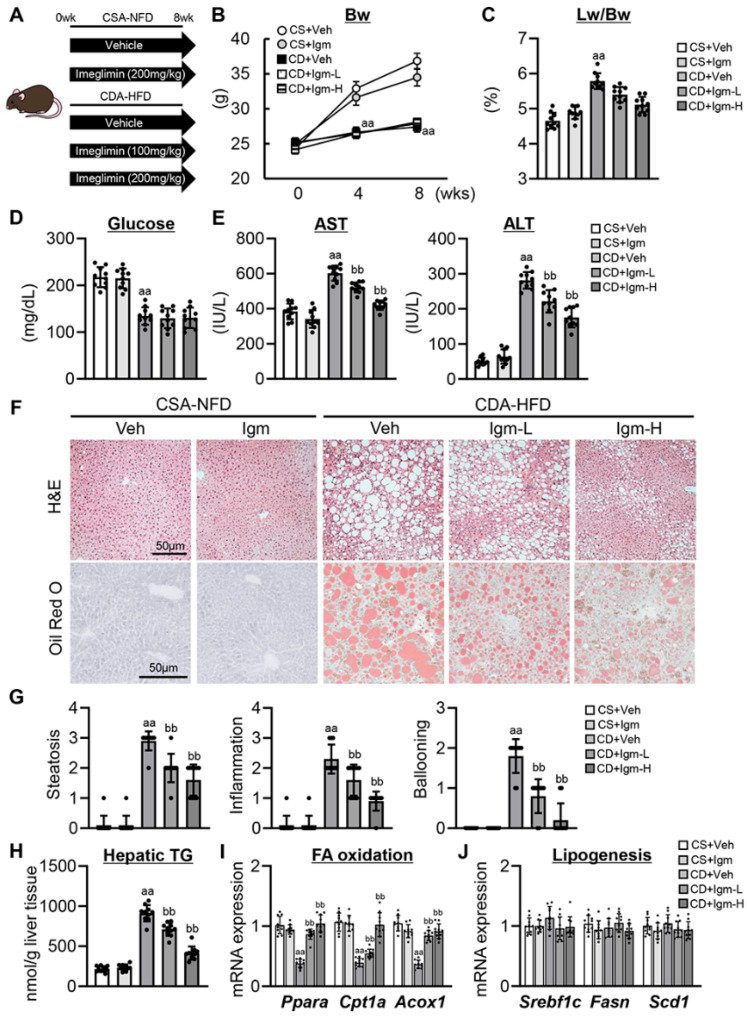
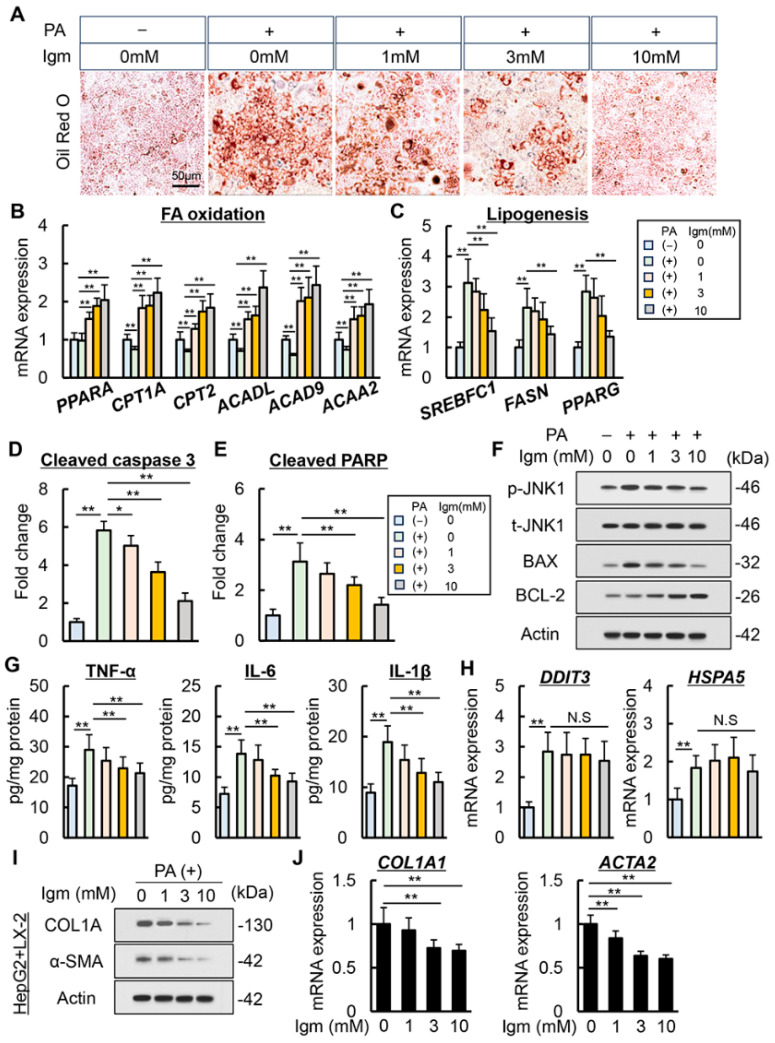
Imeglimin promotes glucose-stimulated insulin secretion in the pancreas in a glucose-dependent manner and inhibits gluconeogenesis in the liver. Meanwhile, imeglimin can improve mitochondrial function in hepatocytes. We used a nondiabetic metabolic dysfunction-associated steatohepatitis (MASH) model to examine the effects of imeglimin on MASH independent of its glucose-lowering action. Mice fed a choline-deficient high-fat diet (CDA-HFD) were orally administered imeglimin (100 and 200 mg/kg twice daily), and MASH pathophysiology was evaluated after 8 weeks. Moreover, an in vitro study investigated the effects of imeglimin on palmitic acid (PA)-stimulated lipid accumulation, apoptosis, and mitochondrial dysfunction in human hepatocytes. CDA-HFD-fed mice showed hepatic steatosis, inflammation, and fibrosis without hyperglycemia. Imeglimin reduced hepatic steatosis in response to increased expression of β-oxidation-related markers. Imeglimin reduced reactive oxygen species accumulation and increased mitochondrial biogenesis in CDA-HFD-fed mice. Consequently, imeglimin suppressed hepatocyte apoptosis and decreased macrophage infiltration with reduced proinflammatory cytokine expression, suppressing hepatic fibrosis development. PA-stimulated hepatocytes induced lipogenesis, inflammatory cytokine production, and apoptosis, which were significantly suppressed by imeglimin. In mitochondrial function, imeglimin improved PA-stimulated decrease in mitochondrial membrane potential, mitochondrial complexes activity, oxygen consumption rate, and mitochondrial biogenesis marker expression. In conclusion, imeglimin could contribute to prevention of MASH progression through suppressing de novo lipogenesis and enhancing fatty acid oxidation.
依美格列明以葡萄糖依赖的方式促进胰腺中葡萄糖刺激的胰岛素分泌,并抑制肝脏中的糖异生。同时,依美格列明可改善肝细胞中的线粒体功能。我们使用非糖尿病性代谢功能障碍相关脂肪性肝炎(MASH)模型来研究依美格列明对MASH的影响,而不考虑其降糖作用。给喂食胆碱缺乏高脂饮食(CDA-HFD)的小鼠口服依美格列明(100和200mg/kg,每日两次),8周后评估MASH的病理生理学。此外,一项体外研究调查了依美格列明对人肝细胞中棕榈酸(PA)刺激的脂质积累、细胞凋亡和线粒体功能障碍的影响。喂食CDA-HFD的小鼠出现肝脂肪变性、炎症和纤维化,但无高血糖。依美格列明通过增加β-氧化相关标志物的表达来减轻肝脂肪变性。依美格列明减少了喂食CDA-HFD小鼠中活性氧的积累并增加了线粒体生物发生。因此,依美格列明抑制了肝细胞凋亡,减少了巨噬细胞浸润,并降低了促炎细胞因子的表达,从而抑制了肝纤维化的发展。PA刺激的肝细胞诱导脂肪生成、炎性细胞因子产生和细胞凋亡,而依美格列明显著抑制了这些过程。在线粒体功能方面,依美格列明改善了PA刺激引起的线粒体膜电位降低、线粒体复合物活性、氧消耗率和线粒体生物发生标志物表达的下降。总之,依美格列明可通过抑制从头脂肪生成和增强脂肪酸氧化来预防MASH的进展。